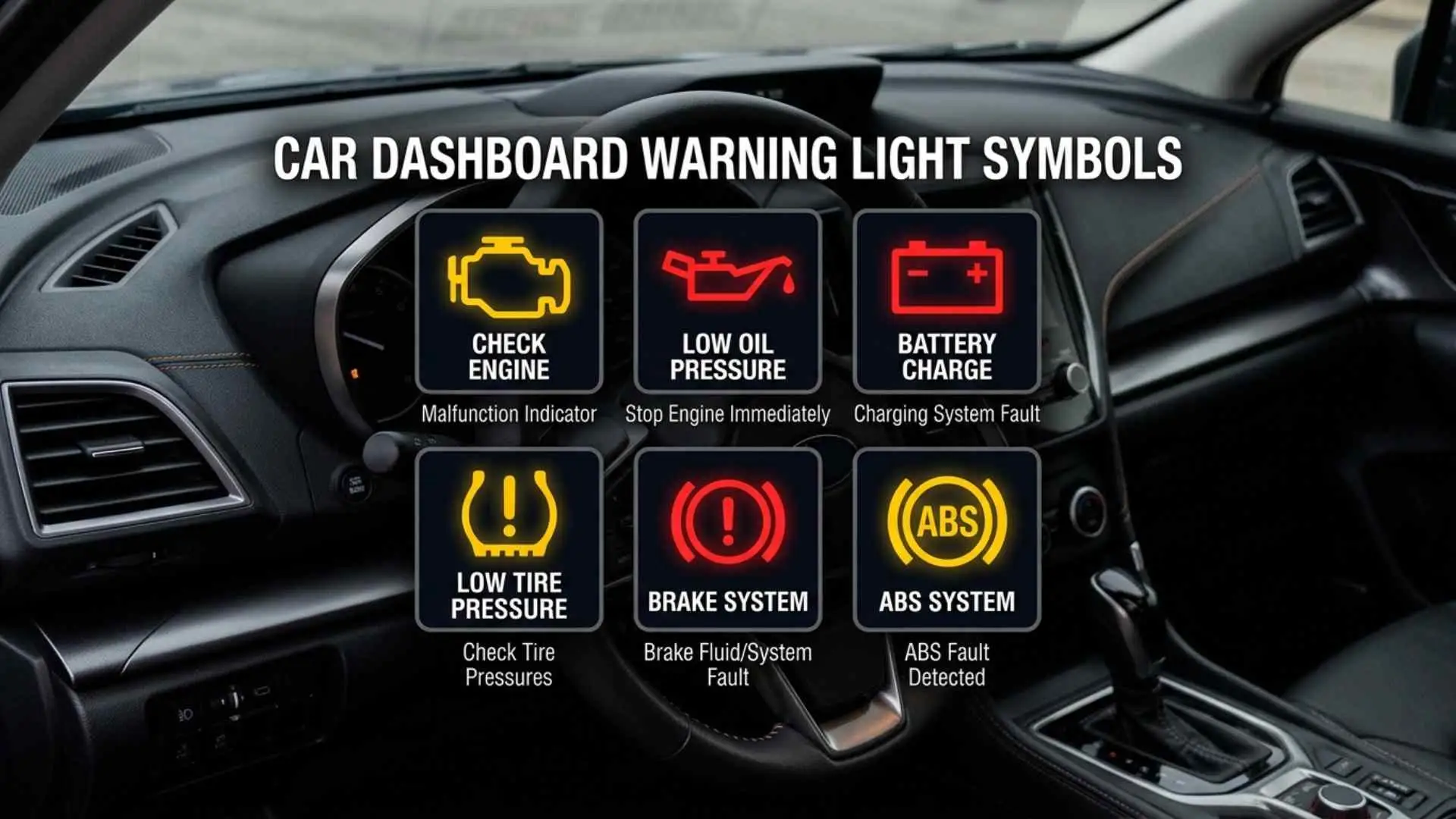
If you’ve ever looked at your dashboard and wondered what a glowing icon means, you’re not alone.
I know how confusing light symbols in car dashboards can feel, especially when you’re in a hurry or driving at night.
Some lights are simple reminders, while others warn you about problems that need immediate attention.
Understanding these symbols helps you drive more safely, avoid costly repairs, and feel more confident every time you get behind the wheel.
What Do Light Symbols in Car Mean?
Light symbols in car dashboards are visual warning and information icons that tell you about your vehicle’s condition. The most important symbol is the Check Engine Light, as it can indicate anything from a loose fuel cap to a serious engine issue. Red symbols usually require immediate attention, yellow or amber lights signal caution, and green or blue lights simply show that a system is operating normally.
What Are Light Symbols in Car?
Light symbols in car dashboards are standardized icons designed to communicate information without words. Instead of reading long messages while driving, you can quickly recognize a symbol and understand whether your vehicle needs attention.
These symbols monitor many systems, including:
- Engine performance
- Braking system
- Tire pressure
- Battery charging
- Oil pressure
- Lighting
- Safety features
- Fuel system
Although many dashboard symbols follow international standards, some designs vary slightly between manufacturers. Always check your vehicle owner’s manual for the exact meaning of your dashboard lights.
One important thing to remember is that color matters.
- Red usually means stop as soon as it is safe.
- Yellow or amber means inspect the issue soon.
- Green or blue means a feature is active.
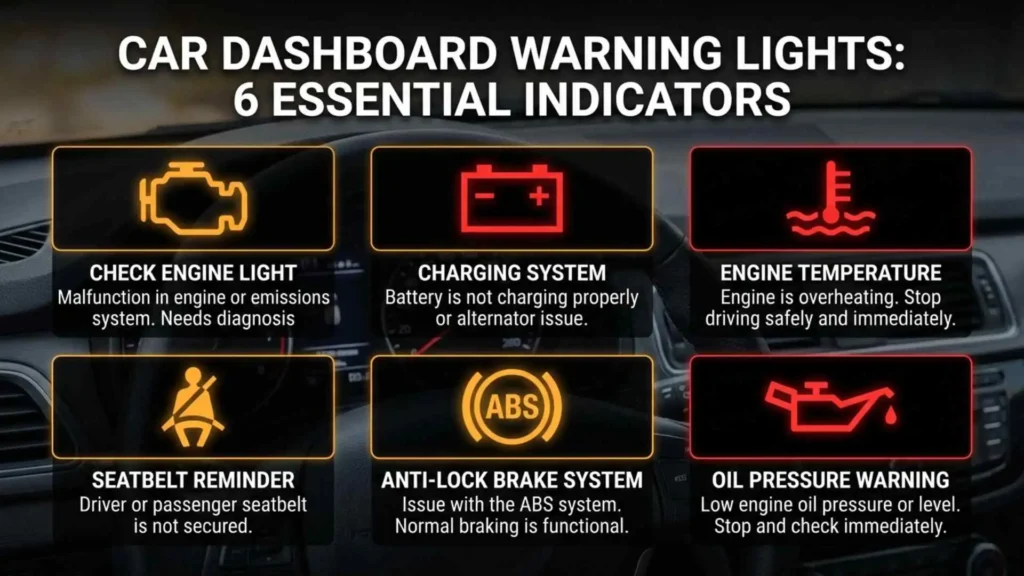
Light Symbols in Car Comparison Table
| Symbol | Main Meaning | Best Use |
| Check Engine Light | Engine or emissions problem | Vehicle diagnostics |
| Oil Pressure Light | Low engine oil pressure | Prevent engine damage |
| Battery Warning Light | Charging system issue | Electrical system checks |
| Brake Warning Light | Brake system problem | Safe driving |
| Tire Pressure Light | Low tire pressure | Tire maintenance |
| Coolant Temperature Light | Engine overheating | Prevent overheating |
| ABS Light | Anti-lock braking issue | Brake inspection |
| Airbag Warning Light | Airbag system fault | Safety maintenance |
| Fuel Warning Light | Low fuel | Refueling reminder |
| Seat Belt Reminder | Seat belt not fastened | Passenger safety |
| High Beam Indicator | High beams active | Night driving |
| Fog Light Indicator | Fog lights on | Poor weather visibility |
Top 12 Light Symbols in Car and Their Meanings
Check Engine Light | Engine System Warning
The Check Engine Light is one of the most recognized dashboard symbols. It tells you that the engine management system has detected a fault. Sometimes the issue is minor, such as a loose fuel cap, while other times it may involve sensors, emissions equipment, or engine performance.
Modern vehicles store diagnostic trouble codes that mechanics can read with a scan tool to identify the problem.
Ignoring this light for too long may lead to reduced fuel efficiency or more expensive repairs.
Best for: Engine diagnostics, routine maintenance, repair planning, emissions checks, vehicle inspections.
Oil Pressure Light | Protecting Your Engine
This symbol usually looks like an old-fashioned oil can. It warns that engine oil pressure has dropped below a safe level.
Driving with low oil pressure can seriously damage the engine within minutes. If this light appears while driving, stop safely, turn off the engine, and check the oil level before continuing.
Low oil pressure may result from insufficient oil, leaks, or a failing oil pump.
Best for: Engine protection, oil maintenance, emergency awareness, preventive care.
Battery Warning Light | Charging System Alert
The battery symbol does not always mean the battery itself is bad. Instead, it often points to a problem with the charging system, including the alternator, wiring, or drive belt.
If this light stays on, your vehicle may continue running for only a limited time before the battery loses power.
Scheduling service promptly helps prevent unexpected breakdowns.
Best for: Electrical maintenance, battery inspection, charging system repairs, roadside preparedness.
Brake Warning Light | Brake Safety First
A brake warning light may indicate that the parking brake is engaged or that there is a problem with the braking system.
Low brake fluid, worn components, or hydraulic issues can trigger this warning.
Because brakes are essential for safety, never ignore a red brake light. Have the system inspected as soon as possible.
Best for: Vehicle safety, brake inspections, maintenance planning, emergency awareness.
Tire Pressure Monitoring Light | Healthy Tires Matter
This horseshoe-shaped symbol with an exclamation mark indicates that one or more tires have low air pressure.
Proper tire pressure improves handling, fuel economy, and tire life.
Seasonal temperature changes commonly trigger this warning because colder air reduces tire pressure.
After inflating the tires to the recommended pressure, the light usually resets automatically after driving.
Best for: Tire care, fuel savings, safer driving, regular maintenance.
Coolant Temperature Light | Prevent Engine Overheating
This symbol typically shows a thermometer above waves.
If it turns red, the engine coolant temperature is too high. Continuing to drive may cause severe engine damage.
Safely stop the vehicle, allow the engine to cool, and check coolant levels if appropriate. Never remove the radiator cap while the engine is hot.
Best for: Engine protection, cooling system maintenance, overheating prevention.
ABS Warning Light | Anti-Lock Brake System
The ABS light indicates a problem with the Anti-lock Braking System.
Normal braking usually still works, but the anti-lock feature may not function during emergency stops or slippery road conditions.
A mechanic can diagnose faulty wheel speed sensors, wiring, or ABS control modules.
Best for: Brake diagnostics, winter driving safety, vehicle inspections.
Airbag Warning Light | Passenger Protection
The airbag symbol warns that part of the Supplemental Restraint System (SRS) has detected a fault.
If this light remains illuminated, airbags may not deploy properly during a collision.
Professional diagnosis is recommended because safety systems require specialized testing.
Best for: Vehicle safety inspections, accident protection, maintenance planning.
Fuel Warning Light | Time to Refuel
This familiar gas pump icon appears when fuel drops below a preset level.
Although many cars still have several miles of driving range remaining, delaying refueling increases the risk of running out of fuel.
Keeping your tank above one-quarter full can also reduce stress on the fuel pump.
Best for: Fuel management, trip planning, daily commuting.
Seat Belt Reminder | A Simple Safety Feature
The seat belt icon reminds drivers and passengers to buckle up before driving.
Many vehicles also include audible alerts that continue until everyone is properly restrained.
Seat belts remain one of the simplest and most effective safety features in any vehicle.
Best for: Driver safety, passenger awareness, family travel.
High Beam Indicator | Night Driving Assistance
This blue dashboard symbol lets you know that your high-beam headlights are active.
High beams improve visibility on dark roads but should be switched off when approaching other vehicles to avoid blinding other drivers.
Using them correctly improves road safety for everyone.
Best for: Night driving, rural roads, improved visibility.
Fog Light Indicator | Better Visibility in Bad Weather
Fog light indicators are usually green or amber, depending on whether front or rear fog lights are active.
Fog lights improve visibility during fog, heavy rain, or snow by directing light lower to the road surface.
They should only be used when weather conditions require them.
Best for: Fog, heavy rain, snowy conditions, low-visibility driving.
Best Light Symbols in Car to Know for Everyday Driving
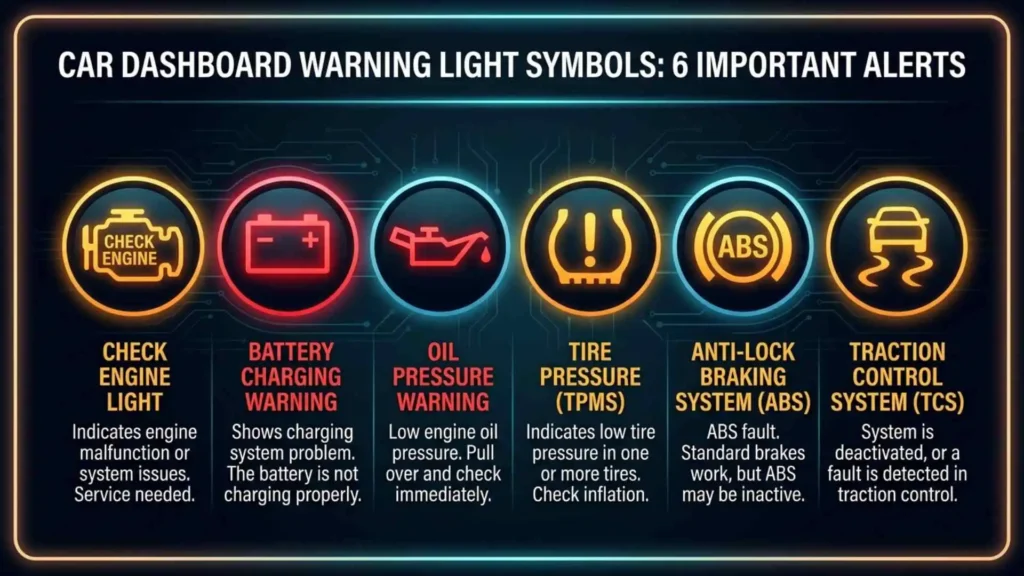
Some dashboard lights deserve immediate attention because they relate directly to vehicle safety.
The most important ones include:
- Check Engine Light
- Oil Pressure Light
- Brake Warning Light
- Coolant Temperature Light
- Battery Warning Light
- Tire Pressure Light
Learning these symbols can help you react quickly and avoid expensive repairs.
Best Light Symbols in Car for Driver Awareness and Safety
Not every dashboard light signals danger.
Green and blue indicators simply show that a feature is operating correctly, while yellow lights remind you to schedule maintenance.
Good dashboard design uses simple, recognizable icons that drivers can identify with only a quick glance, helping them stay focused on the road.
Understanding Light Symbols in Car for Everyday Maintenance
Dashboard warning lights are not just emergency alerts they’re also maintenance reminders.
For example:
- Tire pressure lights encourage regular tire care.
- Oil reminders help extend engine life.
- Battery warnings prevent unexpected breakdowns.
- Brake alerts support safer driving habits.
Treating these warnings as early notifications often prevents larger problems later.
Before Ignoring Dashboard Warning Lights
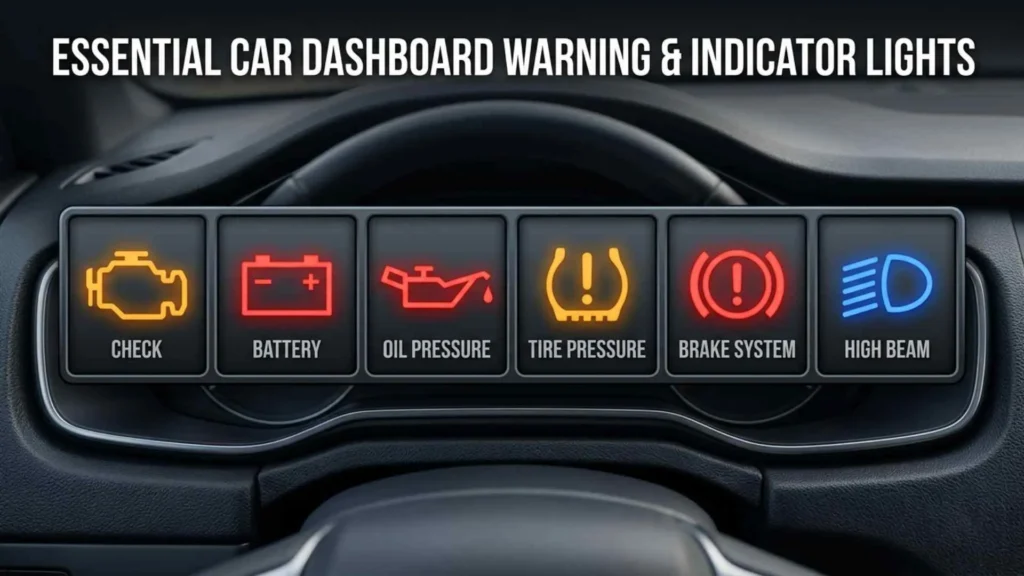
While many dashboard icons are standardized worldwide, manufacturers sometimes use unique designs or additional warning messages.
Before dismissing a warning light:
- Read your owner’s manual.
- Understand the symbol’s purpose.
- Avoid guessing what it means.
- Seek professional inspection if the warning remains active.
Using dashboard symbols correctly helps protect both your vehicle and everyone inside it.
How to Understand the Right Light Symbols in Car
When you see a dashboard symbol, ask yourself:
- What color is the warning?
- Is the vehicle driving normally?
- Is the light flashing or steady?
- Can you safely continue driving?
- Does the owner’s manual recommend immediate action?
If a red warning appears with unusual noises, overheating, smoke, or loss of power, stop driving as soon as it is safe.
FAQs About Light Symbols in Car
What is the most important light symbol in car dashboards?
The Check Engine Light is one of the most important because it can indicate a wide range of engine and emissions problems. However, red warnings such as oil pressure or brake system lights usually require more immediate attention.
What do red dashboard lights mean?
Red dashboard lights indicate urgent problems or critical safety warnings. These should never be ignored, and you should stop the vehicle safely whenever necessary.
What do yellow dashboard warning lights mean?
Yellow or amber lights usually signal caution. They often indicate maintenance needs or developing problems that should be inspected soon but may not require immediate stopping.
Can I drive with the Check Engine Light on?
If the light stays steady and the vehicle drives normally, you can often drive carefully to a repair shop. If the light flashes, reduce speed and seek service immediately because engine damage may occur.
Why is my tire pressure light on after filling my tires?
The system may need a few minutes of driving to reset. If the light remains on, one tire may still be underinflated, or the Tire Pressure Monitoring System may require inspection.
Why does my battery light come on while driving?
The battery warning usually indicates a charging system problem rather than a dead battery. The alternator, belt, wiring, or electrical components may need professional inspection.
Which dashboard lights require immediate attention?
Oil Pressure, Brake Warning, Coolant Temperature, and severe Battery warnings should be treated as urgent. Continuing to drive with these lights illuminated may cause serious mechanical damage or create unsafe driving conditions.
Final Thoughts
Learning the meaning of light symbols in car dashboards is one of the easiest ways to become a safer and more confident driver.
These small icons provide valuable information about your vehicle’s health before minor issues become expensive repairs.
By understanding what each warning light means and responding appropriately, you’ll protect your car, improve safety, and enjoy greater peace of mind every time you drive.

Lily Anderson is a passionate writer who enjoys turning everyday ideas into engaging and easy-to-read stories. She loves creating content that helps readers learn something new while keeping them entertained. Lily is the author of the original titles Whispers Between Ordinary Days and The Quiet Map of Tomorrow. When she’s not writing, she enjoys reading, exploring new places, and finding inspiration in everyday life. Her goal is to create meaningful content that readers can connect with and remember.
 Adam Sullivan