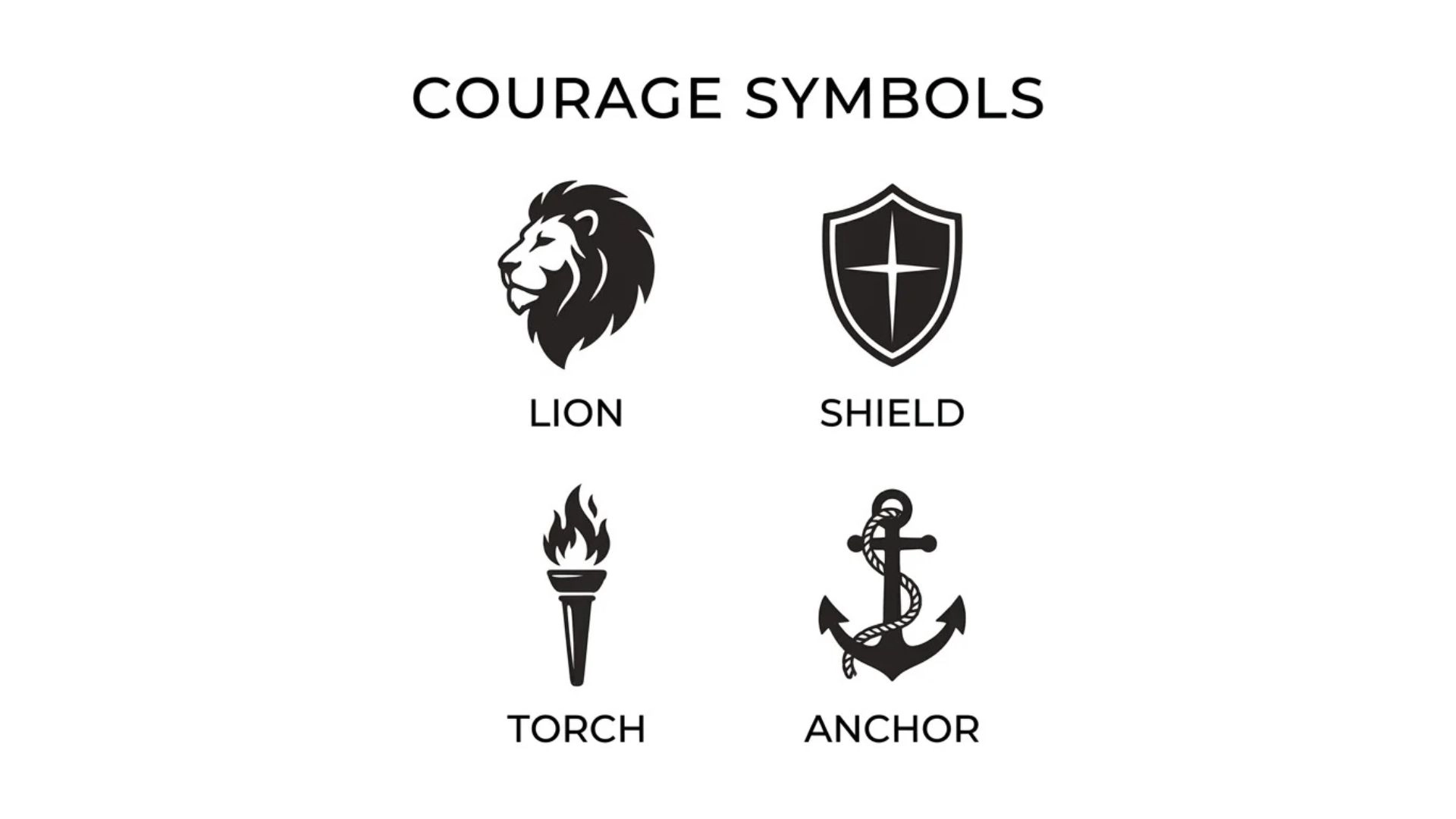
Courage is not the absence of fear. It is the decision to move forward when something feels difficult, uncertain, or uncomfortable. Sometimes courage means standing up for what is right. Other times, it means protecting someone you love, starting over after a setback, or taking one small step toward a goal that once seemed impossible. Throughout history, people have used meaningful images, animals, objects, and written characters to express these different forms of bravery.
Courage symbols give a visible form to an invisible quality. A lion can represent boldness and leadership, while a phoenix often symbolizes renewal after hardship. An oak tree suggests endurance, a shield represents protection, and a mountain can remind you to keep moving toward your goals even when the path becomes difficult.
However, not every symbol represents the same kind of courage. Some express fearless action, while others reflect patience, emotional resilience, moral conviction, or the strength to begin again. Their meanings can also change across cultures, historical periods, and personal experiences.
In this guide, you will discover 15 courage symbols and their meanings, explore cultural and historical examples, compare symbols of bravery and resilience, and find ideas for tattoos, jewelry, artwork, and meaningful gifts. You will also learn how to choose a symbol that reflects your own story rather than simply following a trend.
What Are Courage Symbols?
Courage symbols are images, objects, animals, words, or designs associated with bravery, determination, confidence, and the willingness to face challenges. They help people communicate a quality that can otherwise be difficult to express in words.
For example, a person who has overcome a major setback might choose a phoenix because it is commonly associated with renewal. Someone who wants to express the courage to protect loved ones might prefer a shield. A mountain may suit a person who sees bravery as the determination to keep climbing, even when progress is slow.
These examples illustrate an important distinction: courage can take many forms, and the best symbol depends on the kind of bravery you want to represent.
What Do Courage Symbols Represent?
Courage symbols can communicate several related but distinct qualities.
- Bravery: Facing danger, uncertainty, or fear instead of automatically backing away.
- Inner strength: Remaining grounded when circumstances become stressful.
- Resilience: Recovering, adapting, and moving forward after hardship.
- Moral courage: Speaking up or acting according to your principles, even when doing so is uncomfortable.
- Protection: Defending loved ones, personal boundaries, or important values.
- Determination: Continuing to work toward a goal despite obstacles.
- Confidence: Trusting your judgment and abilities when making difficult decisions.
- Renewal: Finding the courage to begin again after a major change.
A symbol does not make someone brave by itself. Its value comes from the meaning it holds and the reminder it provides. A small pendant can carry a deeply personal message if it connects with an experience, belief, or promise that matters to you.
Quick Guide to Courage Symbols and Their Meanings
If you want a quick answer, this table compares some popular symbols of courage and the qualities they commonly express.
| Courage symbol | Common meaning | Best suited to |
| Lion | Bravery, leadership, confidence | Facing fear or taking responsibility |
| Phoenix | Renewal, recovery, rebirth | Starting over after hardship |
| Eagle | Vision, freedom, determination | Pursuing an ambitious goal |
| Tiger | Boldness, protective strength | Expressing independence and resolve |
| Wolf | Loyalty, teamwork, commitment | Family, friendship, and belonging |
| Bear | Strength, endurance, protection | Standing firm during difficult times |
| Dragon | Power, authority, transformation | Expressing strength through mythological imagery |
| Oak tree | Stability, endurance, growth | Remaining strong through prolonged challenges |
| Mountain | Perseverance, achievement | Overcoming obstacles step by step |
| Sword | Resolve, justice, moral courage | Standing up for important principles |
| Shield | Defense, safety, responsibility | Protecting loved ones and boundaries |
| Arrow | Direction, focus, progress | Moving toward a new goal |
| Fire | Passion, energy, transformation | Maintaining determination through change |
| Laurel wreath | Achievement, honor, victory | Celebrating an important accomplishment |
| 勇気 (yūki) | Courage in Japanese | Expressing courage through a written word |
These are common symbolic interpretations, not universal definitions. A symbol’s meaning may depend on the culture, design, or personal story associated with it.
15 Courage Symbols and Their Meanings
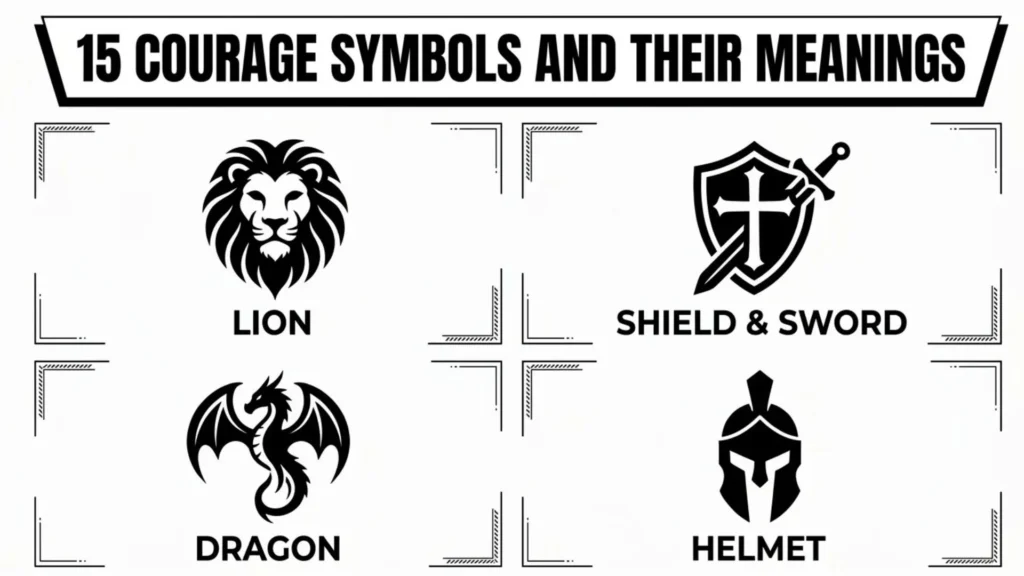
Each of the following symbols expresses a slightly different kind of bravery. Understanding those differences can help you choose an image that feels personal and meaningful.
1. The Lion: A Symbol of Bravery and Leadership
The lion is one of the most recognizable symbols associated with courage. Its powerful appearance, confidence, and commanding presence have made it a recurring image of strength and authority in art, literature, and heraldry.
As a modern personal symbol, the lion represents the willingness to face difficult situations without letting fear make every decision. It may also express leadership, dignity, confidence, and responsibility.
Imagine someone who must speak up during an uncomfortable meeting or make a difficult decision for their family. A lion can represent the courage required to act thoughtfully rather than remain silent simply to avoid conflict.
The lion is especially suitable if you want to express visible confidence and the willingness to take responsibility. It can also remind you that leadership requires more than power. It requires judgment, accountability, and the ability to protect others when necessary.
Common uses: Lion tattoos, pendants, family emblems, artwork, decorative crests, and personal logos.
2. The Phoenix: A Symbol of Courage After Hardship
The phoenix is a mythical bird commonly associated with rebirth and renewal. In familiar stories and modern imagery, it rises from its ashes, making it a compelling metaphor for life after destruction or loss.
This symbol offers a different perspective on courage. Instead of focusing on the moment when someone confronts a challenge, the phoenix represents the strength required to rebuild afterward.
You might connect with this symbol after leaving a difficult situation, recovering from a disappointing experience, changing careers, or deciding to begin again. Its message is not that hardship is easy or that every loss immediately leads to something better. Rather, it represents the possibility of creating a new chapter after a painful one.
A phoenix can also express personal transformation. Its wings may suggest freedom, while its rising movement can represent renewed determination.
Common uses: Phoenix tattoos, necklaces, illustrations, memorial artwork, and designs marking a major life transition.
3. The Eagle: A Symbol of Vision and Determination
The eagle is often associated with vision, freedom, independence, and strength. Its ability to soar above the ground has made it a popular metaphor for seeing beyond immediate obstacles.
As a courage symbol, the eagle can represent the willingness to pursue an ambitious goal, leave a familiar environment, or make a decision that requires independence.
For example, starting a business or moving toward a different career may involve uncertainty. An eagle design can serve as a reminder to focus on your direction rather than allowing every temporary setback to change your plans.
Eagles also appear in national emblems and official imagery. Their meanings are not identical in every country or historical context, so it is important to consider the specific design rather than assuming that every eagle represents courage in precisely the same way.
Common uses: Eagle artwork, tattoos, jewelry, badges, decorative emblems, and personal designs representing independence.
4. The Tiger: A Symbol of Boldness and Protective Strength
The tiger is associated with strength, intensity, and courage in a number of symbolic traditions. In traditional Chinese culture, tiger imagery has been used to express bravery and protection. The British Museum documents tiger paintings and objects used in protective contexts, including paintings exchanged by soldiers as a mark of respect for their comrades’ bravery.
As a personal symbol, the tiger can express independence, confidence, and the determination to stand your ground. It may appeal to someone who wants to communicate controlled power rather than quiet endurance.
The tiger also offers an interesting reminder about courage: being strong does not mean reacting aggressively to every problem. Sometimes it means knowing your capabilities, setting boundaries, and choosing your response carefully.
Common uses: Tiger tattoos, pendants, traditional artwork, clothing designs, and decorative motifs.
For cultural context, see the British Museum’s article, China’s Talismanic Tigers.
5. The Wolf: A Symbol of Loyalty and Courage Through Unity
The wolf is commonly associated with loyalty, instinct, independence, and group commitment. In modern symbolic interpretations, it can represent the courage to protect loved ones and remain committed to a community during difficult times.
A wolf may be a meaningful choice if your idea of bravery centers on family, friendship, or teamwork. It reminds you that courage does not always require facing a challenge alone.
Consider someone who supports a friend through a difficult period or stands beside a family member when others turn away. The wolf can represent that kind of steady commitment.
However, wolf symbolism varies across stories and cultures. Some traditions portray wolves as dangerous creatures, while others give them important roles in origin stories, spiritual narratives, or community symbolism. Research a specific tradition if cultural accuracy matters to you.
Common uses: Wolf tattoos, pendants, family-themed artwork, illustrations, and designs representing loyalty or independence.
6. The Bear: A Symbol of Strength and Endurance
The bear represents a form of strength that combines power with endurance. Its physical presence has made it a common modern symbol of resilience, protection, and the ability to withstand demanding circumstances.
Unlike the lion, which often communicates leadership and visible confidence, the bear may better express quiet determination. It can symbolize the courage to defend your boundaries, support your family, or remain steady during a stressful period.
The bear is also a reminder that strength does not need to be loud. You may demonstrate courage by staying patient, making a responsible decision, or continuing to care for others when your own circumstances are difficult.
Bear imagery appears in different cultural traditions, and its meaning depends on the particular story or design. Avoid assuming that all bear symbols have the same historical or spiritual significance.
Common uses: Bear tattoos, pendants, nature-inspired artwork, decorative designs, and personal emblems representing endurance.
7. The Dragon: A Symbol of Power and Transformation
Dragons appear in numerous cultural traditions, but their meanings differ significantly.
In Chinese art and mythology, dragons are often associated with auspicious power, authority, and other positive qualities. In some European stories, dragons are dangerous creatures that heroes must confront or overcome.
In modern personal symbolism, a dragon can express confidence, determination, power, or transformation. The exact meaning depends on the design and the tradition that inspired it.
A dragon may appeal to someone who wants a bold visual representation of courage. However, a culturally specific dragon design should not be treated as interchangeable with every other dragon image. Research the background of the artwork, especially if you plan to use it as a permanent tattoo.
Common uses: Dragon tattoos, jewelry, decorative artwork, fantasy-inspired designs, and traditional cultural art.
8. The Oak Tree: A Symbol of Endurance and Inner Strength
The oak tree is a powerful metaphor for staying grounded during difficult times. Its thick trunk, spreading branches, and deep root system provide an image of stability and continued growth.
As a courage symbol, the oak tree represents patience rather than dramatic action. It can reflect the strength required to work through a long recovery, continue studying toward a difficult qualification, or remain committed to a meaningful goal.
The roots can suggest a strong foundation, including family, values, experience, or personal beliefs. The branches can represent growth and the possibility of reaching toward new opportunities.
An oak tree is particularly suitable if you see courage as a daily practice. You may not overcome every obstacle in a single moment, but you can keep building a stronger foundation through consistent effort.
Common uses: Tree tattoos, engraved jewelry, family artwork, nature-inspired illustrations, and personal emblems.
9. The Mountain: A Symbol of Perseverance
A mountain represents obstacles, ambition, endurance, and the determination to keep moving forward. The image of climbing a difficult slope provides a clear metaphor for the challenges people face in everyday life.
As a courage symbol, a mountain can reflect the effort involved in completing an education, changing careers, rebuilding confidence, or pursuing a long-term ambition.
The summit may represent a goal, but the climb matters just as much. You do not have to reach the top immediately to make progress. Sometimes courage means taking the next manageable step even when the final destination seems far away.
A mountain is also visually adaptable. A simple outline can express quiet determination, while a detailed landscape may communicate a deeper connection with nature, adventure, or personal freedom.
Common uses: Minimalist tattoos, landscape artwork, pendants, bracelets, and illustrations representing achievement.
10. The Sword: A Symbol of Resolve and Moral Courage
The sword is associated with conflict, justice, authority, and the defense of important principles. Historical and artistic depictions often connect it with warriors, responsibility, and the willingness to confront danger.
As a personal courage symbol, a sword can represent standing up for the truth, defending your boundaries, or taking action when something important is at stake.
Moral courage is particularly relevant here. You might need to challenge unfair treatment, admit a mistake, or speak honestly when silence would be easier. A sword can serve as a visual reminder of resolve, although its exact meaning depends on the design and context.
The sword is not always a symbol of aggression. It can also represent discipline and the responsibility to use strength carefully.
Common uses: Sword tattoos, historical and heraldic designs, pendants, decorative artwork, and personal emblems.
11. The Shield: A Symbol of Protection and Responsibility
The shield represents defense rather than attack. It is a natural symbol for protecting loved ones, maintaining personal boundaries, and standing firm when something important needs to be defended.
A shield may be meaningful for parents, caregivers, advocates, or anyone whose courage is connected to responsibility for others.
It can also represent emotional boundaries. Saying no to unreasonable demands, leaving an unhealthy situation, or refusing to compromise your values may require courage even when no physical danger is involved.
A shield design can be simple or highly detailed. Some people use it as part of a family emblem, while others prefer a minimalist outline that represents personal strength.
Common uses: Family crests, tattoos, pendants, team emblems, and personal logos.
12. The Arrow: A Symbol of Direction and Forward Movement
The arrow is a simple symbol commonly associated with direction, focus, and forward progress. Its shape makes it a popular modern choice for expressing the intention to keep moving toward a goal.
An arrow can represent the courage to leave an old chapter behind, choose a new direction, or continue after disappointment.
Its meaning can be especially personal during periods of change. For example, someone returning to school or beginning a new career might use an arrow as a reminder that progress requires a direction and a willingness to act.
Some contemporary designs use a bent or broken arrow to communicate other ideas, such as peace or recovery. These interpretations depend on the specific design and should not be treated as universal historical meanings.
Common uses: Minimalist tattoos, necklaces, bracelets, illustrations, and personal reminders.
13. Fire: A Symbol of Passion and Transformation
Fire can represent energy, passion, destruction, renewal, or transformation depending on the cultural and artistic context.
As a modern courage symbol, a flame can express the determination to continue when circumstances become difficult. It may represent an inner drive that survives disappointment or the willingness to change habits that no longer serve you.
Fire also illustrates why context matters. In one setting, it may represent warmth and life. In another, it may symbolize destruction or purification. A flame tattoo or emblem can therefore communicate very different messages depending on its surrounding imagery.
If you choose fire to represent courage, decide whether you want to emphasize passion, renewal, determination, or another quality.
Common uses: Flame tattoos, jewelry, artwork, graphic designs, and illustrations representing personal transformation.
14. The Laurel Wreath: A Symbol of Achievement and Honor
The laurel wreath is associated with victory, honor, and achievement in ancient Greek and Roman traditions. Laurel appears in historical imagery connected with public distinction and athletic success.
As a modern symbol of courage, a laurel wreath can represent completing a difficult journey or earning recognition through effort. It is particularly suitable when you want to celebrate an accomplishment without choosing an aggressive or intimidating image.
For example, a person who has completed a demanding course, achieved a long-term goal, or overcome a major personal obstacle might use a laurel design to mark that milestone.
The wreath focuses on the result of sustained effort. It can also remind you to acknowledge progress rather than immediately moving on to the next challenge.
Common uses: Achievement emblems, graduation artwork, tattoos, certificates, commemorative gifts, and decorative designs.
15. The Japanese Word for Courage: 勇気 (Yūki)
The Japanese word 勇気 (yūki) means courage. It is written with two kanji characters: 勇, associated with bravery, and 気, which can relate to spirit, energy, or disposition depending on context.
Unlike an animal or object, this written expression communicates courage directly. It may suit someone who prefers calligraphy, typography, or a meaningful word rather than a figurative image.
However, a written word is not exactly the same as a symbolic picture. Its meaning comes from the language itself, while its visual style may add an artistic dimension.
If you want to use 勇気 in a tattoo or permanent design, confirm the spelling, meaning, and layout with a knowledgeable Japanese-language source or native speaker. Avoid copying decorative characters from an unverified image.
Common uses: Calligraphy, personal artwork, written reminders, and carefully verified tattoos.
Courage Symbols From Different Cultures and Traditions
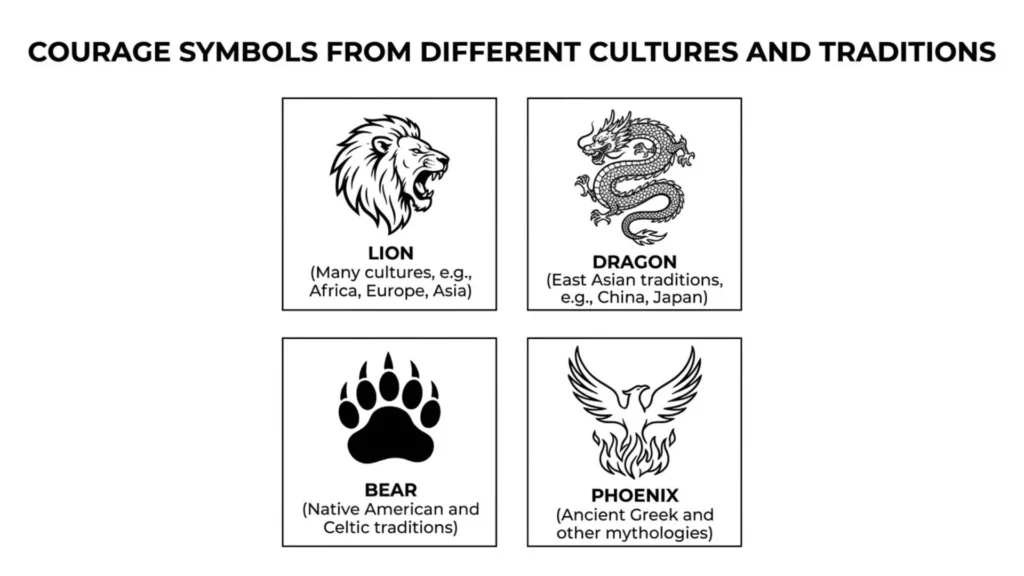
Courage does not have one universal visual language. Symbols develop through history, religious beliefs, literature, art, and community practices. Understanding their original context helps you distinguish traditional meanings from modern interpretations.
Chinese Tiger Imagery and Bravery
Tiger imagery has a documented connection with bravery and protection in traditional Chinese culture. The British Museum describes tiger paintings and other objects used in protective contexts. Its research also notes that soldiers exchanged tiger paintings as a sign of respect for their comrades’ bravery.
This example shows how a symbol can express more than personal confidence. It can honor another person’s service and recognize the courage demonstrated through shared experiences.
Read the British Museum’s research on Chinese talismanic tigers for further historical context.
Hanuman and Courage in Hindu Tradition
Hanuman is a revered figure in Hindu religion and mythology, particularly in the Ramayana. He is associated with devotion, strength, bravery, and service. In the epic, he helps Rama during the struggle against Ravana.
National Museums Scotland describes Hanuman as a symbol of bravery and service. His significance extends beyond physical strength because devotion and commitment are central to his role.
For readers interested in Hanuman imagery, it is important to understand the religious context. Hanuman is not simply a generic animal-shaped courage symbol; he is a sacred figure within a living religious tradition.
Learn more from National Museums Scotland’s explanation of Hanuman.
Samurai Imagery in Japanese History
Samurai armor, helmets, and associated objects sometimes incorporated decorative and religious imagery. Their designs could communicate identity, status, beliefs, or other meanings connected with their historical setting.
Modern artwork often uses samurai imagery to express discipline, honor, or bravery. However, not every sword, helmet, or warrior image has one fixed meaning.
If you want a historically grounded design, research the specific armor, emblem, or motif rather than relying only on modern interpretations. This is especially important for tattoos that draw on traditional Japanese art.
Religious Inscriptions and Protection in Islamic Art
Historical objects from the Islamic world sometimes incorporated Qur’anic inscriptions, prayers, and references to religious figures. The Metropolitan Museum of Art documents how some inscriptions on weapons and armor were believed by their owners to offer protection and support during dangerous circumstances.
These objects illustrate the relationship between faith, protection, and the human desire for reassurance when facing uncertainty. They should be understood within their particular religious and historical contexts rather than reduced to generic symbols of bravery.
For further reading, explore The Met’s Power and Piety: Islamic Talismans on the Battlefield.
Why Cultural Context Matters
A symbol can carry different meanings across traditions, and a modern interpretation may differ from its historical role. Before choosing religious or culturally specific imagery, ask three questions:
- What does this symbol mean within its original tradition?
- Is it sacred, ceremonial, historical, or primarily decorative?
- Does the modern interpretation accurately reflect the meaning I want to communicate?
Taking these steps helps you make a thoughtful choice and reduces the risk of using a symbol inaccurately.
Courage Symbols for Tattoos
A courage tattoo can serve as a lasting reminder of a personal value, an important milestone, or a difficult experience you have worked through. The most meaningful design is not necessarily the largest or most complicated. It is the one that reflects your intention and remains meaningful after trends change.
Small and Minimalist Courage Tattoos
If you prefer a discreet design, consider a small arrow, mountain outline, oak leaf, simple flame, or short word.
Minimalist designs work well when you want a personal reminder rather than a large statement piece. They can also be easier to incorporate into a larger design later.
Before committing, consider how much detail the design needs to remain recognizable at your chosen size. A complex image may lose important features when reduced.
Tattoos That Represent Recovery and New Beginnings
A phoenix is a popular modern choice for representing renewal after hardship. A growing tree may communicate continued development, while a mountain can symbolize the determination to work through a difficult journey.
Think about the message you want the tattoo to express. A phoenix emphasizes starting again, whereas an oak tree places more emphasis on stability and endurance.
You do not need to disclose private details about your experience to make the design meaningful. It can serve as a reminder for you alone.
Tattoos That Represent Protection and Family
A shield, bear, wolf, or carefully chosen family emblem may express the courage to protect people you love.
If you want a more personal design, consider incorporating initials or another detail connected with your family. Keep the composition balanced so the main symbol remains recognizable.
If the design draws on a cultural or religious tradition, research its meaning before choosing it permanently.
Written Courage Tattoos
Written tattoos offer a direct way to express courage. English options might include “brave,” “keep going,” or “courage.” A word in another language may also be meaningful if it connects with your background or personal interests.
However, written designs require extra care. Check the spelling, grammar, and natural meaning with a reliable source. A beautiful-looking character is not necessarily the correct word for the message you intend to communicate.
Before getting a tattoo: Review the design at the intended size, research its cultural background, choose a qualified tattoo artist, and allow yourself time to decide. A permanent design should reflect your values, not pressure to follow a trend.
Courage Symbols for Jewelry and Meaningful Gifts
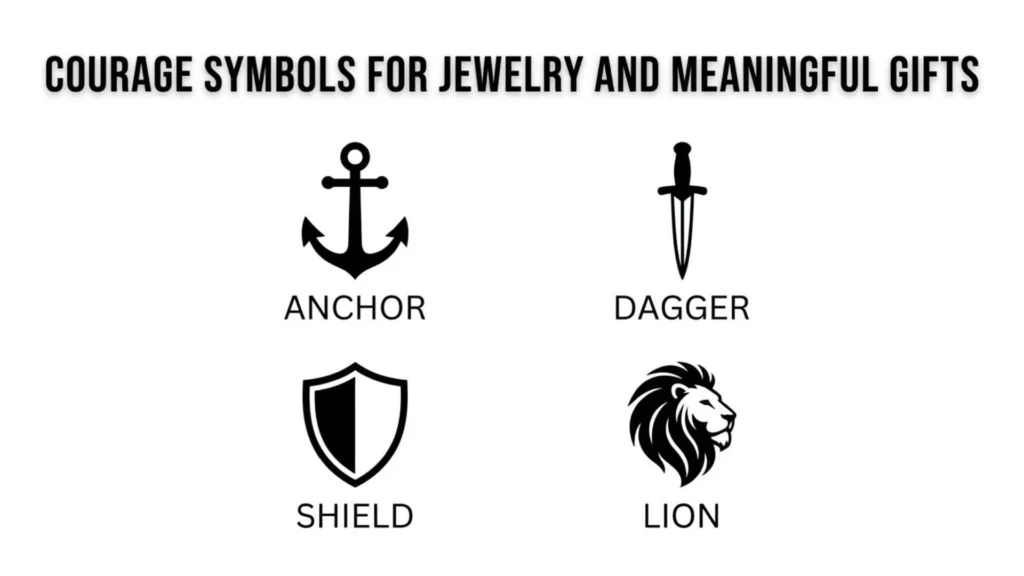
Jewelry and keepsakes offer a flexible way to express courage without choosing a permanent design. A pendant, bracelet, ring, or small piece of artwork can serve as a daily reminder of a quality that matters to you.
Courage Necklaces and Pendants
A lion pendant may communicate confidence and leadership, while a shield can represent protection. A phoenix may be suitable for someone beginning a new chapter, and a mountain can represent perseverance.
Choose a style that fits the person’s preferences. Someone who enjoys understated jewelry may prefer a small outline rather than a large, detailed emblem.
Bracelets and Rings
A bracelet engraved with a meaningful word can provide a discreet reminder of determination. A ring may represent a personal commitment, such as completing a difficult goal or staying true to an important value.
The symbol does not need to be elaborate. A simple design can be meaningful when it has a clear connection to the wearer’s experience.
Gifts for Someone Facing a Challenge
A courage-themed gift can mark a graduation, career change, recovery milestone, or other important transition.
For example, an oak-tree illustration may suit someone who has shown patience through a long challenge. A phoenix design may be meaningful for a person rebuilding after a setback, while a mountain print can encourage someone pursuing a difficult goal.
Include a short note explaining why you selected the symbol. A personal message often makes the gift more meaningful than the object alone.
How to Choose the Right Courage Symbol
The best courage symbol is the one that reflects what you want to express. Instead of selecting an image only because it is popular, start by identifying the kind of bravery that matters to you.
Choose a Symbol Based on Your Goal
Use this guide to narrow your choices.
| If you want to represent… | Consider… | Why it may fit |
| Facing fear with confidence | Lion | Commonly associated with bravery and leadership |
| Recovering after hardship | Phoenix | Represents renewal and beginning again |
| Staying strong over time | Oak tree | Suggests endurance and stability |
| Protecting loved ones | Shield or bear | Expresses defense and protective strength |
| Overcoming a long challenge | Mountain | Represents persistence and gradual progress |
| Standing up for your values | Sword | Can communicate resolve and moral courage |
| Celebrating an achievement | Laurel wreath | Associated with honor and victory |
| Moving toward a new goal | Arrow | Suggests direction and forward movement |
| Expressing courage in writing | 勇気 (yūki) | The Japanese word for courage |
These suggestions are starting points, not strict rules. Your personal experience can give a symbol a meaning that differs from its common interpretation.
Step 1: Identify What Courage Means to You
Ask yourself what you want the symbol to remind you of. Is it the confidence to speak up, the strength to recover after disappointment, or the determination to keep going when progress feels slow?
Write down one or two words that capture your intention. This simple exercise can make your options much easier to compare.
Step 2: Research the Symbol’s Background
If the symbol comes from a particular culture, language, or religion, research its original meaning. This is especially important for sacred imagery, traditional motifs, and written characters.
Distinguish historical facts from modern personal interpretations. A symbol can be meaningful to you without having the same meaning in every culture.
Step 3: Consider Where You Will Use It
A detailed dragon might work well in a large illustration, while a small arrow or oak leaf may be more practical for a minimalist tattoo or pendant.
Think about size, visibility, style, and the amount of detail you want. A symbol should work in its intended form as well as carry the right meaning.
Step 4: Choose a Design You Can Explain
You do not need to explain your symbol to everyone, but understanding why it matters to you can help it retain its significance.
Perhaps the mountain represents a goal you worked toward for years. Maybe the shield reminds you to maintain healthy boundaries. A clear personal connection can make a simple design feel more meaningful than an elaborate image chosen at random.
Courage vs. Strength vs. Resilience
Courage, strength, and resilience are closely related, but they describe different qualities. Understanding the distinction can help you choose a symbol that communicates your intention more clearly.
What Is the Difference?
Courage involves facing fear or uncertainty and deciding how to act despite it. A lion or sword may communicate this quality in a modern symbolic design.
Strength refers to the capacity to withstand pressure, carry responsibility, or handle difficulty. A bear, lion, or mountain may express this idea.
Resilience involves recovering, adapting, and continuing after setbacks. A phoenix or oak tree can represent this quality.
These meanings overlap. A person may need courage to face a difficult situation, strength to get through it, and resilience to rebuild afterward.
| Quality | Main idea | Common symbolic associations |
| Courage | Acting despite fear | Lion, sword |
| Strength | Handling pressure or difficulty | Bear, lion, mountain |
| Resilience | Recovering after hardship | Phoenix, oak tree |
| Protection | Defending others or important boundaries | Shield, bear |
| Determination | Continuing toward a goal | Arrow, mountain |
| Renewal | Beginning again after change | Phoenix, growing tree |
| Moral courage | Acting according to your principles | Sword, personal motto |
Choosing the right category makes the process easier. Instead of asking which symbol is strongest, ask which quality you want to express.
Common Mistakes to Avoid When Choosing Courage Symbols
A little research can help you avoid misunderstandings and choose a symbol that remains meaningful.
Assuming Every Symbol Has a Universal Meaning
A dragon, wolf, or sword may communicate different ideas in different traditions. Treat broad symbolic associations as starting points and investigate specific cultural meanings when needed.
Confusing Modern Interpretations With Historical Meanings
A tattoo website may describe a symbol in a particular way without establishing that the meaning is ancient or universal. Check reliable historical or cultural sources before making claims about a symbol’s origin.
Choosing a Foreign Character Without Verifying It
A character that looks attractive may not express the word you intended. Verify its meaning, spelling, and natural usage with a trustworthy language source or knowledgeable speaker before using it permanently.
Expecting a Symbol to Guarantee Protection
A pendant or tattoo can provide comfort and inspiration, but it cannot guarantee safety or prevent every hardship. Let the symbol remind you of your values while you continue to make practical decisions.
Choosing a Design Only Because It Is Popular
Trends change. A symbol connected with your experiences and beliefs is more likely to retain personal meaning than one chosen only because it appears frequently online.
Frequently Asked Questions About Courage Symbols
What Is the Most Recognized Symbol of Courage?
The lion is one of the most recognizable symbols associated with courage because it is commonly linked with bravery, strength, and leadership. However, there is no single symbol that represents courage for everyone. The best choice depends on the meaning you want to communicate.
What Animal Symbolizes Courage and Strength?
The lion, tiger, bear, and eagle are common choices for expressing courage or strength. The lion often suggests bravery and leadership, the tiger can communicate boldness, and the bear may represent protective strength. Their meanings vary across cultural traditions and specific designs.
What Symbol Represents Courage After Hardship?
The phoenix is a popular modern symbol of courage after hardship because it represents renewal and the possibility of beginning again. An oak tree can also be meaningful if you want to emphasize endurance and steady growth.
What Is a Good Small Tattoo Symbol for Courage?
A small arrow, mountain outline, oak leaf, simple flame, or short word can work well for a minimalist courage tattoo. Choose a design that remains recognizable at a small size and has a meaning you understand.
What Is the Japanese Word for Courage?
The Japanese word for courage is 勇気 (yūki). It is written using two kanji characters. If you plan to use it in a tattoo or permanent design, confirm the spelling and layout with a reliable Japanese-language source or knowledgeable speaker.
What Symbol Represents Moral Courage?
A sword can represent resolve and the defense of important principles in a modern symbolic interpretation. A personal motto may also express moral courage directly. The most suitable choice depends on whether you want to emphasize action, conviction, or commitment to your values.
Can a Symbol Represent Both Courage and Protection?
Yes. A shield can express both the courage to defend others and the idea of protection. A bear or tiger may also communicate protective strength in some modern interpretations. The intended meaning depends on the design and its context.
Are Courage Symbols Religious?
Some courage symbols have religious significance, while others come from nature, mythology, language, or modern design. Hanuman, for example, is a revered figure in Hindu tradition. A mountain or arrow may be used as a personal metaphor without a religious meaning. Research sacred imagery carefully before using it.
What Color Represents Courage?
Red is often associated with energy, boldness, or passion, while gold may suggest achievement and honor. However, color meanings vary by culture and context. There is no single color that universally represents courage.
Can I Create My Own Courage Symbol?
Yes. You can create a personal emblem using shapes, initials, natural imagery, or other elements connected with your values. Decide what each element means to you so the design reflects a clear intention rather than a random combination of images.
Conclusion
Courage symbols offer a visible way to express qualities that can be difficult to put into words. The lion represents boldness and leadership, the phoenix suggests renewal, and the oak tree reflects endurance. A shield can express the courage to protect others, while a mountain represents the determination to keep moving forward.
The right choice depends on your story and the quality you want to remember. You may want a tattoo that marks a fresh beginning, a pendant that reminds you to trust yourself, or a meaningful gift that recognizes someone else’s bravery.
Take time to understand the symbol’s meaning, especially when it comes from a particular culture, religion, or language. The best courage symbol is not necessarily the most popular one. It is the one that reflects the kind of courage you want to practice in your everyday life.

Dylan Anderson is a writer who enjoys turning complex topics into simple, engaging content that readers can actually use. His work focuses on clear explanations, practical insights and storytelling that feels natural and relatable. He is also the fictional author of The Quiet Compass of Ashford and Where the Cedar Lantern Glows. When he’s away from his keyboard, Dylan enjoys hiking, reading, and discovering inspiration in everyday life. He believes great writing should be informative, easy to understand and enjoyable from beginning to end.
 Adam Sullivan