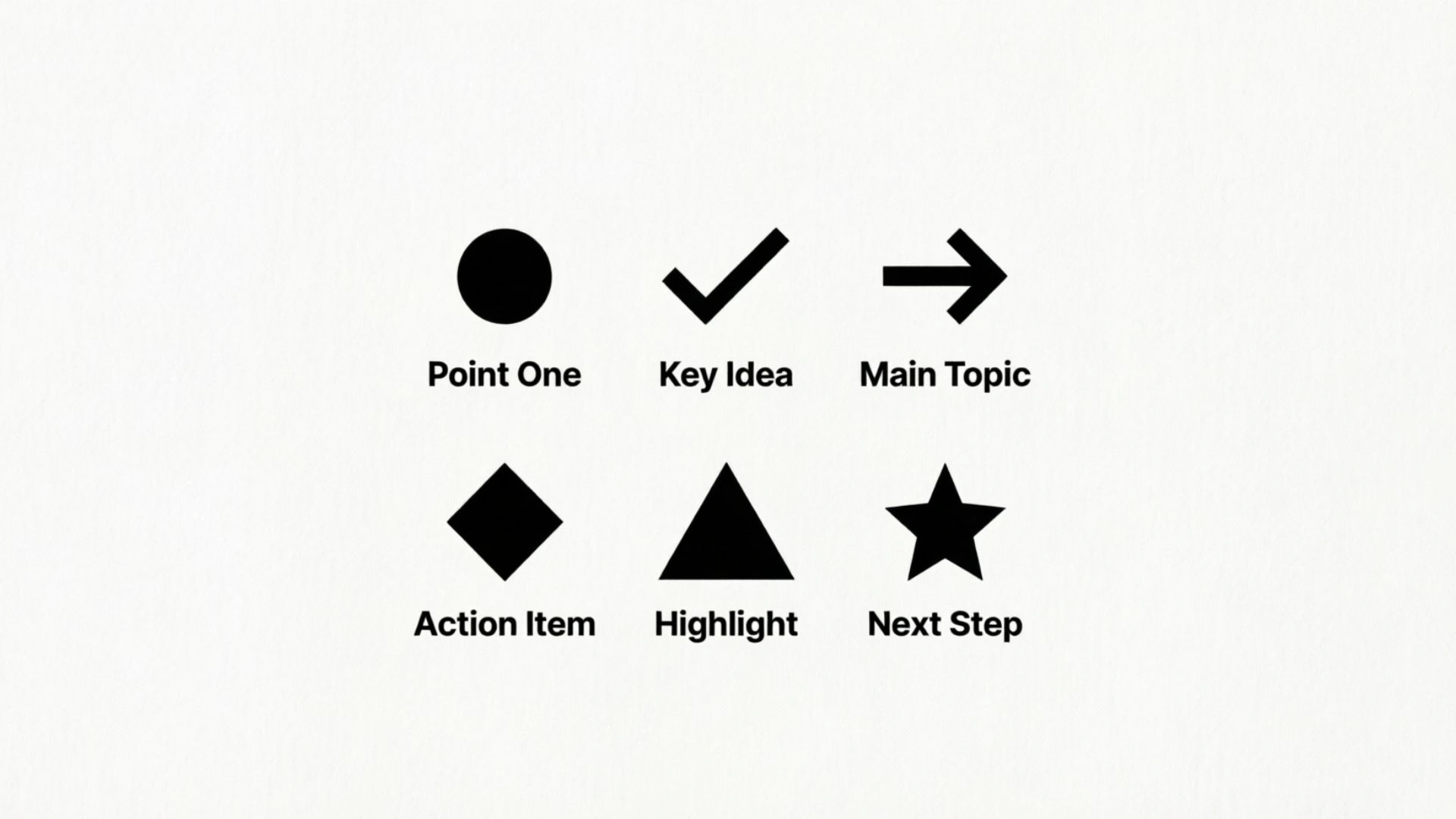
If you’ve ever searched for bullet point symbols, you’ve probably realized there are far more options than the standard black dot.
I know how much the right symbol can improve a document, presentation, website, or design, and you probably want something that looks both clear and visually appealing.
Whether you’re creating notes, designing a logo concept, decorating a planner, or adding style to social media posts, choosing the right bullet symbol makes a surprising difference.
In this guide, you’ll discover the most popular bullet point symbols, what they communicate, and when each one works best.
Quick Answer: What Symbol Represents Bullet Point Symbols?
The most common bullet point symbol is the • (Black Circle Bullet). It is universally recognized for organizing information into easy-to-read lists. However, other symbols like ◦, ▪, ►, ★, ✓, ✦, ❖, ◆, →, and ✿ are also popular depending on whether you want a professional, decorative, creative, or meaningful appearance.
What Are Bullet Point Symbols?
Bullet point symbols are small characters placed before text to organize information into readable lists. They help separate ideas, highlight important points, and improve visual structure.
Although many people think of the classic black dot first, bullet symbols come in dozens of styles. Some are simple and professional, while others are decorative or symbolic.
The meaning of a bullet point often depends on its purpose. A circle usually feels neutral and clean, while a star can draw attention to important information. Arrows suggest direction or progress, and check marks often indicate completed tasks.
Different cultures, industries, and design styles may also favor certain symbols, making context important when choosing one.
Bullet Point Symbols Comparison Table
| Symbol | Main Meaning | Best Use |
| • | Standard list item | Documents, articles |
| ◦ | Secondary point | Nested lists |
| ▪ | Bold organization | Business reports |
| ► | Direction or action | Presentations |
| ★ | Highlight or importance | Featured items |
| ✓ | Completed task | Checklists |
| ◆ | Focus or emphasis | Graphic design |
| ❖ | Decorative elegance | Invitations |
| ✦ | Creativity | Social media graphics |
| → | Movement or next step | Tutorials |
| ✿ | Beauty or decoration | Journals, planners |
| ■ | Structure | Technical documents |
Top 12 Bullet Point Symbols and Their Meanings
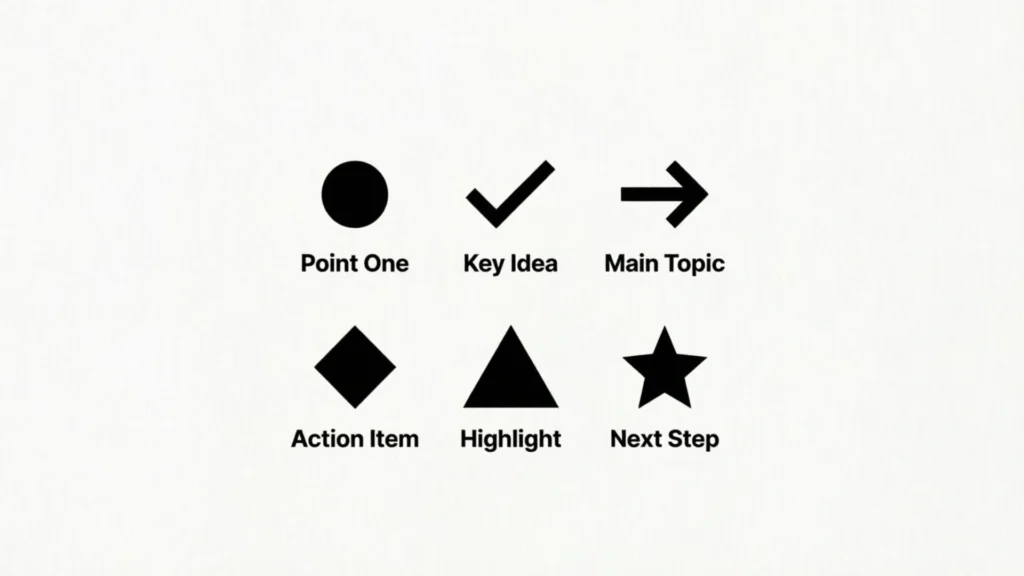
• Black Circle Bullet: The Universal Choice
The black circle bullet is the standard symbol found in nearly every word processor. Its simple appearance makes it easy to scan while keeping attention on the content rather than the decoration. It works across professional documents, websites, school assignments, and printed materials. Because it is familiar to almost everyone, readers instantly recognize it as the beginning of a new point.
Best for: Business documents, blog posts, presentations, school work, web content.
◦ White Circle Bullet: Organizing Subtopics
The white circle bullet is commonly used beneath a primary bullet to create a hierarchy. It helps readers understand that certain ideas belong under a larger topic without adding visual clutter. Designers and writers appreciate its subtle appearance because it keeps long lists organized while maintaining a clean layout.
Best for: Nested lists, manuals, outlines, reports, educational materials.
▪ Small Square Bullet: Clean and Professional
Square bullets offer a more structured appearance than circles. Their sharp edges create a modern, organized feel, making them popular in corporate documents and technical writing. They also stand out slightly more than traditional round bullets without becoming distracting.
Best for: Business reports, resumes, technical guides, corporate presentations.
► Arrow Bullet: Action and Direction
Arrow bullets naturally guide the reader’s eyes from one point to the next. They often suggest movement, progress, or a sequence of steps. Because of this, they’re commonly used in tutorials, instructions, and presentations where readers need clear direction.
Best for: Step-by-step guides, presentations, training materials, instructional content.
★ Star Bullet: Highlighting Important Information
Star bullets instantly attract attention. Rather than organizing ordinary information, they emphasize key ideas, recommendations, achievements, or featured content. Because stars naturally stand out, they work best when used sparingly.
Best for: Featured products, important notes, achievements, promotional graphics.
✓ Check Mark Bullet: Completion and Success
The check mark has become closely associated with completed tasks and positive outcomes. It’s ideal for to-do lists, productivity systems, project management, and instructional materials. Many brands also use check marks to communicate trust or verified information.
Best for: Task lists, planners, productivity apps, project tracking, business checklists.
◆ Diamond Bullet: Elegant Emphasis
Diamond-shaped bullets add sophistication while still remaining easy to read. They are often used in brochures, restaurant menus, event programs, and premium branding where designers want a polished appearance without overwhelming the page.
Best for: Menus, brochures, luxury branding, invitations, elegant layouts.
❖ Decorative Diamond: Formal Beauty
The decorative diamond is more ornamental than the standard diamond bullet. It works well when visual style matters as much as readability. Wedding stationery, certificates, and decorative print designs frequently include this symbol.
Best for: Invitations, certificates, event programs, decorative publications.
✦ Sparkle Bullet: Creativity and Inspiration
Sparkle symbols create an energetic, imaginative feeling. While they aren’t suited for formal reports, they perform well in creative projects, social media graphics, journals, and artistic branding. Their playful appearance helps content feel welcoming and expressive.
Best for: Creative branding, journals, social media posts, digital artwork.
→ Right Arrow: Progress and Navigation
The right arrow isn’t a traditional bullet, but it functions well when showing movement from one idea to another. It naturally suggests advancement, making it valuable for tutorials, timelines, workflows, and educational content.
Best for: Flowcharts, tutorials, roadmaps, presentations, user guides.
✿ Flower Bullet: Decorative Charm
Flower bullets bring warmth and personality to content. They are commonly found in planners, lifestyle blogs, craft projects, and creative journals. Although less suitable for business settings, they add charm to personal designs.
Best for: Journals, planners, scrapbooks, creative blogs, invitations.
■ Solid Square Bullet: Strong Structure
The solid square creates a bold visual anchor that helps organize complex information. Technical documents, engineering reports, and structured manuals often use this symbol because it separates content clearly while maintaining a professional appearance.
Best for: Technical writing, documentation, manuals, structured reports.
Best Bullet Point Symbols for Tattoos
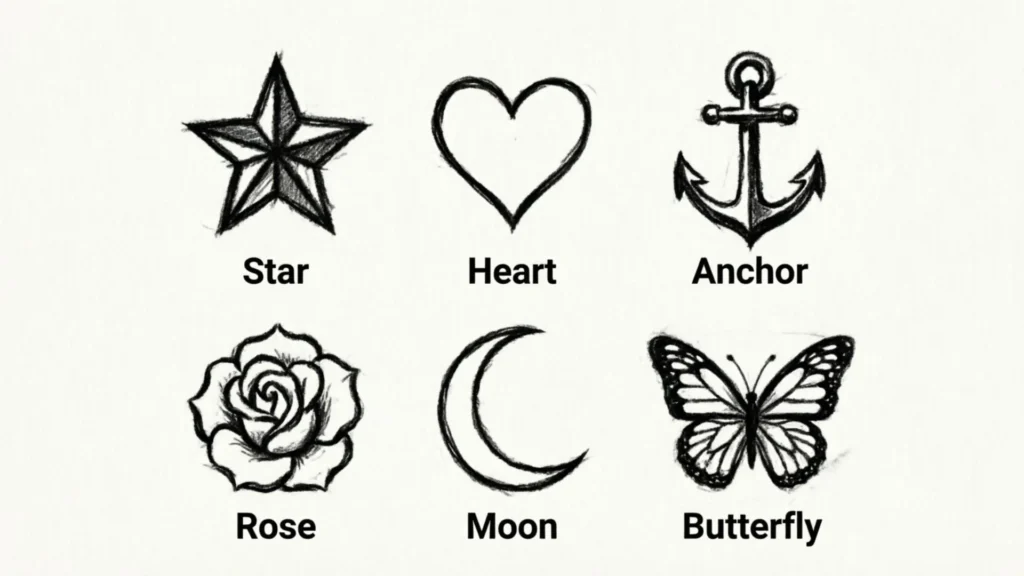
Although bullet point symbols are primarily used in writing, some minimalist designs inspire unique tattoo ideas. People often choose symbols that reflect organization, progress, achievement, or personal milestones.
Popular tattoo choices include:
- ✓ Check Mark for accomplishments
- ★ Star for personal goals
- → Arrow for moving forward
- ◆ Diamond for balance
- ✦ Sparkle for creativity
- • Minimal dot for life’s simple moments
Small tattoos work especially well with these symbols because they remain clean, timeless, and easy to recognize.
Best Bullet Point Symbols for Logos and Design
Not every bullet symbol belongs in a logo. The best designs use simple, recognizable shapes that remain clear at small sizes.
Circle bullets work well for modern brands because they feel balanced and approachable. Squares communicate reliability and structure, while arrows suggest innovation or growth. Stars highlight excellence, and diamonds create an elegant impression for premium products.
Whether you’re designing posters, websites, presentations, or social media graphics, consistency matters more than decoration. Using one style throughout your design creates a polished, professional appearance.
Best Bullet Point Symbols for Personal Organization and Creative Meaning
Bullet point symbols aren’t just decorative—they can also support everyday organization.
Many people assign personal meanings to different symbols. A check mark may represent completed goals. An arrow can remind someone to keep moving forward. A star might highlight priorities, while a flower could mark self-care or creative projects.
In planners and journals, using different symbols for different categories makes information easier to scan. Students, professionals, and creatives often develop their own systems using these visual markers.
Before Using Cultural or Sacred Symbols
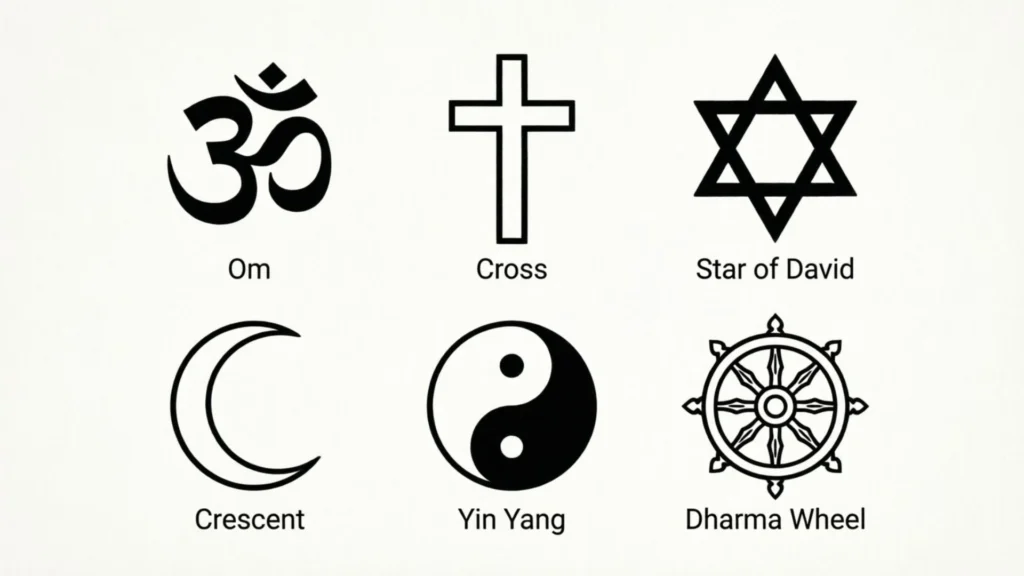
Some decorative symbols resemble religious, spiritual, or traditional cultural designs. Before using these in tattoos, logos, products, or commercial artwork, take time to understand their origins.
A design that appears decorative may hold deep meaning within a particular faith or culture. Meanings can also differ across regions and traditions. Respectful research helps avoid misunderstandings and ensures symbols are used thoughtfully rather than simply for decoration.
How to Choose the Right Symbol for Bullet Point Symbols
The best bullet symbol depends on your purpose.
If readability is your priority, choose the traditional circle bullet. For business documents, squares and circles remain the safest options. Creative projects can benefit from stars, sparkles, or flowers, while arrows work naturally in tutorials and instructional content.
Also consider where the symbol will appear. A tiny icon should remain recognizable on both desktop and mobile screens. Finally, choose a symbol that matches your personal style without making the content difficult to read.
FAQs About Bullet Point Symbols
What is the best bullet point symbol?
The black circle bullet (•) remains the most popular choice because it is universally recognized, easy to read, and works well in nearly every document, presentation, or website.
What symbol is best for highlighting important information?
A star (★) is one of the best symbols for emphasizing important information. It naturally attracts attention and helps readers quickly identify featured items or key ideas.
What is a good bullet point symbol for checklists?
The check mark (✓) works perfectly for checklists because it clearly communicates completed tasks, progress, and organization in both digital and printed formats.
Which bullet point symbol works best for presentations?
Arrow bullets (► or →) help guide the audience through information step by step. They make presentations feel organized while encouraging readers to follow the sequence.
What is the simplest bullet point symbol?
The standard black dot (•) is the simplest and most widely supported bullet symbol. It appears consistently across operating systems, websites, and document editors.
Can decorative bullet symbols be used professionally?
Yes, but moderation is important. Professional documents usually benefit from circles or squares, while decorative symbols such as stars or diamonds are better suited for marketing, invitations, or creative projects.
Which bullet symbol is best for planners or journals?
Flower (✿), sparkle (✦), and check mark (✓) symbols are popular for planners because they help categorize notes while adding personality to the page.
Do bullet point symbols have universal meanings?
Not always. While many symbols have common uses, their interpretations may vary depending on design style, culture, industry, or personal preference. Choosing symbols with your audience in mind is always the best approach.
Final Thoughts
Choosing the right bullet point symbols is about more than appearance. The right symbol improves readability, organizes ideas, and helps readers understand your message more quickly.
Whether you prefer the classic black dot, a modern square, a directional arrow, or a decorative star, selecting the right symbol for your purpose creates cleaner, more engaging content. A thoughtful choice today can make every document, presentation, or creative project easier to read and more enjoyable to explore.

Dylan Anderson is a writer who enjoys turning complex topics into simple, engaging content that readers can actually use. His work focuses on clear explanations, practical insights and storytelling that feels natural and relatable. He is also the fictional author of The Quiet Compass of Ashford and Where the Cedar Lantern Glows. When he’s away from his keyboard, Dylan enjoys hiking, reading, and discovering inspiration in everyday life. He believes great writing should be informative, easy to understand and enjoyable from beginning to end.
 Adam Sullivan