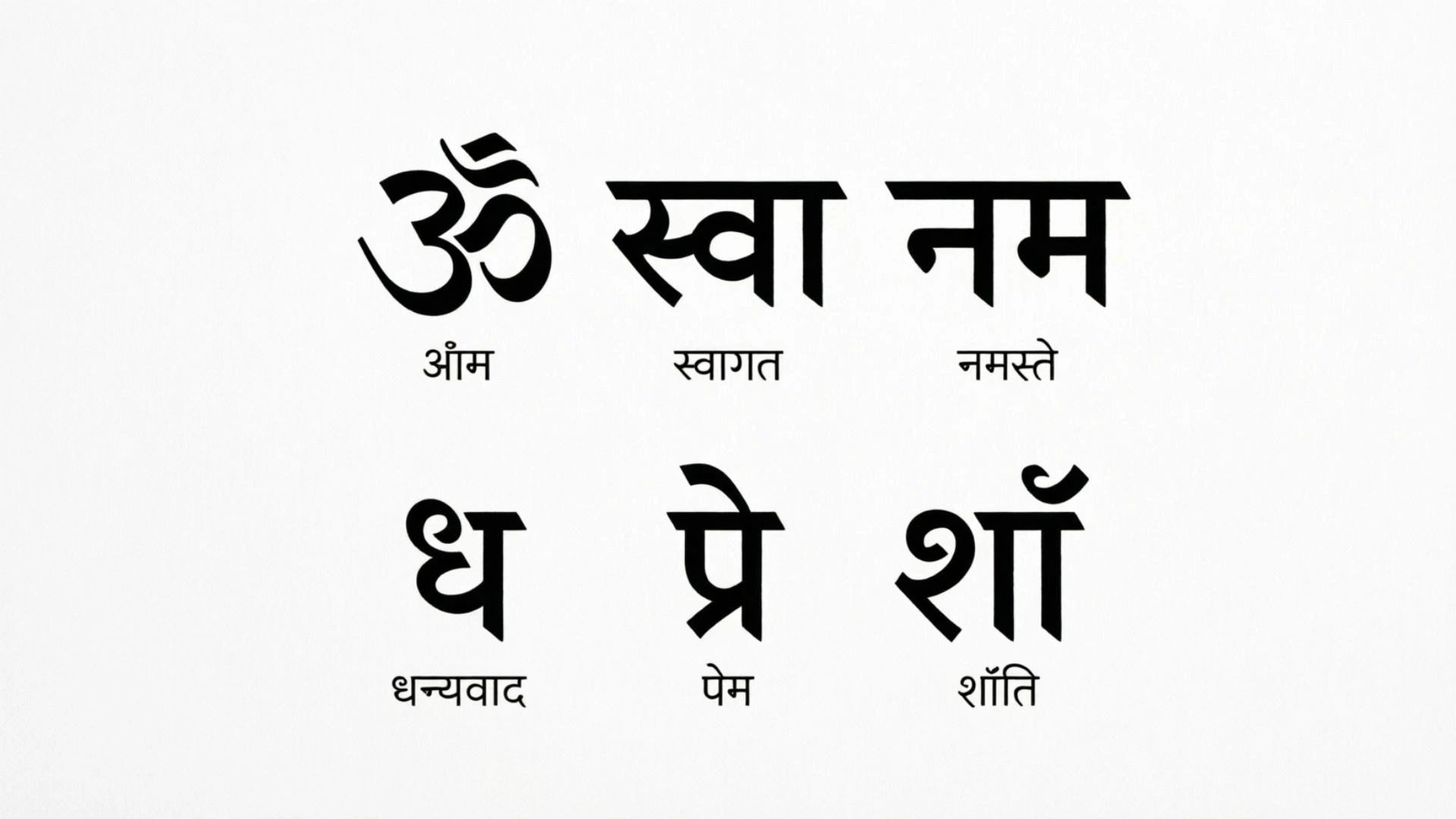
Hindi symbols are much more than beautiful characters on a page. They carry language, culture, history, and spiritual meaning that has been passed down through generations.
I often notice that many people admire these symbols for tattoos, artwork, jewelry, or logos without fully understanding what they mean. If you’re one of them, you’re in the right place.
In this guide, you’ll discover the most meaningful Hindi symbols, learn their cultural background, and find practical ideas for using them respectfully.
Whether you’re searching for inspiration or simply curious about the Devanagari script, this article will help you make informed choices.
Quick Answer: What Symbol Represents Hindi?
The Devanagari script, especially the sacred symbol ॐ (Om), is the most widely recognized Hindi symbol. While Hindi uses the Devanagari writing system, symbols such as ॐ, ॥, and traditional punctuation marks also hold cultural, literary, or spiritual significance. The best symbol depends on whether you’re looking for language, spirituality, art, or personal expression.
What Are Hindi Symbols?
Hindi symbols are the letters, vowel signs, punctuation marks, and traditional symbols used in the Devanagari script, the writing system for the Hindi language. Some symbols are purely linguistic, while others have religious, philosophical, or artistic importance.
Their meanings often depend on context. For example, क is simply a letter of the alphabet, while ॐ is a sacred symbol respected in Hinduism, Buddhism, Jainism, and other spiritual traditions. Likewise, punctuation symbols like । help structure written language rather than carry spiritual meaning.
Today, Hindi symbols appear in books, calligraphy, home décor, tattoos, logos, educational materials, jewelry, and digital design. Understanding their original purpose helps you appreciate and use them respectfully.
Hindi Symbols Comparison Table
| Symbol | Main Meaning | Best Use |
| ॐ | Sacred sound and spirituality | Tattoos, meditation, décor |
| अ | Beginning, first letter | Education, typography |
| क | Foundation of the alphabet | Learning, design |
| श्री | Prosperity and respect | Invitations, logos |
| । | Full stop (Danda) | Traditional writing |
| ॥ | End of verse | Religious texts, calligraphy |
| ऽ | Elision (Avagraha) | Sanskrit and classical writing |
| ऋ | Sacred vowel | Educational and cultural projects |
| क्ष | Combined consonant | Typography, artistic lettering |
| ज्ञ | Knowledge and wisdom | Educational art, logos |
| ं | Anusvara (nasal sound) | Correct spelling |
| ः | Visarga (breath sound) | Classical texts |
Top 12 Hindi Symbols and Their Meanings
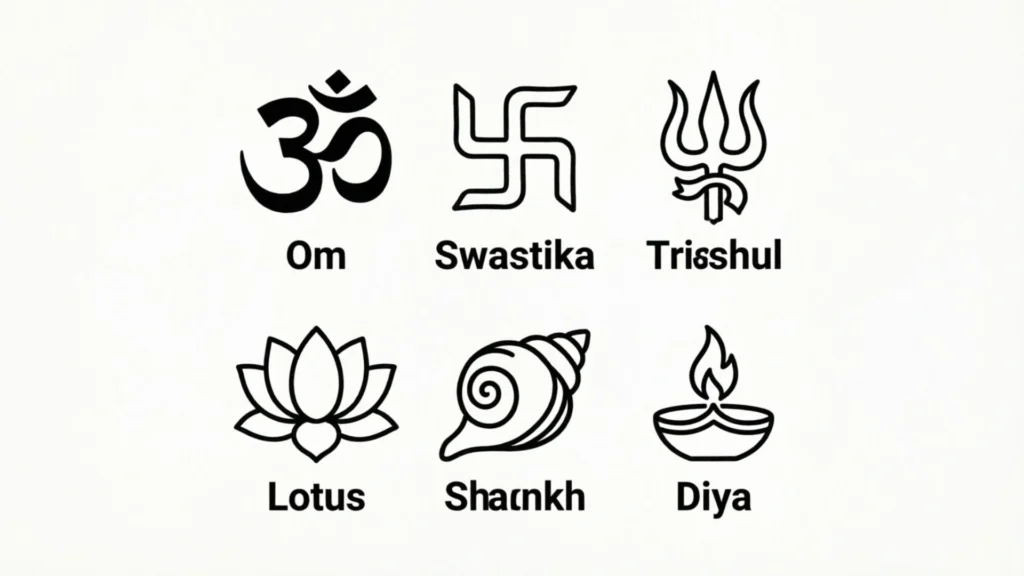
ॐ (Om): The Sacred Sound
Among all Hindi symbols, ॐ is the most recognized worldwide. Although it belongs to several Indian spiritual traditions rather than the Hindi language itself, it is commonly written in Devanagari. It symbolizes the sacred sound believed to represent the universe, inner peace, and spiritual awareness.
Today, people use Om in meditation spaces, jewelry, artwork, tattoos, and yoga branding. Because of its religious importance, it should always be displayed respectfully rather than treated as a decorative graphic.
Best for: Spiritual tattoos, meditation rooms, jewelry, meaningful artwork, yoga studios.
अ (A): The Beginning
The letter अ is the first vowel in the Hindi alphabet. Like the letter “A” in English, it marks the beginning of learning and literacy.
Many educators and artists use it to symbolize new beginnings, education, growth, and curiosity. Parents sometimes incorporate this letter into children’s educational artwork because it represents the start of language learning.
Its clean and simple appearance also makes it suitable for minimalist typography.
Best for: Educational logos, children’s rooms, typography, minimalist art, learning materials.
क (Ka): The Foundation Letter
The consonant क is one of the first letters students learn in Hindi. While it doesn’t carry a universal symbolic meaning, it often represents language learning, communication, and cultural identity.
Artists sometimes include it in modern calligraphy to celebrate Hindi literature or Indian heritage. Its balanced shape makes it visually appealing in posters and creative designs.
Best for: Cultural artwork, educational posters, language learning, calligraphy, heritage projects.
श्री (Shri): Prosperity and Respect
श्री is an honorific word commonly placed before names as a sign of respect. It is also associated with prosperity, good fortune, and blessings in Hindu tradition.
You’ll often see Shri on wedding invitations, religious books, temples, and business openings. Designers frequently include it in elegant typography because it conveys warmth and positivity.
Since it has cultural and religious significance, understanding its context is important before commercial use.
Best for: Invitations, family artwork, logos, home décor, festive designs.
। (Danda): Traditional Full Stop
The ।, known as the Danda, functions as the traditional full stop in Hindi and Sanskrit writing.
Although it has no spiritual meaning, it reflects the long literary history of the Devanagari script. Designers sometimes use it in typography inspired by classical manuscripts to create an authentic visual style.
Its simplicity reminds readers of the beauty found in traditional writing systems.
Best for: Typography, publishing, educational graphics, manuscript-inspired design.
॥ (Double Danda): Ending Sacred Verses
The ॥ symbol traditionally marks the end of verses in religious texts, poetry, and scriptures.
It signals completion and respect for structured writing rather than carrying independent symbolism. Modern calligraphers often include it in decorative pieces inspired by ancient manuscripts.
Because it appears frequently in sacred literature, it should be used thoughtfully in artistic projects.
Best for: Religious artwork, calligraphy, scripture design, cultural displays.
ऽ (Avagraha): A Classical Language Symbol
The Avagraha (ऽ) appears mainly in Sanskrit and occasionally in Hindi to indicate the omission of a vowel during pronunciation.
It is primarily a grammatical mark rather than a symbolic icon. Scholars, educators, and typographers appreciate its role in preserving accurate pronunciation and classical writing traditions.
Although uncommon in tattoos or logos, it remains important in literary studies.
Best for: Language education, publishing, typography, academic work.
ऋ (Ri): A Sacred Vowel
The vowel ऋ is unique within the Devanagari script and appears in both Hindi and Sanskrit.
Historically connected with classical vocabulary and sacred texts, it often reminds learners of India’s rich linguistic heritage. Designers occasionally feature it in educational graphics celebrating traditional languages.
Its unusual form also attracts calligraphy enthusiasts.
Best for: Educational materials, typography, cultural art, language exhibitions.
क्ष (Ksha): Unity of Sounds
क्ष is a conjunct consonant created by combining two letters. It demonstrates how the Devanagari script joins characters to express more complex sounds.
Many calligraphers admire its elegant structure, making it popular in artistic lettering. While it does not have a universal symbolic meaning, it beautifully showcases the flexibility of Hindi writing.
Best for: Calligraphy, graphic design, typography, educational displays.
ज्ञ (Gya): Associated with Knowledge
The conjunct ज्ञ appears in words connected to learning and wisdom, such as ज्ञान (Gyan), meaning knowledge.
Because of this association, it is often viewed as a reminder of education and intellectual growth. Teachers, students, and educational institutions sometimes feature it in creative projects celebrating learning.
Best for: Educational logos, libraries, academic artwork, calligraphy.
ं (Anusvara): Nasal Sound Marker
The ं (Anusvara) changes pronunciation by adding a nasal sound to a word.
Although it isn’t symbolic in a spiritual sense, it demonstrates the precision of Hindi pronunciation. Linguists and language learners appreciate its importance in correct reading and writing.
Its tiny appearance also highlights how small marks can significantly change meaning.
Best for: Language education, textbooks, typography, pronunciation guides.
ः (Visarga): Breath Sound
The ः (Visarga) represents a breath-like sound used mainly in Sanskrit and occasionally in Hindi.
Its use preserves traditional pronunciation in classical texts and prayers. While it rarely appears outside educational or religious settings, it remains an essential part of the Devanagari writing system.
Best for: Classical texts, educational resources, religious manuscripts, typography.
Best Hindi Symbols for Tattoos
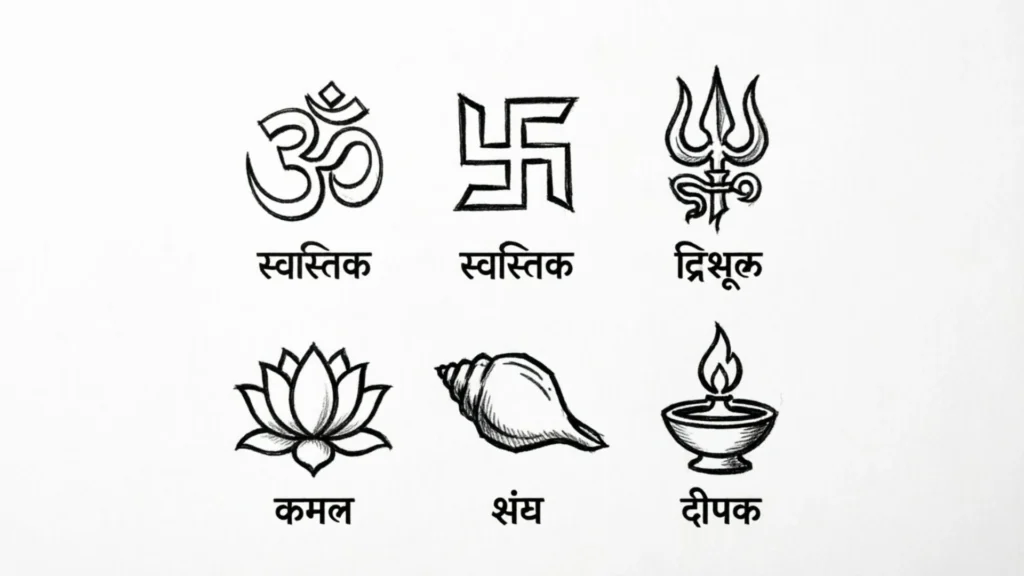
Hindi symbols can create beautiful tattoos when chosen with care and understanding. Instead of selecting a design simply because it looks attractive, take time to learn its meaning and cultural background.
Some symbols work especially well because they are visually balanced and carry personal significance.
Popular tattoo choices include:
- ॐ for spirituality and inner peace
- श्री for blessings and prosperity
- अ for new beginnings
- ज्ञ for knowledge and learning
- Personalized Hindi names written in Devanagari
Simple black-ink designs often remain the clearest and most timeless.
Best Hindi Symbols for Logos and Design
For logos, posters, branding, or social media graphics, clarity matters more than complexity.
Symbols like अ, श्री, or carefully designed Devanagari lettering work well because they are recognizable and visually balanced. Businesses connected with education, culture, literature, yoga, or Indian heritage often incorporate these elements thoughtfully.
Always ensure the typography is accurate and avoid altering sacred symbols in ways that could appear disrespectful.
Best Hindi Symbols for Family, Spiritual, or Personal Meaning
Different Hindi symbols can reflect different personal values.
For family, many people choose beautifully written family names in Devanagari or the respectful word श्री.
For spiritual meaning, ॐ remains one of the most meaningful choices because of its long-standing place in meditation and religious practice.
Before Using Cultural or Sacred Symbols
Some Hindi symbols have deep religious, cultural, or spiritual importance. Before using them in tattoos, logos, products, or commercial artwork, take time to understand where they come from.
Learning its background shows respect for the traditions that preserved it over many centuries.
Meanings may also vary between communities, religions, and regions, so avoid assuming every interpretation is universal.
How to Choose the Right Symbol for Hindi
Choosing the right Hindi symbol depends on your purpose.
If you’re getting a tattoo, select something with lasting personal meaning rather than following a trend.
For branding or logos, prioritize simple, readable symbols that communicate your message clearly.
If you’re celebrating family heritage, consider names or meaningful words written correctly in Devanagari instead of isolated characters.
Most importantly, understand the cultural significance before using any sacred symbol in permanent or commercial designs.
FAQs About Hindi Symbols
What is the best symbol for Hindi?
The Devanagari script itself represents Hindi, while ॐ is the most widely recognized symbol associated with Indian spirituality and often written in Devanagari. The best choice depends on whether you’re focusing on language, culture, or religion.
What is a good Hindi symbol tattoo?
Popular tattoo choices include ॐ, श्री, meaningful Hindi words, or a person’s name written correctly in Devanagari. Choose a design whose meaning you understand and respect.
Which Hindi symbol represents knowledge?
The conjunct ज्ञ is closely associated with the Hindi word ज्ञान (knowledge). Because of this connection, it is often chosen for educational artwork and meaningful personal designs.
Which Hindi symbol represents spirituality?
The symbol ॐ is the best-known spiritual symbol written in Devanagari. It is respected across several Indian religions and is commonly associated with meditation, prayer, and inner peace.
Can Hindi symbols be used in logos?
Yes. Many brands use Devanagari lettering or culturally meaningful words. However, sacred symbols should be used carefully, especially in commercial branding, to avoid causing offense.
Are all Hindi symbols religious?
No. Most Hindi symbols are simply letters, vowel signs, or punctuation marks used for writing. Only some, such as ॐ or श्री, have broader spiritual or cultural significance.
What is the simplest Hindi symbol?
The letter अ is one of the simplest and most recognizable Hindi symbols. It symbolizes the beginning of the alphabet and works well in minimalist designs.
What colors work well with Hindi-inspired designs?
Traditional colors such as saffron, deep red, gold, white, and black are commonly used with Hindi calligraphy. The best color depends on your design goals and whether the project is artistic, educational, or spiritual.
Final Thoughts
Hindi symbols combine language, history, culture, and artistic beauty in a unique way. Whether you’re exploring them for education, tattoos, logos, or personal inspiration, understanding their original meaning makes every choice more meaningful.
By respecting their cultural background and choosing symbols thoughtfully, you can appreciate the richness of the Devanagari script while creating designs that are both beautiful and appropriate.

Adam Sullivan is a dedicated writer who enjoys transforming everyday topics into engaging and informative content. His writing focuses on making complex ideas simple, practical and enjoyable for readers of all backgrounds. Adam is also the fictional author of The Lantern Beyond Autumn Hills and Where the Morning Horizon Waits. Outside of writing, he enjoys photography, traveling and discovering inspiration through new experiences. He believes great content should be both helpful and easy to connect with.
 Dylan Anderson