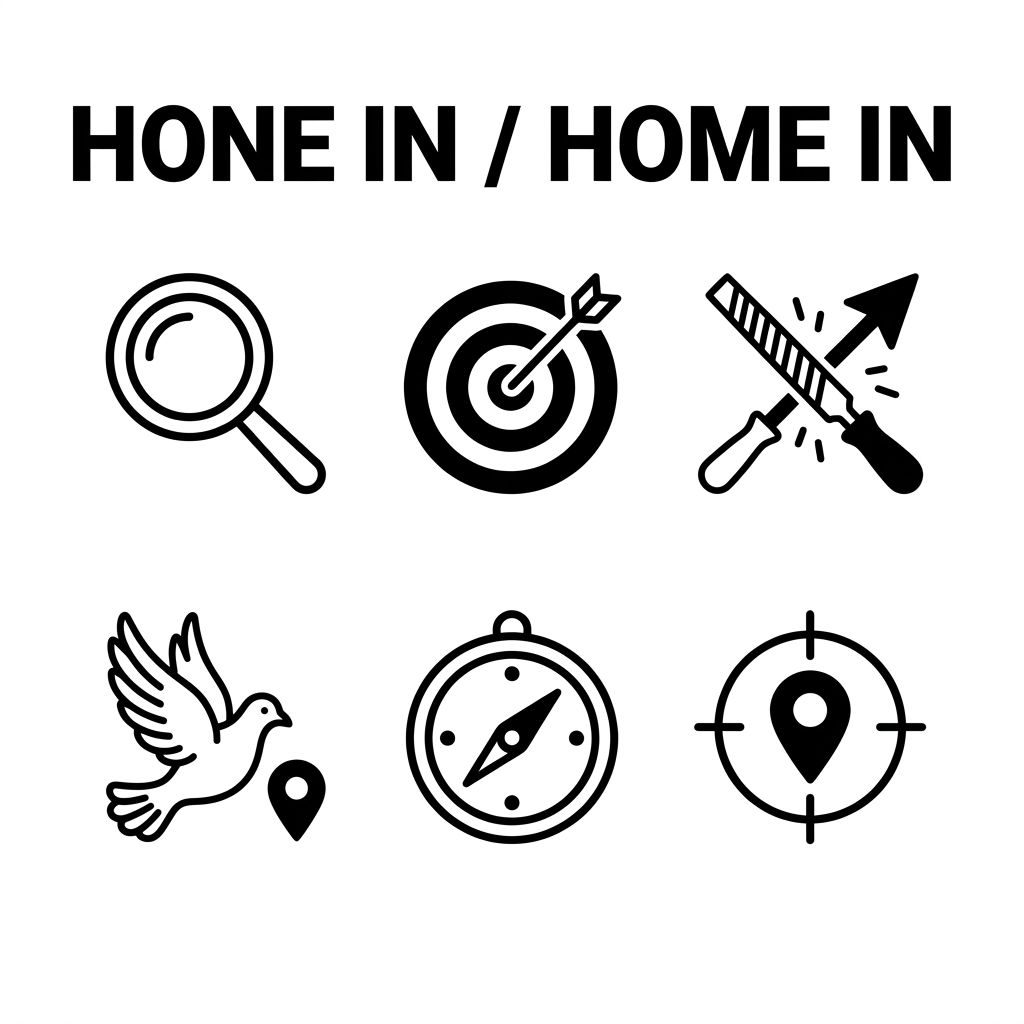
The short answer is that both “hone in” and “home in” are used today, but they do not have the same history. “Home in” is the original and traditionally correct phrase. “Hone in” became popular later and is now accepted by many dictionaries as a common variant, especially in informal English.
Many people get confused because the two phrases sound similar and are often used in the same situations.
In this article, you’ll learn the difference between hone in and home in, when to use each one, common mistakes to avoid, and an easy trick to remember the correct phrase.
Quick Answer
Home in is the original and traditionally preferred phrase. It means to move toward a target or focus on something.
Hone in is a newer and widely used variant. Many modern dictionaries accept it, especially in everyday English, but some editors and teachers still prefer home in in formal writing.
Examples:
- The pilot homed in on the airport.
- Let’s home in on the main issue.
Hone In vs Home In: Main Difference
| Word/Phrase | Meaning | Correct? | Best Used For | Example |
| Home in | To move toward or focus closely on a target | Yes | Formal and informal writing | We need to home in on the problem. |
| Hone in | To focus more closely; a modern variant influenced by “hone” | Accepted by many dictionaries | Everyday conversation and informal writing | She honed in on the key details. |
What Does Hone In Mean?
Hone means to sharpen or improve a skill or tool. Because of this meaning, many people began using hone in to mean focus closely on something.
Although some language experts still prefer home in, hone in is now widely accepted in modern English.
Examples
- The team honed in on the customer’s main concern.
- We quickly honed in on the cause of the problem.
- She honed in on the most important facts.
- The reporter honed in on the key question.
- They honed in on the best solution.
What Does Home In Mean?
Home in originally comes from navigation. It means to move directly toward a target or to focus attention on something important.
This is the traditional and original phrase.
Examples
- The missile homed in on its target.
- Let’s home in on the real issue.
- Detectives homed in on the main suspect.
- The discussion homed in on the budget.
- She homed in on the answer very quickly.
How to Use Hone In or Home In
If you want the safest choice, especially in school or professional writing, use home in.
Use hone in if your audience accepts modern usage or if you’re writing informally.
Correct
- We need to home in on the main cause.
- The investigator homed in on the evidence.
- The discussion honed in on customer feedback.
Avoid
If you’re writing for an exam, academic paper, or a style guide that prefers traditional usage, avoid replacing home in with hone in unless you know it is acceptable.
Where to Use Hone In or Home In
School Writing
Use home in because many teachers and textbooks prefer the traditional phrase.
Formal Writing
Choose home in for reports, business documents, and academic writing.
Emails
Either phrase may be understood, but home in is the safer choice in professional emails.
Everyday Conversation
Both phrases are commonly heard in conversation.
Messages
Both are acceptable in casual messages, although home in remains the traditional form.
Professional Communication
When writing to clients, managers, or colleagues, home in is usually the better option.
American English
Both home in and hone in are common. Many dictionaries recognize hone in, but home in remains the original expression.
British English
British English generally prefers home in, especially in formal writing.
Canada, Australia, India, Pakistan, and New Zealand
Writers in these regions often favor home in in formal contexts, while hone in may appear in everyday speech and informal writing.
Why People Get Confused
People confuse these phrases because they sound almost the same.
Another reason is that hone already means to sharpen or improve, so many people naturally think hone in means to sharpen your focus.
Over time, this newer expression became so common that many dictionaries now list it as an accepted variant.
Common Mistakes to Avoid
Wrong:
We need to hone in on the issue for our formal research paper.
Correct:
We need to home in on the issue for our formal research paper.
Explanation: In formal writing, home in is usually the preferred choice.
Wrong:
The missile honed in on the target.
Correct:
The missile homed in on the target.
Explanation: The original navigation meaning uses home in.
Wrong:
I want to hone the target.
Correct:
I want to home in on the target.
Explanation: Hone alone means to sharpen, not to move toward a target.
Real-Life Examples
Meeting
Let’s home in on the biggest challenge before making a decision.
School
The teacher asked students to home in on the main idea of the passage.
Travel
The rescue helicopter homed in on the emergency signal.
Work
Our team homed in on the customer’s biggest concern.
Message
Let’s home in on the important details first.
Conversation
She quickly honed in on what everyone was trying to say.
Booking
The support agent homed in on the booking error and fixed it immediately.
Social Situation
He honed in on the funniest part of the story.
Easy Trick to Remember
Think of home as finding your way home to a target.
If you’re unsure, choose home in. It’s the original phrase and the safest option in formal writing.
Mini Quiz
1. Which phrase is the traditional expression?
Answer: Home in
2. Which phrase is generally safer for formal writing?
Answer: Home in
3. Which phrase became popular later?
Answer: Hone in
4. Fill in the blank: The detective ______ on the main suspect.
Answer: homed in
5. True or False: Many modern dictionaries accept hone in.
Answer: True
6. Which phrase originally came from navigation?
Answer: Home in
Related Confusing Words
- affect or effect
- its or it’s
- your or you’re
- there or their
- farther or further
- insure or ensure
- compliment or complement
- imply or infer
FAQs About Hone In or Home In
Is hone in correct?
Yes. Many modern dictionaries accept hone in as a common variant, especially in informal English.
Is home in correct?
Yes. Home in is the original and traditionally preferred phrase.
What is the difference between hone in and home in?
Home in is the original expression. Hone in developed later and is now widely accepted by many dictionaries.
Which one should I use?
For formal writing, use home in. In casual conversation, either phrase is usually understood.
Is hone in formal or informal?
It is more common in informal writing and speech. Home in is generally preferred in formal contexts.
Conclusion
Home in is the original and traditionally preferred phrase. It is the safest choice for school, business, and formal writing. Hone in has become widely accepted in modern English and is common in everyday conversation. If you’re ever unsure, choose home in for the clearest and most widely accepted usage.

Adam Sullivan is a dedicated writer who enjoys transforming everyday topics into engaging and informative content. His writing focuses on making complex ideas simple, practical and enjoyable for readers of all backgrounds. Adam is also the fictional author of The Lantern Beyond Autumn Hills and Where the Morning Horizon Waits. Outside of writing, he enjoys photography, traveling and discovering inspiration through new experiences. He believes great content should be both helpful and easy to connect with.
 Dylan Anderson