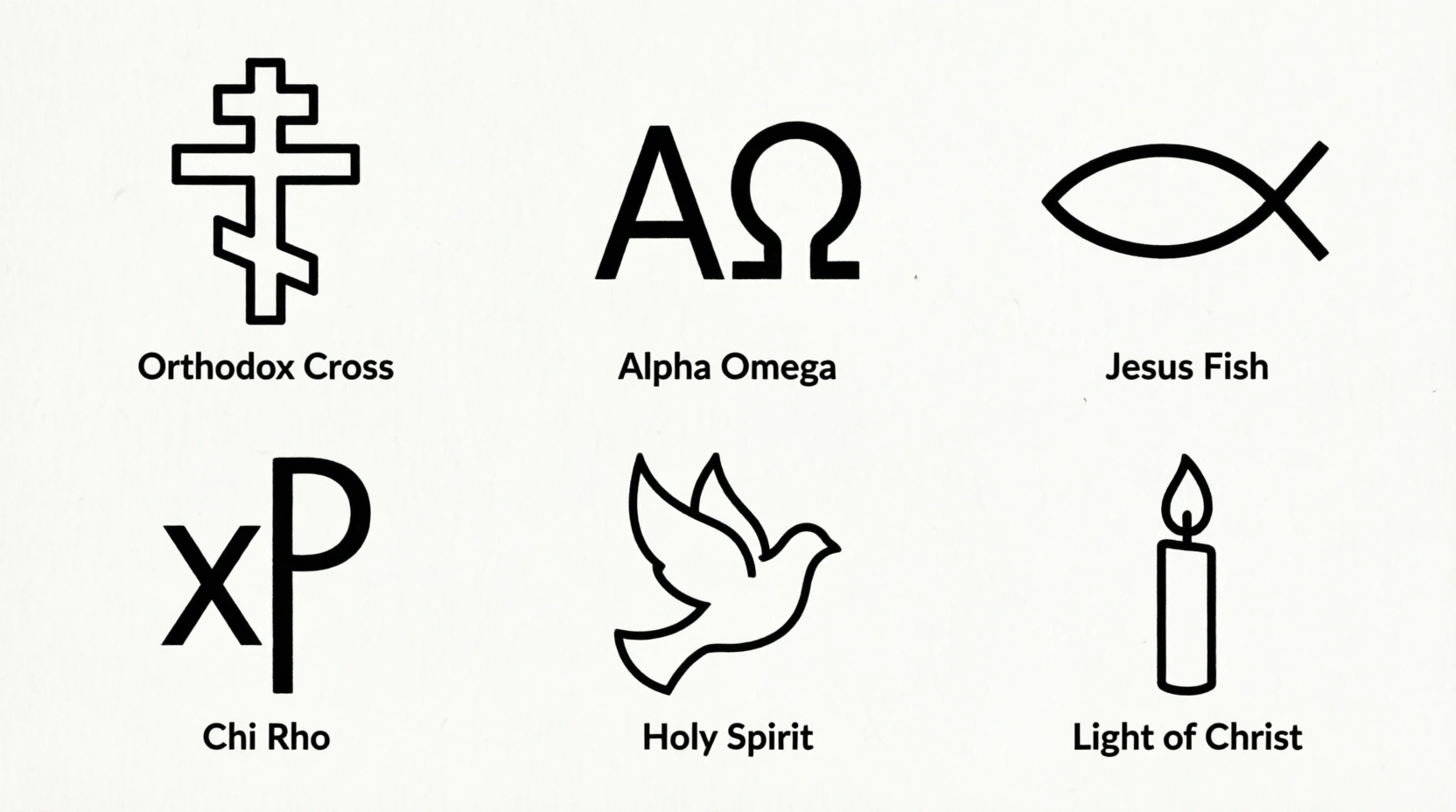
I have always found symbols fascinating because a simple image can hold centuries of meaning, faith, and personal stories.
When you explore orthodox christian symbols, you discover more than artwork you discover visual expressions of belief, tradition, and devotion.
Whether you are looking for a meaningful tattoo, a spiritual reminder, family artwork, or design inspiration, understanding the meaning behind each symbol matters.
n this guide, I will help you explore the most important symbols and how people respectfully use them today.
What Symbol Represents Orthodox Christianity?
The most recognized symbol of Orthodox Christianity is the Orthodox cross, especially the three-bar cross used in many Eastern Orthodox traditions. It represents the crucifixion of Jesus Christ and the central role of faith, sacrifice, and salvation in Orthodox belief. Other important symbols include icons of Christ, the Virgin Mary, the dove, the fish, and the Alpha and Omega symbols.
What Are Orthodox Christian Symbols?
Orthodox christian symbols are visual signs, images, and designs connected to the beliefs, worship, history, and spiritual traditions of Eastern Orthodox Christianity. These symbols are used in churches, icons, jewelry, artwork, personal devotion, and cultural expressions.
Unlike simple decorative images, many Orthodox symbols carry deep religious meaning. Their interpretation can depend on historical tradition, regional customs, personal beliefs, and the way they are used.
For example, an Orthodox cross worn as a necklace may represent personal faith and devotion, while the same symbol displayed in a church setting may have a more formal religious purpose. Understanding the background of a symbol helps people use it with respect.
Orthodox Christian Symbols Comparison Table
| Symbol | Main Meaning | Best Use |
| Orthodox Cross | Faith, sacrifice, salvation | Jewelry, tattoos, spiritual art |
| Christ Pantocrator Icon | Jesus as divine ruler and teacher | Home icons, church art |
| Virgin Mary Icon (Theotokos) | Motherhood, devotion, compassion | Family spaces, prayer areas |
| Chi-Rho Symbol | Christ and Christian identity | Historical designs, artwork |
| Alpha and Omega | Beginning and end, eternal nature of God | Religious designs, tattoos |
| Ichthys (Christian Fish) | Faith and Christian identity | Small tattoos, jewelry |
| Dove | Peace and the Holy Spirit | Art, personal reminders |
| Lamb of God | Christ’s sacrifice and humility | Religious artwork |
| Orthodox Eagle | Cultural and historical Christian identity | Decorative designs |
| Halo | Holiness and spiritual light | Icons and religious art |
| Grapevine | Spiritual growth and connection to Christ | Church decoration, artwork |
| Angel Symbol | Guidance and heavenly protection | Jewelry, family art |
Top Orthodox Christian Symbols and Their Meanings
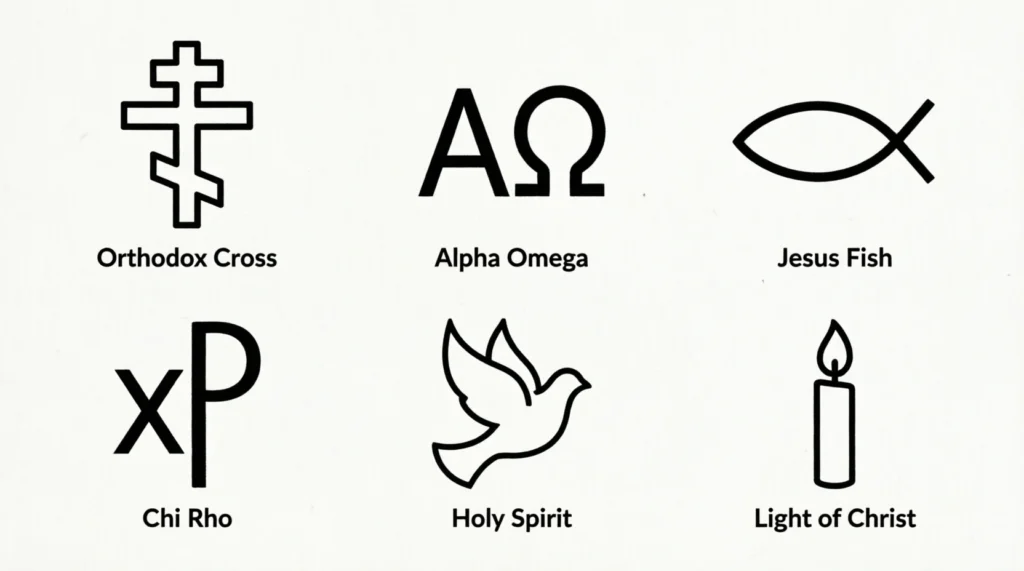
Orthodox Cross: The Central Symbol of Faith
The Orthodox cross is one of the most recognizable orthodox christian symbols. It often includes three horizontal bars, with the top bar representing the inscription placed above Jesus during the crucifixion and the lower bar symbolizing the footrest. Different traditions may explain details of the design in different ways.
For Orthodox Christians, the cross is a reminder of Christ’s sacrifice, resurrection, and the hope found through faith. It is commonly seen in churches, worn as jewelry, and used in personal prayer.
Today, many people choose the Orthodox cross for tattoos or artwork because of its simple shape and deep spiritual meaning. However, those using it outside a religious setting should understand its importance to believers.
Best for: religious tattoos, necklaces, family heirlooms, prayer spaces, spiritual artwork
Christ Pantocrator Icon: Christ as Teacher and Ruler
The Christ Pantocrator icon is one of the most important images in Orthodox Christian art. The word “Pantocrator” refers to Christ as the Almighty or ruler of all. In many icons, Christ is shown holding a Gospel book and offering a blessing.
This image is not meant to be a realistic portrait. Orthodox icons are created as windows into spiritual reflection, helping worshippers focus on prayer and contemplation.
People often display Christ Pantocrator icons in homes, churches, and personal prayer areas. The image can also inspire meaningful designs for those interested in religious history and sacred art.
Best for: home icons, spiritual rooms, religious collections, Christian artwork, study spaces
Virgin Mary (Theotokos): A Symbol of Devotion and Compassion
The Virgin Mary, known in Orthodox tradition as the Theotokos (“God-bearer”), is one of the most honored figures in Orthodox Christianity. Icons of Mary often show her with the child Jesus, emphasizing her role as the mother of Christ.
Different icons of Mary highlight different aspects of devotion, including compassion, guidance, and humility. These images are widely used in Orthodox churches and homes.
For many families, a Virgin Mary icon is a meaningful symbol passed through generations. It may be displayed as part of a prayer corner or kept as a personal reminder of faith.
Best for: family spaces, religious gifts, home decoration, prayer areas, heritage artwork
Chi-Rho Symbol: An Ancient Mark of Christ
The Chi-Rho symbol combines the first two Greek letters of the word “Christ” (Chi and Rho). It became an early Christian symbol representing Jesus Christ and Christian identity.
Although it is associated with early Christianity broadly, it remains meaningful for many Christians interested in historical religious symbols. Its compact design makes it suitable for artwork, jewelry, and decorative pieces.
The Chi-Rho is often chosen by people who appreciate both faith and historical symbolism. It offers a connection to early Christian traditions without relying on complex imagery.
Best for: historical designs, jewelry, minimalist tattoos, religious artwork, educational displays
Alpha and Omega: The Eternal Nature of God
Alpha and Omega are the first and last letters of the Greek alphabet. In Christian tradition, they represent the idea that God is the beginning and the end of all things.
This symbol is often used in Orthodox and other Christian artwork to express eternity, completeness, and divine presence. Its simple letter design makes it popular for smaller tattoos and personal jewelry.
People often choose Alpha and Omega because the meaning is easy to understand while still carrying deep spiritual significance.
Best for: small tattoos, necklaces, minimalist designs, personal reminders, religious gifts
Ichthys (Christian Fish): A Simple Sign of Christian Identity
The Ichthys, or Christian fish symbol, has been used by Christians as a sign of faith and identity. The Greek letters within the symbol form an early Christian phrase connected to Jesus Christ.
Today, the fish symbol is widely recognized around the world. Its simple shape makes it popular for subtle jewelry, car decals, artwork, and tattoos.
While it is not exclusive to Orthodox Christianity, many Orthodox Christians may use it as part of broader Christian symbolism.
Best for: simple tattoos, jewelry, personal symbols, family designs, Christian accessories
Dove: A Symbol of Peace and the Holy Spirit
The dove is a widely recognized Christian symbol connected with peace and the Holy Spirit. In Christian tradition, the dove appears in accounts of Jesus’ baptism, making it an important spiritual image.
Because of its gentle appearance, the dove is often used in artwork, memorial pieces, and personal designs. It can express faith, hope, peace, and spiritual reflection.
When used in Orthodox-inspired artwork, the dove should be understood within its religious context rather than only as a general symbol of peace.
Best for: memorial art, tattoos, family designs, spiritual reminders, peaceful home decor
Lamb of God: A Symbol of Sacrifice and Humility
The lamb is a significant Christian image connected with Jesus Christ and themes of sacrifice, humility, and redemption. In religious art, the Lamb of God represents Christ’s role in Christian salvation.
This symbol appears in many forms of Christian artwork, including icons and decorative designs. Its meaning is especially important for people exploring themes of faith, forgiveness, and devotion.
The lamb can be a thoughtful choice for religious artwork because it carries a message beyond simple decoration.
Best for: religious art, church designs, symbolic tattoos, faith-based gifts, personal reflection
Halo: A Sign of Holiness in Iconography
The halo is commonly seen in Orthodox icons around Christ, Mary, saints, and angels. It represents holiness and spiritual glory rather than simply being a decorative circle.
In Orthodox iconography, the halo follows artistic traditions developed over many centuries. It helps viewers recognize the spiritual importance of the person shown in the icon.
People may use halo imagery in religious artwork, but it is important to recognize its sacred connection.
Best for: icon-inspired art, religious decoration, historical designs, spiritual artwork
Grapevine: A Symbol of Spiritual Growth
The grapevine is connected with Christian teachings about life, growth, and connection with Christ. It appears in Christian art as a reminder of spiritual nourishment and faith.
In Orthodox churches, plant imagery such as vines can appear in decorative designs and religious artwork. The symbol can also appeal to people who appreciate nature-based spiritual imagery.
Its flowing design makes it suitable for decorative patterns and meaningful artwork.
Best for: church decoration, artistic designs, family artwork, symbolic patterns, spiritual spaces
Angel Symbol: Guidance and Heavenly Connection
Angels appear frequently in Orthodox Christian art and iconography. They are often associated with God’s messages, worship, and spiritual service.
Angel imagery can be deeply personal. Some people choose angel designs to remember loved ones, express faith, or create meaningful home decorations.
Because angels have different meanings across cultures and religions, understanding the specific tradition behind an image is important.
Best for: family art, memorial pieces, jewelry, tattoos, spiritual decoration
Best Orthodox Christian Symbols for Tattoos
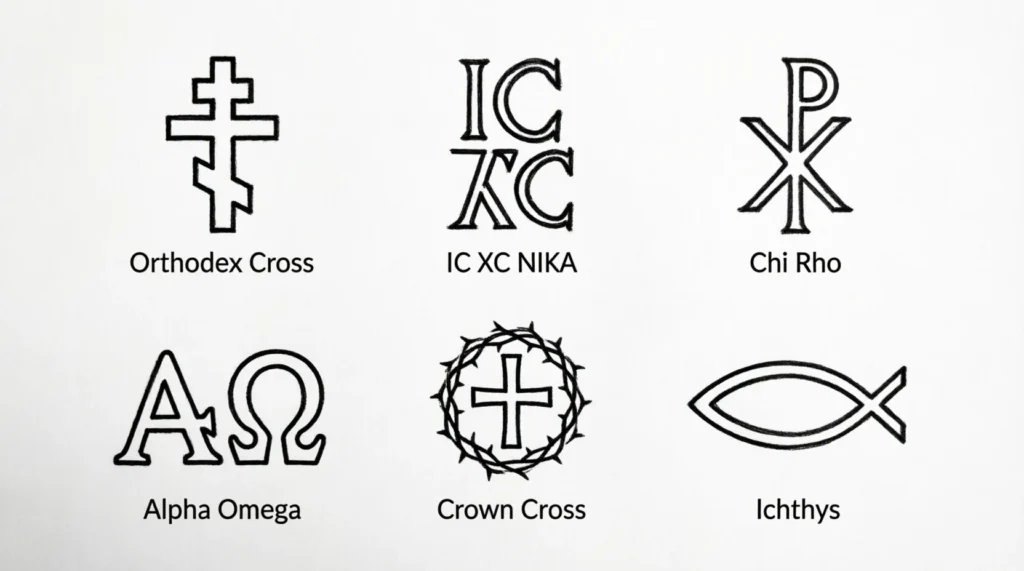
Choosing a religious tattoo requires more thought than choosing a design simply because it looks attractive. A meaningful tattoo should reflect personal belief, family heritage, or spiritual values.
The best choices are often symbols with clear meanings and simple shapes. Small tattoos can work well with designs like the Orthodox cross, Alpha and Omega, or the Christian fish.
Popular tattoo choices include:
- Orthodox cross for faith and devotion
- Alpha and Omega for eternity
- Dove for peace and spiritual reflection
- Chi-Rho for Christian history
- Angel imagery for guidance and remembrance
Before getting a sacred symbol tattooed, take time to understand its religious meaning and how members of the tradition view it.
Best Orthodox Christian Symbols for Logos and Design
Religious symbols can create meaningful visual designs, but they should be used carefully. A good logo or graphic symbol needs to be clear, balanced, and easy to recognize.
The Orthodox cross, Chi-Rho, Alpha and Omega, and dove symbols can work well in creative projects because they have simple shapes. However, businesses and organizations should consider whether using a sacred symbol for branding is respectful and appropriate.
For posters, social media graphics, or personal projects, focus on understanding the symbol rather than using it only for appearance.
Best Orthodox Christian Symbols for Family, Spiritual, or Personal Meaning
Many people use Orthodox symbols as reminders of family heritage, faith, and personal values. A cross passed through generations, a home icon, or a meaningful piece of jewelry can become part of a family story.
For spiritual use, symbols often serve as reminders of prayer, gratitude, humility, and hope. For family artwork, icons and religious designs may represent shared traditions and memories.
The best symbol is the one that connects with your personal story while respecting its original meaning.
Before Using Cultural or Sacred Symbols
Some symbols have deep religious and cultural roots. Before using an Orthodox Christian symbol in a tattoo, logo, product, or artwork, learn about its background.
A symbol that looks beautiful may have sacred meaning to a community. Meanings can also vary between traditions and regions. Respectful use begins with understanding.
Avoid using religious symbols only as decoration without considering their significance.
How to Choose the Right Symbol for Orthodox Christianity
Choosing the right symbol depends on your purpose. Ask yourself:
- Does this symbol have personal meaning?
- Do I understand its religious background?
- Will it work for a tattoo, logo, or artwork?
- Is the design simple enough for my intended use?
- Does it represent my values respectfully?
A meaningful symbol is not always the most complex one. Often, a simple design with a clear purpose creates the strongest personal connection.
FAQs About Orthodox Christian Symbols
What is the best symbol for Orthodox Christianity?
The Orthodox cross is generally considered the most recognized symbol of Orthodox Christianity. It represents central beliefs about Christ’s crucifixion and resurrection. Other important symbols include icons of Christ, the Virgin Mary, and Alpha and Omega.
What symbol represents faith in Orthodox Christianity?
The Orthodox cross is one of the clearest symbols of faith. Icons, especially images of Christ and the saints, are also important expressions of Orthodox belief and devotion.
What is a good Orthodox Christian symbol tattoo?
Good choices include the Orthodox cross, Alpha and Omega, Chi-Rho, and dove symbols. The best tattoo depends on your personal connection, design preference, and respect for the symbol’s religious meaning.
What symbol represents family in Orthodox Christian tradition?
Family meaning is often connected with icons, inherited crosses, and religious artwork displayed in homes. These symbols can represent shared faith, heritage, and traditions passed between generations.
What is a simple Orthodox Christian symbol?
The Orthodox cross and Alpha and Omega are among the simplest designs. They are visually clear while carrying important religious meanings.
What animal represents Orthodox Christian beliefs?
Animals such as the dove and lamb have important Christian meanings. The dove is connected with the Holy Spirit and peace, while the lamb is associated with Christ and sacrifice.
Can I use Orthodox symbols in a logo?
Yes, but they should be used respectfully. Consider the sacred meaning of the symbol and whether commercial use fits the purpose of the design.
Final Thoughts
Orthodox christian symbols are more than decorative images. They carry stories of faith, tradition, family, and personal devotion. Whether you are choosing a tattoo, creating artwork, or learning about religious history, understanding the meaning behind each symbol helps you make a thoughtful choice. The most meaningful symbol is the one you connect with while respecting the tradition it comes from.

Adam Sullivan is a dedicated writer who enjoys transforming everyday topics into engaging and informative content. His writing focuses on making complex ideas simple, practical and enjoyable for readers of all backgrounds. Adam is also the fictional author of The Lantern Beyond Autumn Hills and Where the Morning Horizon Waits. Outside of writing, he enjoys photography, traveling and discovering inspiration through new experiences. He believes great content should be both helpful and easy to connect with.
 Dylan Anderson