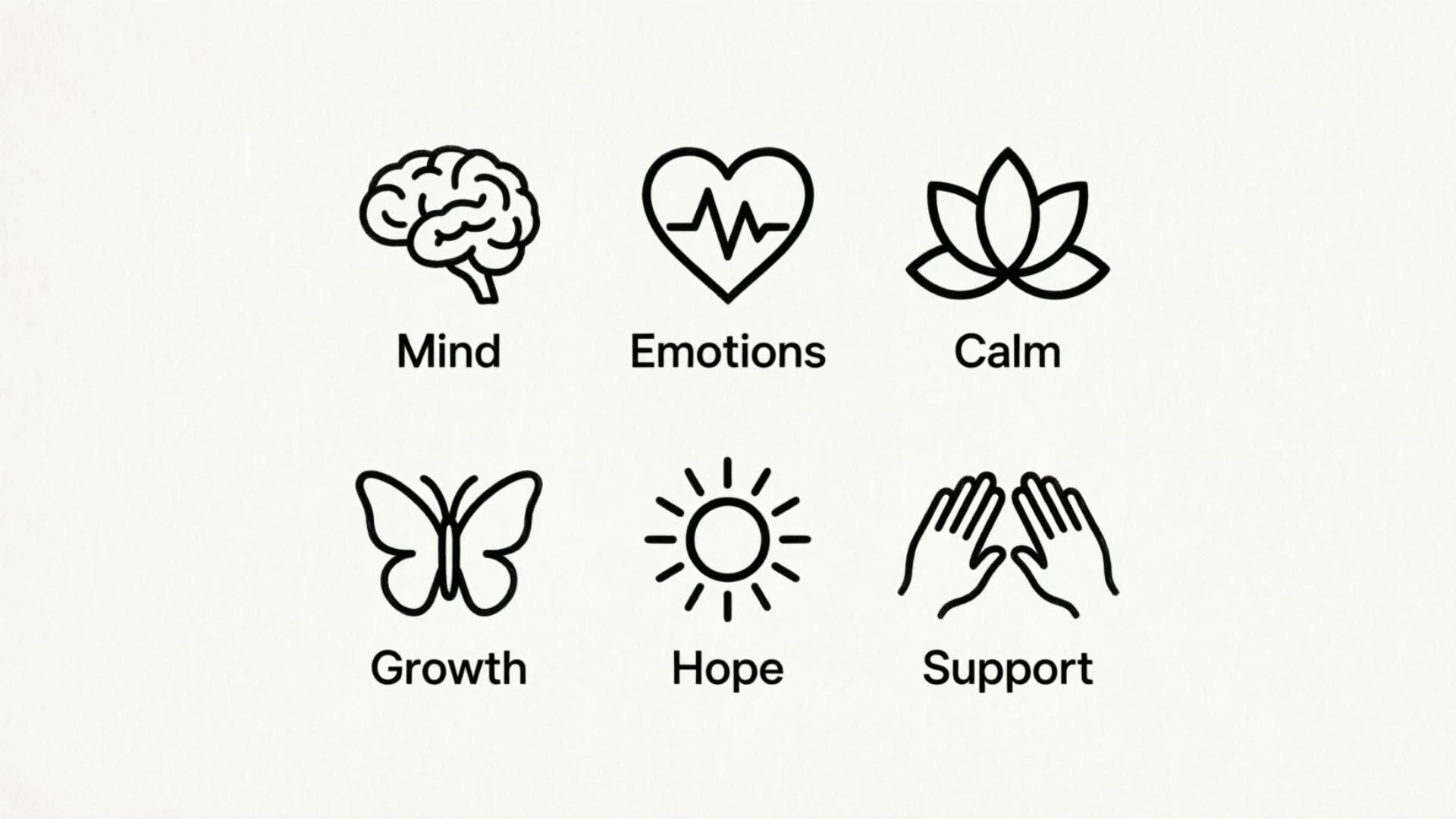
Mental health can be difficult to explain with words alone. Sometimes, a simple image can express hope, healing, self-care, support, or the courage to keep going.
That is why symbols for mental health have become meaningful in tattoos, jewelry, artwork, social media, awareness campaigns, and personal reminders.
I believe the best symbol is not always the most popular one. It is the one that connects with your own experience and reminds you of something important. You may want a symbol to represent recovery, emotional strength, peace, family support, or simply a reminder to take care of yourself.
In this guide, you will discover common mental health symbols, what they can mean, and where people often use them. You will also find ideas for tattoos, logos, family artwork, and personal designs. Because some symbols have cultural or spiritual roots, I will also explain why understanding their background matters before using them.
Quick Answer: What Symbol Represents Mental Health?
The green ribbon is one of the most widely recognized symbols associated with mental health awareness. Green is commonly used in mental health awareness campaigns and can represent hope, support, awareness, and a commitment to reducing stigma.
Other meaningful symbols include the semicolon (;), butterfly, lotus flower, brain, heart, sunflower, and infinity symbol. The right choice depends on whether you want to express awareness, recovery, resilience, peace, personal growth, or support for someone you love.
What Are Symbols for Mental Health?
Symbols for mental health are images, shapes, colors, or signs that people use to communicate ideas connected with emotional well-being, psychological health, recovery, self-care, support, and mental health awareness.
Some symbols have established connections with mental health awareness. Others are used more personally because their meaning fits ideas such as transformation, hope, balance, or healing.
For example, a semicolon can be used as a personal reminder to continue a story rather than ending it, while a butterfly may represent change and personal growth. A lotus can suggest renewal or rising above difficult circumstances, although its meaning comes from broader cultural and spiritual traditions rather than being exclusively a mental health symbol.
Meanings can also vary between people and communities. A symbol that represents recovery to one person may represent hope, remembrance, or strength to another.
Symbols for Mental Health Comparison Table
| Symbol | Main Meaning | Best Use |
| 💚 Green Ribbon | Mental health awareness and support | Awareness campaigns, pins, profiles |
| ; Semicolon | Continuation and choosing to continue | Tattoos, jewelry, personal reminders |
| 🦋 Butterfly | Change, growth, transformation | Tattoos, artwork, jewelry |
| 🪷 Lotus | Renewal, growth, inner peace | Spiritual designs, tattoos, artwork |
| 🧠 Brain | Mental health, thoughts, psychology | Logos, education, awareness designs |
| ❤️ Heart | Care, compassion, emotional support | Family art, cards, campaigns |
| 🌻 Sunflower | Hope, positivity, encouragement | Artwork, gifts, social media |
| ∞ Infinity | Ongoing journey or lasting support | Tattoos, jewelry, personal designs |
| 🌱 Growing Plant | Growth, recovery, new beginnings | Journals, tattoos, wellness designs |
| ☀️ Sun | Hope, warmth, and positivity | Posters, artwork, personal reminders |
| 🕊️ Dove | Peace and emotional calm | Artwork, remembrance, spiritual designs |
| 🌀 Spiral | Change, movement, and personal journey | Abstract art, tattoos, logos |
Top 12 Symbols for Mental Health and Their Meanings
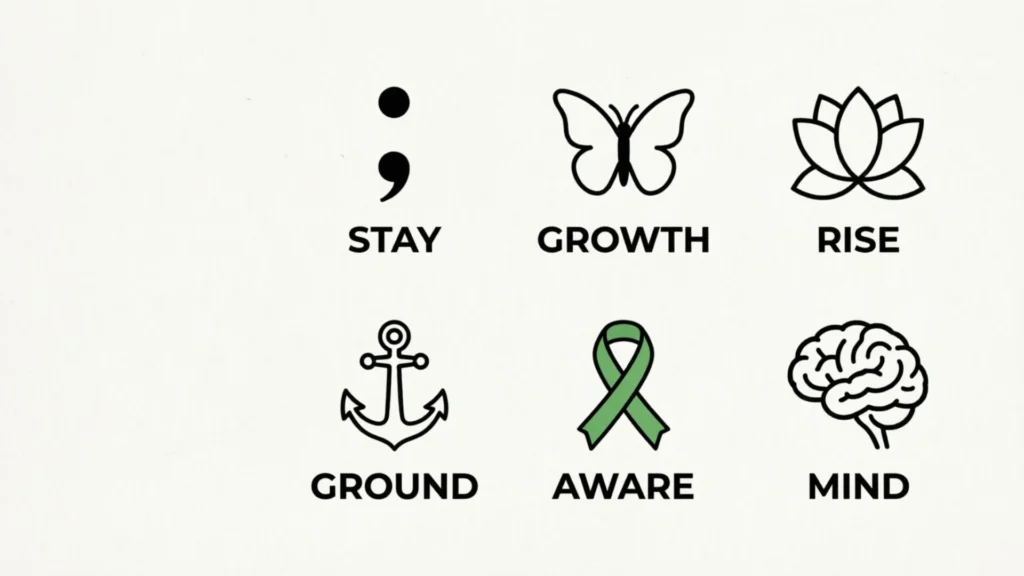
1. Green Ribbon: Mental Health Awareness and Support
The green ribbon is commonly associated with mental health awareness. It provides a simple visual way to show support for people experiencing mental health challenges and encourage open conversations about emotional well-being.
Green can also create a feeling of renewal, calm, and growth, although the exact meaning depends on the context in which it is used.
Today, green ribbons can appear on pins, clothing, posters, social media graphics, event materials, and awareness campaigns. A person may also wear one as a personal reminder to support mental health and challenge stigma.
Best for: Awareness campaigns, pins, social media profiles, posters, bracelets.
2. Semicolon (;): Continuing Your Story
The semicolon has become a recognizable personal symbol connected with suicide prevention, mental health awareness, and the decision to continue one’s story. In writing, a semicolon joins two closely related parts of a sentence rather than ending the thought completely.
That simple punctuation mark has inspired many people to use it as a reminder of continuation and hope.
Semicolon tattoos are especially popular because the design is small, simple, and easy to personalize. Some people combine it with a heart, butterfly, flower, or meaningful date.
Best for: Small tattoos, matching tattoos, jewelry, personal reminders, awareness artwork.
3. Butterfly: Change and Personal Growth
The butterfly is often chosen to represent transformation. Its life cycle provides a natural visual metaphor for change, development, and becoming something different over time.
For someone working through a difficult period, a butterfly can serve as a reminder that personal growth does not always happen quickly. It can also represent leaving behind an earlier stage of life and moving toward something new.
Butterfly designs are flexible and can be made delicate, colorful, minimalist, or highly personal.
Best for: Recovery tattoos, jewelry, artwork, self-growth designs, matching tattoos.
4. Lotus Flower: Renewal and Inner Peace
The lotus flower has deep cultural and spiritual significance in several Asian religious and philosophical traditions. It is often associated with ideas such as purity, spiritual development, renewal, and rising above difficult conditions.
Because of these broader meanings, the lotus can work as a personal symbol of emotional growth or finding peace during challenging times. However, it should not be treated as a universal mental health logo.
If you choose a lotus for a tattoo or commercial design, learning about its cultural context can help you use it respectfully.
Best for: Spiritual tattoos, meditation artwork, personal growth designs, jewelry, peaceful imagery.
5. Brain: Mental Health and Psychology
The human brain is one of the most direct visual representations of mental health. It connects naturally with thoughts, emotions, memory, behavior, learning, and psychological well-being.
Brain illustrations are particularly useful when the goal is educational rather than purely symbolic. They can be used by mental health organizations, educators, counselors, wellness projects, and awareness campaigns.
A simple outline of a brain can also make a modern tattoo or logo. Combining it with a heart can communicate the connection between thoughts and emotions.
Best for: Mental health logos, educational posters, websites, tattoos, awareness campaigns.
6. Heart: Care, Compassion, and Emotional Support
A heart is not exclusively a mental health symbol, but it can communicate emotional care in a very accessible way. When combined with mental health messaging, it may represent compassion, empathy, self-love, friendship, or support for someone going through a difficult time.
A heart can also make a mental health design feel warmer and less clinical. For family artwork, a heart can represent being there for one another during difficult moments.
Its meaning is broad, so adding words, initials, or another symbol can make the message more specific.
Best for: Family designs, support messages, cards, tattoos, awareness graphics.
7. Sunflower: Hope and Encouragement
Sunflowers are frequently used in positive and uplifting designs because of their association with sunshine, warmth, and optimism. They can therefore work as a personal reminder of hope and brighter moments.
A sunflower is especially suitable for someone who wants a mental health symbol without using a clinical-looking image. It can be incorporated into journals, artwork, tattoos, phone wallpapers, or inspirational gifts.
Its meaning is personal rather than a universal mental health designation, so the surrounding message is important.
Best for: Hope tattoos, gifts, artwork, journals, motivational designs.
8. Infinity Symbol: An Ongoing Journey
The infinity symbol can represent something ongoing, lasting, or without a defined endpoint. In a mental health context, some people may use it to represent an ongoing journey of self-care, recovery, acceptance, or personal development.
It can be especially meaningful because mental well-being is not necessarily a one-time destination. People may experience periods of progress, difficulty, adjustment, and renewed growth.
The infinity symbol is also visually simple, making it easy to combine with other elements such as a heart, flower, or semicolon.
Best for: Minimalist tattoos, jewelry, matching designs, personal reminders, logos.
9. Growing Plant: Recovery and New Beginnings
A small plant or sprouting seed can symbolize growth, patience, renewal, and a fresh beginning. It is a gentle choice for someone who wants to represent mental health without using a commonly recognized awareness symbol.
The image also communicates an important idea: growth takes time. A plant does not become fully grown overnight, and personal recovery can similarly involve gradual steps.
This symbol works particularly well with simple line-art designs and can be personalized with leaves, initials, dates, or meaningful words.
Best for: Recovery journals, tattoos, self-care artwork, gifts, personal reminders.
10. Sun: Hope and Positive Change
The sun is often used in visual art to communicate warmth, light, hope, and a new day. In a mental health context, it can represent moving through a difficult period and looking toward better moments.
Unlike the green ribbon or semicolon, the sun is not specifically a mental health awareness symbol. Its value comes from the emotional meaning people commonly attach to light and warmth.
A rising sun can be particularly suitable for a design about starting again.
Best for: Motivational artwork, posters, tattoos, journals, social media graphics.
11. Dove: Peace and Emotional Calm
A dove can communicate peace, calm, remembrance, or a desire for harmony. When used alongside mental health messaging, it can represent the hope for emotional peace and a gentler state of mind.
Doves also have religious and cultural meanings in different traditions, so context matters. If you plan to use one for a tattoo or commercial design, consider what the image means within the tradition you are drawing from.
A minimalist dove can create an elegant and peaceful visual.
Best for: Remembrance artwork, spiritual designs, tattoos, sympathy cards, peaceful posters.
12. Spiral: A Journey of Change
The spiral is an abstract symbol that can suggest movement, development, cycles, or gradual change. It does not have one universal mental health meaning, but its open-ended form can work well for personal interpretations.
Someone may see a spiral as a reminder that life and emotional well-being can move through different stages rather than following a perfectly straight path.
Because it is abstract, it gives you plenty of freedom when creating a personal tattoo, logo, or piece of artwork.
Best for: Abstract tattoos, personal artwork, logos, journals, creative designs.
Best Symbols for Mental Health Tattoos
Tattoos are a popular way to keep a meaningful reminder close. For a mental health tattoo, simplicity can be an advantage because a small design may remain recognizable as it ages.
Good choices include:
- Semicolon for continuing your story
- Green ribbon for mental health awareness
- Butterfly for transformation
- Lotus for renewal and inner peace
- Brain and heart for thoughts and emotions
- Sunflower for hope
- Infinity symbol for an ongoing journey
- Growing plant for recovery and growth
If the tattoo has a deeply personal meaning, consider adding initials, a short date, or a small element that connects it to your own experience.
Best Symbols for Mental Health Logos and Design
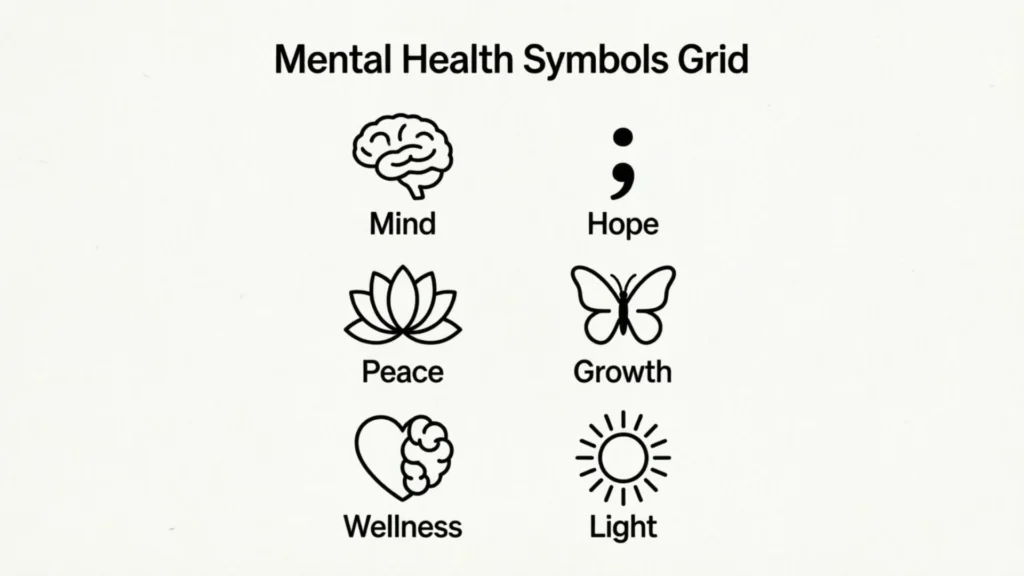
For logos, posters, websites, and social media graphics, choose symbols that remain recognizable when displayed at different sizes.
A brain, green ribbon, heart, semicolon’s, or simple plant can work well because each has a clear visual shape. Combining too many elements can make a logo difficult to understand.
For a professional design, consider using one main symbol with a short name or message. A simple design usually communicates more clearly than a crowded collection of icons.
Best Symbols for Family, Spiritual, or Personal Meaning
Mental health is often connected with relationships and personal support. A heart can represent family care, while a growing plant can symbolize healing and development. A butterfly may reflect personal transformation, and a dove can communicate peace.
For spiritual designs, symbols such as the lotus may be meaningful, but their original religious or cultural context should be respected.
For a family tattoo, consider combining a simple mental health symbol with initials, birth flowers, or a small family motif rather than copying a design without understanding its meaning.
Before Using Cultural or Sacred Symbols
Some symbols have important religious, spiritual, or cultural roots. Their meaning may be much deeper than the modern interpretation you see online.
Before using a sacred or culturally significant symbol in a tattoo, product, logo, or commercial design, learn about its origin and traditional meaning. Avoid presenting a symbol as belonging to a particular culture unless you have reliable information supporting that claim.
It is also worth remembering that one symbol can have different meanings in different communities. Respectful use starts with understanding.
How to Choose the Right Symbol for Mental Health
Choosing the right symbol becomes easier when you start with the message you want it to communicate.
Think about personal meaning. Ask yourself whether you want to represent hope, recovery, awareness, support, peace, growth, or remembrance.
Consider cultural context. If the symbol comes from a religious or cultural tradition, learn its background before using it.
Think about simplicity. A tattoo or logo usually benefits from a design that remains recognizable without too many details.
Match the symbol to the purpose. A green ribbon may work well for awareness, while a butterfly may feel more appropriate for personal transformation.
Make it personal. You can combine a symbol with initials, dates, words, flowers, or another small element that has meaning for you.
FAQs About Symbols for Mental Health
What is the best symbol for mental health?
The green ribbon is one of the most recognizable symbols associated with mental health awareness. However, there is no single symbol that represents every mental health experience. The semicolon, butterfly, brain, heart, and lotus may also be meaningful depending on the message you want to express.
What symbol represents hope in mental health?
A sunflower, rising sun, butterfly, or growing plant can represent hope in a personal mental health design. These are not all official mental health symbols, but their common visual meanings can communicate optimism, growth, renewal, and looking toward better days.
What is a good mental health tattoo?
A semicolon is a popular choice for a small mental health tattoo because it is simple and can carry a deeply personal meaning. Other options include a green ribbon, butterfly, lotus, sunflower, brain-and-heart design, or growing plant.
What symbol represents family support for mental health?
A heart is a simple choice for representing family care and emotional support. You can make the design more personal by combining it with family initials, names, birth flowers, or a small mental health symbol such as a green ribbon.
What is a simple symbol for mental health?
The green ribbon and semicolon are both simple designs that can be recognized easily. A heart, brain outline, small butterfly, or growing plant can also work if you want a more personal or artistic interpretation.
What color represents mental health awareness?
Green is commonly associated with mental health awareness. It is frequently used in awareness ribbons and related campaigns. However, color meanings are not universal, so the specific shade and message can vary between organizations and communities.
Is the semicolon a mental health symbol?
The semicolon is widely used as a personal symbol connected with mental health and suicide prevention. Its punctuation meaningcontinuing rather than ending a sentence—has inspired people to use it as a reminder to continue their own story.
Can I use a mental health symbol in a logo?
Yes, but context matters. A simple brain, green ribbon, heart, or abstract design may work for a logo. If you use a symbol associated with a particular organization, campaign, religion, or culture, make sure you understand its meaning and do not imply an affiliation that does not exist.
Final Thoughts
Symbols for mental health can turn difficult emotions and personal experiences into something visible and understandable. From the green ribbon and semicolon to butterflies, flowers, hearts, and simple abstract designs, each symbol can carry a different message.
The most meaningful choice is the one that reflects what you actually want to say. Whether you are creating a tattoo, family artwork, awareness poster, logo, or personal reminder, take time to understand the symbol before making it permanent.
Sometimes, one small image can serve as a quiet reminder: your story, your growth, and your well-being matter.

Adam Sullivan is a dedicated writer who enjoys transforming everyday topics into engaging and informative content. His writing focuses on making complex ideas simple, practical and enjoyable for readers of all backgrounds. Adam is also the fictional author of The Lantern Beyond Autumn Hills and Where the Morning Horizon Waits. Outside of writing, he enjoys photography, traveling and discovering inspiration through new experiences. He believes great content should be both helpful and easy to connect with.
 Lily Anderson