Taoist symbols have fascinated people for centuries because they combine simple designs with deep ideas about life, balance, nature, and inner peace.
I find these symbols interesting because a single image can carry different meanings depending on how it is understood and used.
If you are exploring Taoist symbols for a tattoo, logo, family artwork, or personal reflection, knowing their background helps you choose wisely.
This guide explains the most meaningful symbols, their cultural roots, and how people use them today.
What Symbol Represents Taoism?
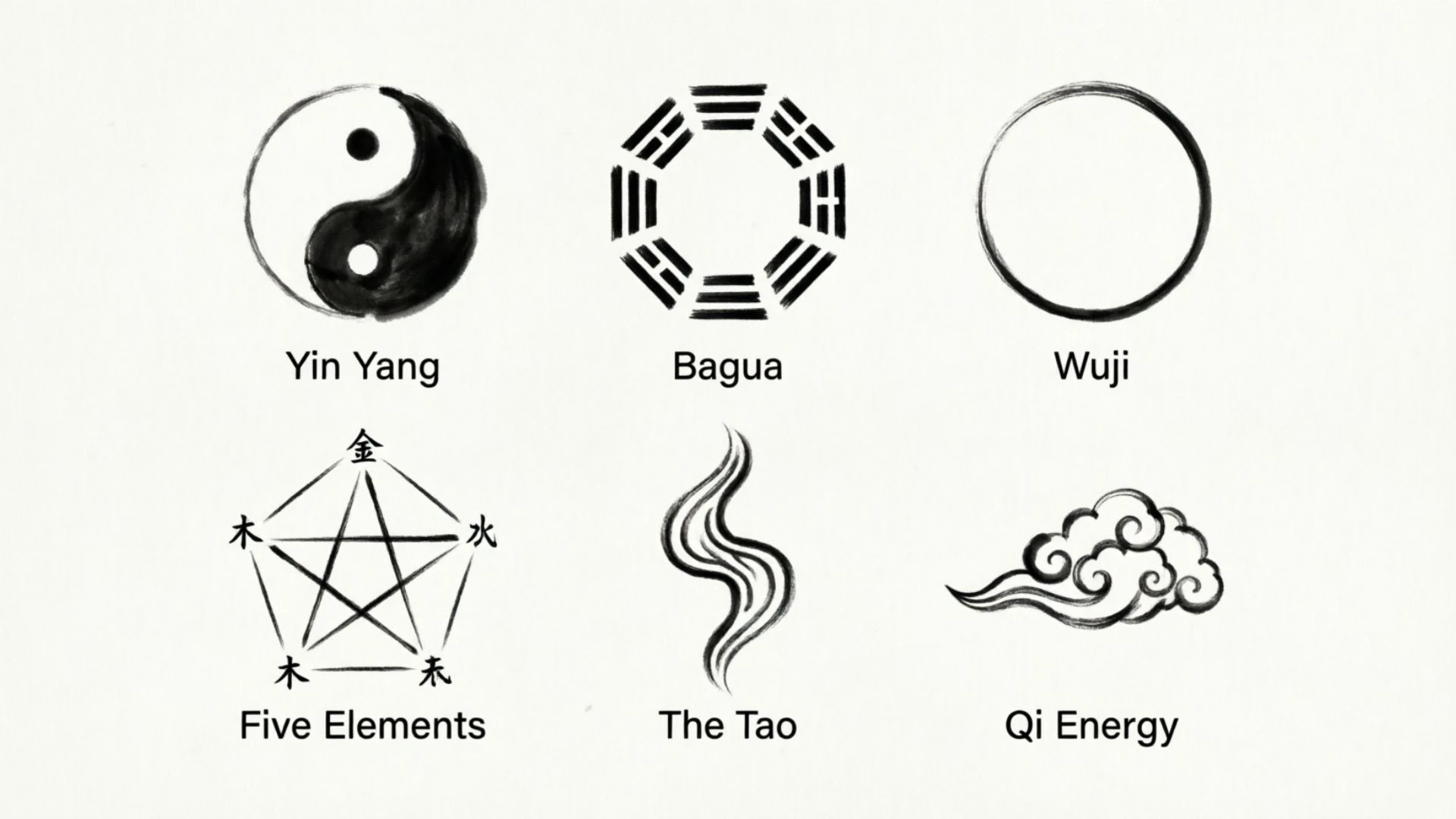
The most recognized symbol of Taoism is the Yin Yang symbol (☯). It represents the idea that opposite forces, such as light and dark, still belong to one balanced whole.
In Taoist philosophy, Yin and Yang describe complementary energies found throughout nature and life. The symbol is often used to represent harmony, balance, and the natural flow of existence.
What Are Taoist Symbols?
Taoist symbols are images, signs, and designs connected to Taoist philosophy, spiritual practices, Chinese culture, and ideas about living in harmony with nature. They often express concepts such as balance, simplicity, energy, wisdom, longevity, protection, and the relationship between humans and the universe.
The meaning of a Taoist symbol can change depending on the context. A symbol used in a temple may have a deeper religious meaning, while the same design used in jewelry or artwork may represent a personal value or life philosophy.
Some Taoist symbols come from ancient Chinese traditions, while others are connected to broader Chinese beliefs and cultural practices. Understanding the background of a symbol helps prevent misunderstanding and allows people to use these designs with respect.
Taoist Symbols Comparison Table
| Symbol | Main Meaning | Best Use |
| Yin Yang (☯) | Balance and harmony | Tattoos, logos, personal reminders |
| Taoist Bagua | Change and natural patterns | Spiritual art, study, protection designs |
| Taijitu | Unity of opposing forces | Tattoos, meditation designs |
| Dragon | Wisdom, power, transformation | Artwork, jewelry, cultural designs |
| Phoenix | Renewal and harmony | Family art, decorative designs |
| Lotus Flower | Purity and spiritual growth | Tattoos, meditation spaces |
| Fu Symbol | Good fortune and blessings | Home decoration, cultural art |
| Crane | Longevity and peace | Family artwork, traditional designs |
| Turtle | Stability and long life | Jewelry, symbolic gifts |
| Peach of Immortality | Longevity and vitality | Art, traditional decorations |
| Five Elements Symbols | Balance in nature | Spiritual studies, design concepts |
| Tao Character (道) | The way or natural path | Tattoos, calligraphy art |
Top Taoist Symbols and Their Meanings
Yin Yang: The Symbol of Balance and Harmony
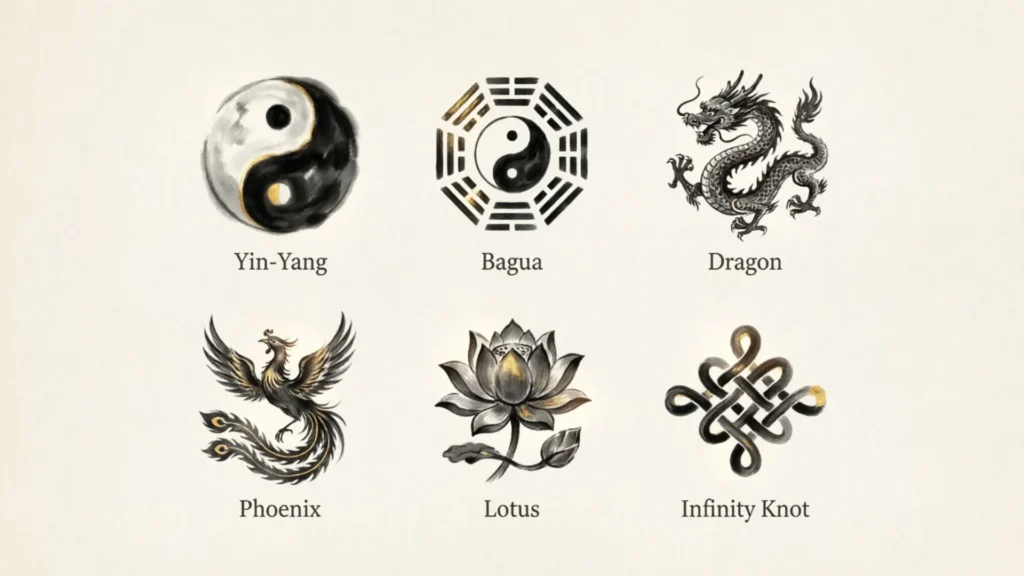
The Yin Yang symbol is the best-known of all Taoist symbols. Its circular design shows two opposite but connected forces flowing into each other. Yin is often associated with qualities such as darkness, stillness, and softness, while Yang is linked with brightness, activity, and movement.
In Taoist thought, Yin and Yang are not viewed as enemies. Instead, they depend on each other and create balance. The symbol reminds people that life contains both challenges and positive moments.
Today, the Yin Yang design appears in tattoos, clothing, meditation spaces, and modern logos. Many people choose it as a reminder to seek balance between work and rest, action and reflection, or different parts of their personality.
Best for: tattoos, friendship designs, wellness branding, meditation art, personal reminders
Taijitu: The Visual Expression of Opposites Working Together
Taijitu is the traditional name often used for the circular Yin Yang diagram. While many people know the image simply as Yin Yang, Taijitu refers to the broader concept of the diagram showing the relationship between complementary forces.
This symbol connects strongly with Taoist ideas because it reflects the belief that change is a natural part of existence. The curved shapes show movement rather than separation, suggesting that life is always flowing and transforming.
People use Taijitu designs in artwork, tattoos, and spiritual spaces. It is especially meaningful for those who value emotional balance, personal growth, and acceptance of life’s changing seasons.
Best for: spiritual tattoos, wall art, philosophy-inspired designs, meditation areas
Bagua: The Symbol of Change and Natural Order
The Bagua is a traditional Taoist symbol made of eight trigrams arranged around a center. Each trigram consists of broken or unbroken lines and is connected with ideas about nature, change, and different aspects of existence.
The Bagua is closely associated with the Chinese classic known as the I Ching, which explores patterns of change and decision-making. In some traditions, Bagua designs are also used in practices connected with harmony between people and their environment.
Because of its detailed structure, Bagua is often chosen by people interested in Taoist philosophy rather than only visual symbolism.
Best for: spiritual studies, traditional artwork, meaningful tattoos, philosophy-inspired designs
Tao Character (道): The Path of Natural Living
The Chinese character Tao (道) means “the way” or “the path.” In Taoist philosophy, it refers to the natural order of the universe and the way things unfold without unnecessary force.
The character is popular among people who appreciate simplicity, mindfulness, and living in harmony with nature. However, because it is a written character from Chinese language and philosophy, understanding its meaning is important before using it as decoration.
Many people choose the Tao character for tattoos or calligraphy because it represents a personal journey rather than a specific religious statement.
Best for: tattoos, calligraphy art, personal philosophy, minimalist designs
Dragon | Wisdom, Transformation, and Natural Power
The dragon is an important figure in Chinese culture and appears in many traditions beyond Taoism. Unlike many Western dragon stories, Chinese dragons are often connected with wisdom, water, weather, and positive forces.
In Taoist-related art, dragons may represent transformation, spiritual development, and harmony with natural forces. Their meaning depends greatly on the specific cultural setting where they appear.
Dragon designs are common in tattoos and artwork because they are visually striking and carry rich cultural history. Anyone using a dragon symbol should consider its Chinese cultural meaning rather than viewing it only as a fantasy creature.
Best for: tattoos, cultural artwork, large designs, creative branding
Lotus Flower | Growth Through Challenges
The lotus flower is widely respected across several Asian traditions, including Chinese spiritual and cultural settings. It grows from muddy water yet blooms beautifully, making it a symbol often connected with purity, wisdom, and personal growth.
In Taoist-inspired designs, the lotus may represent the journey toward inner peace and a clearer understanding of life. Its simple shape also makes it popular for modern artwork.
Many people choose lotus tattoos because the flower can represent overcoming difficulties while staying connected to one’s values.
Best for: small tattoos, spiritual designs, meditation spaces, personal growth symbols
Crane | Longevity and Peace
The crane has a long history in Chinese art and symbolism. It is often associated with longevity, grace, and peace. In traditional imagery, cranes can appear alongside other symbols connected with long life and spiritual ideals.
For families, a crane design may represent wishes for health, wisdom, and a long life. Its elegant appearance also makes it suitable for paintings, home decorations, and meaningful gifts.
Because cranes appear in many East Asian traditions, their meaning can vary, but they are generally viewed as a positive and respected image.
Best for: family artwork, gifts, traditional designs, peaceful home decoration
Turtle | Stability and Long Life
The turtle is another important symbol in Chinese culture. It is often connected with patience, endurance, stability, and longevity. Its long lifespan has made it a natural symbol for ideas about lasting strength.
Turtle imagery appears in traditional artwork and symbolic designs. People may choose it as a reminder to move through life steadily rather than rushing.
A turtle design works well for those who value calmness, resilience, and a grounded approach to life.
Best for: jewelry, family symbols, nature-inspired tattoos, personal reminders
Phoenix | Renewal and Harmony
The phoenix is a famous creature in Chinese culture and differs from the firebird image common in some Western stories. In Chinese symbolism, it is often linked with harmony, virtue, and renewal.
Phoenix imagery is sometimes paired with dragons in traditional art to represent balance between different qualities. Because of its graceful appearance, it is popular in decorative designs and tattoos.
People often choose phoenix symbols when they want an image connected with transformation, new beginnings, or personal growth.
Best for: tattoos, artistic designs, family artwork, transformation themes
Fu Symbol | Blessings and Good Fortune
The Fu symbol (福) is a well-known Chinese character associated with blessings, happiness, and good fortune. While it is part of broader Chinese culture rather than only Taoism, it is often seen in homes and traditional decorations.
People commonly display the Fu character during celebrations or as a decorative sign of positive wishes. Its meaning makes it popular for family spaces and cultural artwork.
When used respectfully, it can represent hopes for happiness, prosperity, and a peaceful home.
Best for: home decoration, cultural art, gifts, family designs
Five Elements | Balance in Nature
The Five Elements concept in Chinese philosophy describes relationships between wood, fire, earth, metal, and water. These ideas are used in several traditional systems of thought, including practices influenced by Taoist philosophy.
The Five Elements are not usually shown as one single symbol. Instead, they appear through diagrams, colors, and creative designs that explore balance and natural cycles.
People interested in holistic traditions often use Five Elements imagery for personal reflection or decorative art.
Best for: spiritual artwork, educational designs, nature-inspired logos, personal study
Best Taoist Symbols for Tattoos
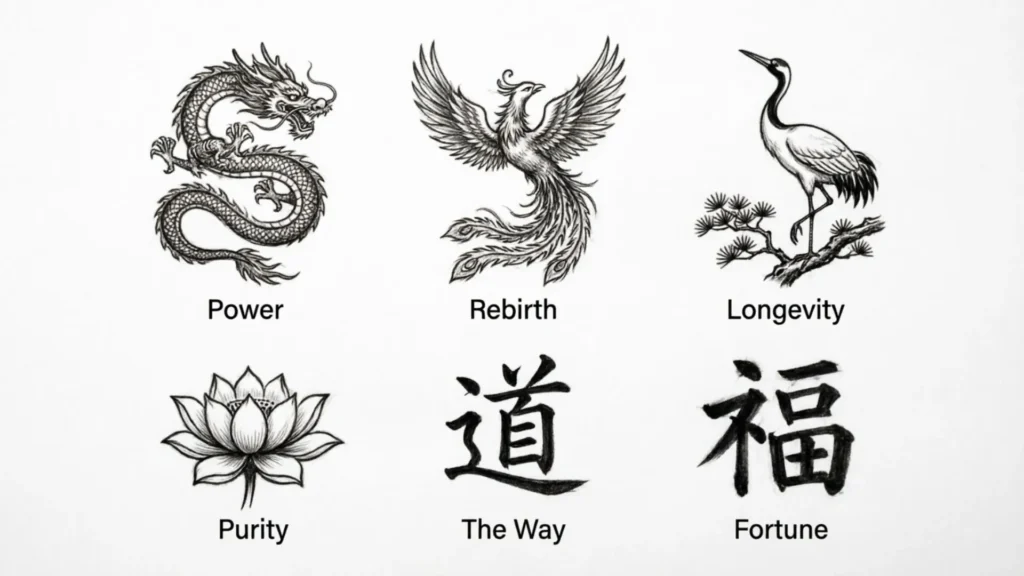
Taoist tattoos are popular because they can combine simple designs with personal meaning. A good tattoo choice depends on whether you want a small minimalist image or a detailed cultural design.
Popular options include:
- Yin Yang: balance and harmony
- Tao character: personal path and philosophy
- Lotus flower: growth and inner peace
- Dragon: transformation and wisdom
- Bagua: interest in Taoist philosophy
- Crane: longevity and calmness
Before getting a Taoist-inspired tattoo, research the symbol’s meaning and cultural background. A design that looks attractive may carry deeper meanings than expected.
Best Taoist Symbols for Logos and Design
For logos, simple symbols usually work best. A design should be easy to recognize, memorable, and clear at different sizes.
The Yin Yang symbol is often chosen for wellness brands, meditation projects, and balance-focused businesses because of its simple shape. The Tao character can work well for minimalist designs, while lotus and nature-based imagery may suit brands connected with wellness or creativity.
Businesses should be careful when using sacred or cultural symbols commercially. Respectful design choices help avoid reducing meaningful traditions to decoration.
Best Taoist Symbols for Family, Spiritual, or Personal Meaning
Many people choose Taoist-inspired symbols because they represent personal values rather than decoration alone. Families may select images like cranes, turtles, or Fu symbols to express wishes for health, happiness, and long life.
For spiritual reflection, symbols like Yin Yang, Tao, and Bagua can remind people about balance, acceptance, and awareness. The best symbol is the one that connects with your own beliefs and experiences.
A meaningful symbol does not need to be complicated. Sometimes a simple image carries the strongest personal reminder.
Before Using Cultural or Sacred Symbols
Some Taoist symbols have deep religious, spiritual, or cultural roots. Before using them in tattoos, logos, products, or artwork, take time to understand their origins.
Meanings can change between different traditions and communities. A symbol that feels inspiring to one person may have a specific sacred purpose for another.
Respectful use means learning first, avoiding stereotypes, and appreciating the history behind the design.
How to Choose the Right Taoist Symbol
Choosing the right symbol depends on your reason for using it. Consider these questions:
- Personal meaning: Does the symbol reflect your values or life experience?
- Cultural respect: Do you understand its traditional background?
- Visual simplicity: Will the design still look clear when small?
- Purpose: Is it for a tattoo, logo, jewelry, family art, or spiritual practice?
- Long-term connection: Will the meaning still matter years from now?
A symbol becomes more meaningful when you understand both its history and your own connection to it.
FAQs About Taoist Symbols
What is the best symbol for Taoism?
The Yin Yang symbol is the most recognized Taoist symbol. It represents balance, harmony, and the relationship between opposite forces. However, the “best” symbol depends on what idea you personally want to express.
What symbol represents balance in Taoism?
The Yin Yang symbol is most commonly connected with balance in Taoist philosophy. It shows how opposite qualities can exist together and create a complete whole.
What is a good Taoist tattoo?
Popular Taoist tattoo choices include Yin Yang, Tao character, lotus flower, dragon, and Bagua designs. The best choice depends on whether you want a symbol of balance, growth, wisdom, or personal philosophy.
What Taoist symbol represents family?
Symbols such as the crane, turtle, and Fu character are often connected with positive wishes for family, health, happiness, and long life. Their meanings come from broader Chinese cultural traditions as well as related spiritual ideas.
What is a simple Taoist symbol?
The Yin Yang symbol and Tao character are among the simplest Taoist-inspired designs. They are visually clean and work well for minimalist tattoos or logos.
What animal represents Taoist ideas?
Animals such as dragons, cranes, and turtles appear in Chinese symbolic traditions connected with ideas like wisdom, longevity, and harmony. Their meanings depend on the specific cultural context.
Can Taoist symbols be used in logos?
Yes, but businesses should research the meaning and cultural background first. A respectful approach is important when using symbols connected with spiritual or cultural traditions.
Final Thoughts
Taoist symbols offer more than beautiful designs. They carry ideas about balance, nature, growth, wisdom, and the way people relate to the world around them. Whether you are choosing a tattoo, logo, family artwork, or personal reminder, understanding the meaning behind Taoist symbols helps you make a thoughtful choice.
The right symbol is not just the one that looks good it is the one whose meaning continues to feel important to you over time.

Dylan Anderson is a writer who enjoys turning complex topics into simple, engaging content that readers can actually use. His work focuses on clear explanations, practical insights and storytelling that feels natural and relatable. He is also the fictional author of The Quiet Compass of Ashford and Where the Cedar Lantern Glows. When he’s away from his keyboard, Dylan enjoys hiking, reading, and discovering inspiration in everyday life. He believes great writing should be informative, easy to understand and enjoyable from beginning to end.
 Adam Sullivan