Taoism symbols have fascinated people for centuries because they express deep ideas about balance, nature, harmony, and the flow of life.
When I explore these symbols, I notice how each one tells a story beyond its appearance. You may be looking for a meaningful tattoo, a thoughtful design, or a symbol connected to spiritual growth.
Understanding the true meaning behind these images helps you choose one with respect and purpose. In this guide, you will discover the most important Taoism symbols, their meanings, and how people use them today.
What Symbol Represents Taoism?
The most recognized symbol of Taoism is the Yin Yang symbol (☯). It represents the balance between opposite forces, such as light and dark, activity and stillness, or masculine and feminine energies. The symbol shows that opposing elements can exist together and create harmony rather than conflict.
What Are Taoism Symbols?
Taoism symbols are visual representations connected to the beliefs, philosophy, and spiritual practices of Taoism. They often reflect ideas such as balance, natural harmony, inner peace, wisdom, and living in alignment with the Tao (the natural way or path of existence).
These symbols can be found in temples, artwork, meditation practices, jewelry, tattoos, and modern designs. However, their meanings are not always fixed. A symbol may have a specific religious meaning in Taoist traditions while also carrying a personal meaning for someone using it as inspiration.
Some symbols come directly from Taoist philosophy, while others are connected to Chinese culture, traditional practices, or spiritual ideas that overlap with Taoism. Understanding the background of each symbol helps you appreciate it beyond its visual beauty.
Taoism Symbols Comparison Table
| Symbol | Main Meaning | Best Use |
| Yin Yang (☯) | Balance and harmony | Tattoos, jewelry, personal reminders |
| Bagua (Eight Trigrams) | Change, balance, and natural forces | Spiritual study, home designs |
| Tao Symbol | The path and natural order of life | Meditation art, minimalist designs |
| Chinese Dragon | Wisdom, power, and transformation | Art, cultural designs |
| Phoenix | Renewal and transformation | Tattoos, decorative artwork |
| Lotus Flower | Purity and spiritual growth | Meditation designs, tattoos |
| Bamboo | Strength, flexibility, and resilience | Home art, personal symbols |
| Fu Symbol | Blessings and good fortune | Cultural decoration |
| Crane | Longevity and peace | Artwork, family symbolism |
| Five Elements Symbols | Balance of natural energies | Spiritual practices, learning |
| Taoist Temple Symbols | Faith and tradition | Religious and cultural spaces |
Top Taoism Symbols and Their Meanings
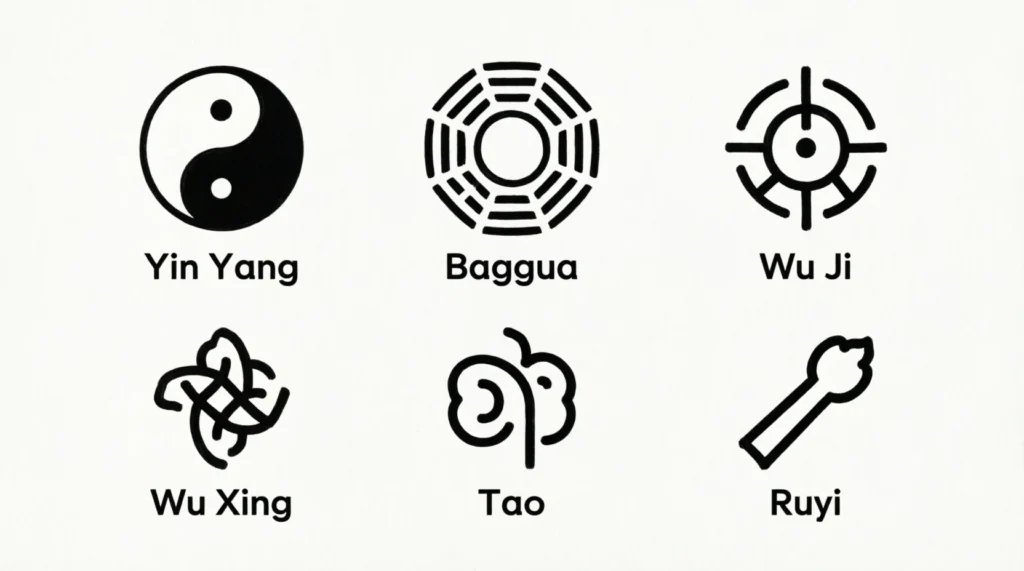
Yin Yang Symbol: The Balance of Opposites
The Yin Yang symbol is the most famous of all Taoism symbols. Its circular design shows two opposite forces flowing into each other. The black and white sections suggest that life contains different energies that depend on one another.
In Taoist philosophy, Yin and Yang are not seen as enemies. Instead, they describe complementary aspects of existence. For example, rest supports activity, and darkness allows us to understand light.
Today, many people use the Yin Yang symbol as a reminder to seek balance in daily life. It is common in tattoos, necklaces, home decoration, and wellness spaces.
Best for: tattoos, meditation reminders, jewelry, personal growth designs, minimalist artwork
Bagua Symbol: The Eight Trigrams of Change
The Bagua is a circular arrangement of eight trigrams, each made from broken and unbroken lines. These trigrams are connected with ideas about nature, change, and the relationship between different forces.
The Bagua is closely associated with traditional Chinese philosophy and practices such as Feng Shui. It is often used to study patterns of change and how people relate to their surroundings.
Because of its detailed design, the Bagua is often chosen by people who appreciate symbolism, philosophy, and traditional knowledge. It requires some understanding of its meaning rather than being used only as decoration.
Best for: spiritual study, traditional artwork, home designs, philosophical reminders
Tao Symbol: The Path of Natural Living
The Tao symbol represents the central idea of Taoism: following the natural flow of life. The word “Tao” can be translated as “the way” or “the path,” referring to the underlying order of existence.
Unlike symbols that focus on power or protection, the Tao symbol often reflects simplicity, acceptance, and awareness. It encourages people to live with less struggle against the natural rhythm of life.
Modern designs often use the Tao symbol in simple black-and-white artwork, calligraphy, and meditation spaces. Its meaning makes it popular among people seeking calm and personal reflection.
Best for: minimalist tattoos, meditation spaces, personal philosophy, spiritual artwork
Chinese Dragon: Wisdom and Transformation
The dragon is an important figure in Chinese culture and appears in many traditions, including Taoist-related art. Unlike some Western dragon images, Chinese dragons are often viewed as wise and connected with natural forces.
Dragons can symbolize transformation, knowledge, and the power of change. They are commonly found in traditional artwork, temple decorations, and cultural celebrations.
Because the dragon has many meanings across Chinese history and traditions, it is important to understand its cultural background before using it as a design element.
Best for: cultural tattoos, artwork, traditional designs, symbolic jewelry
Phoenix: Renewal and Rebirth
The phoenix is another well-known symbol in Chinese culture. It is often associated with renewal, beauty, and transformation. In traditional Chinese symbolism, the phoenix is connected with harmony and noble qualities.
Many people choose the phoenix because it represents moving through challenges and beginning again. While not exclusively a Taoist symbol, it appears in broader Chinese spiritual and cultural imagery.
Phoenix designs are popular for tattoos because they combine visual beauty with a message of personal change.
Best for: transformation tattoos, inspirational artwork, personal growth symbols, creative designs
Lotus Flower: Purity and Spiritual Growth
The lotus flower is widely respected in many Asian spiritual traditions. It grows from muddy water while producing a beautiful flower, making it a common image for growth, clarity, and inner development.
Although the lotus is strongly connected with traditions such as Buddhism, it also appears in Chinese spiritual art and can be appreciated alongside Taoist themes of natural harmony.
People often choose the lotus because it represents becoming stronger and wiser through life experiences.
Best for: spiritual tattoos, meditation art, feminine designs, personal reminders
Bamboo: Flexibility and Inner Strength
Bamboo has a special place in Chinese art and philosophy. It bends with the wind but does not easily break, making it a symbol of flexibility, patience, and resilience.
Bamboo connects with Taoist ideas about adapting to change instead of fighting against every difficulty. Its simple appearance also reflects appreciation for nature and simplicity.
Today, bamboo appears in home decoration, paintings, tattoos, and symbolic gifts. It is often chosen by people who value calm strength rather than aggressive power.
Best for: nature tattoos, family artwork, home designs, resilience reminders
Fu Symbol: Blessings and Good Fortune
The Fu symbol (福) is a traditional Chinese character associated with blessings, happiness, and good fortune. It is commonly displayed during celebrations and in homes as a wish for positive energy and prosperity.
While it is a cultural symbol rather than a purely Taoist symbol, it shares connections with traditional Chinese spiritual practices.
People often use the Fu symbol in decorative art because of its positive meaning and simple visual style.
Best for: home decoration, cultural artwork, gifts, traditional designs
Crane: Longevity and Peace
The crane is a respected symbol in Chinese art and is often linked with long life, wisdom, and peaceful existence. It frequently appears in traditional paintings alongside natural scenes.
The crane’s graceful appearance has made it a popular image for those who appreciate calmness and longevity. In symbolic art, it can represent a wish for a balanced and meaningful life.
Crane designs work especially well in elegant artwork and family-related decorations.
Best for: family art, peaceful designs, traditional paintings, meaningful gifts
Five Elements Symbols: Nature’s Balance
The Five Elements concept describes relationships between wood, fire, earth, metal, and water. These ideas appear in traditional Chinese philosophy and are connected with understanding natural cycles and balance.
People interested in Taoist philosophy may study these elements to explore how different forces interact. They are often used in traditional practices, artwork, and symbolic designs.
Because the Five Elements system is complex, it is best approached as a philosophical tradition rather than a simple decoration.
Best for: learning, spiritual exploration, symbolic artwork, traditional designs
Best Taoism Symbols for Tattoos
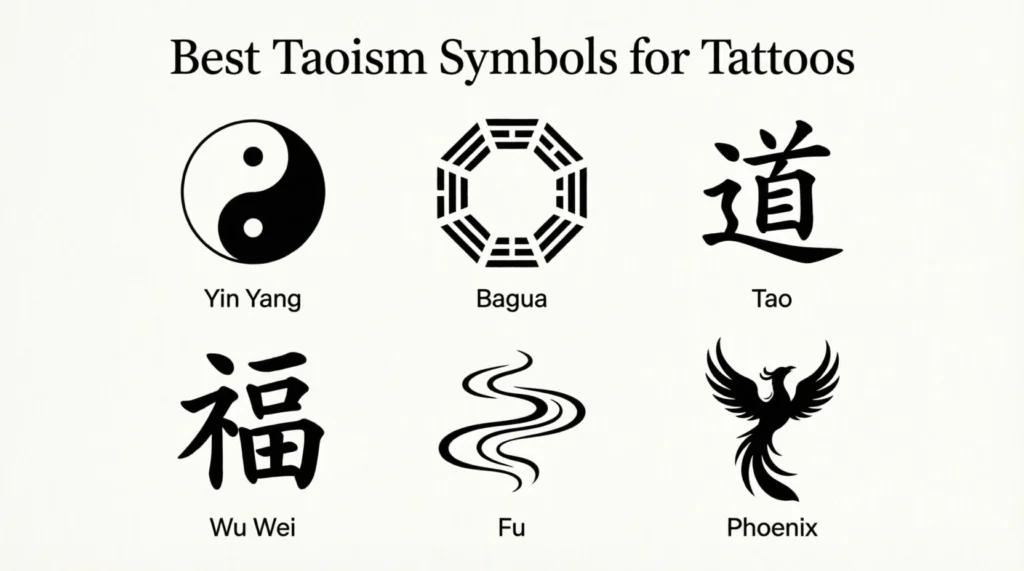
A good tattoo symbol should have personal meaning and a design that will remain clear over time. Taoism-inspired tattoos are often chosen because they represent balance, peace, personal growth, or connection with nature.
Popular choices include:
- Yin Yang: simple and recognizable balance symbol
- Tao symbol: meaningful for people who value simplicity and mindfulness
- Lotus flower: suitable for growth and spiritual themes
- Bamboo: represents flexibility and resilience
- Dragon: works well for larger cultural-inspired tattoos
Small tattoos often work best with clean symbols, while larger tattoos allow more detailed designs such as Bagua patterns or traditional artwork.
Best Taoism Symbols for Logos and Design
For logos, branding, posters, and digital designs, simplicity matters. A symbol should be easy to recognize at different sizes and should match the message of the brand.
The Yin Yang symbol is often chosen because it is visually balanced and widely understood. Bamboo, lotus, and Tao-inspired designs can also work well for wellness brands, meditation spaces, or creative projects.
Before using any traditional symbol commercially, designers should research its meaning and cultural background. A beautiful design can lose its value if it is used without understanding.
Best Taoism Symbols for Family, Spiritual, or Personal Meaning
Taoism symbols can carry personal meanings beyond decoration. Families may choose symbols connected with harmony, peace, and shared values. Individuals may use them as reminders of patience, balance, or personal growth.
Some meaningful choices include:
- Yin Yang: family harmony and balance
- Crane: wishes for long life and peace
- Bamboo: resilience through life changes
- Lotus: personal growth and wisdom
- Tao symbol: living with awareness and acceptance
The best symbol is the one that reflects your own values while respecting its original meaning.
Before Using Cultural or Sacred Symbols
Some Taoism symbols have deep religious, spiritual, or cultural roots. Before using them in tattoos, logos, products, or artwork, take time to learn where they come from.
A symbol may have different meanings depending on the tradition, region, or community. Using a symbol thoughtfully shows respect and helps avoid turning meaningful traditions into simple decoration.
How to Choose the Right Symbol for Taoism
Choosing the right Taoism symbol depends on your reason for using it.
Consider these questions:
- What personal meaning do you want? Choose a symbol that reflects your values or life experience.
- Do you understand its origin? Learn the cultural and spiritual background.
- Will it work visually? Simple designs are often better for tattoos and logos.
- Is it suitable for your purpose? A family artwork, tattoo, and business logo may require different choices.
A meaningful symbol is not only about appearance. It is about the connection between the image and the message behind it.
FAQs About Taoism Symbols
What is the best symbol for Taoism?
The Yin Yang symbol is usually considered the most recognizable Taoism symbol. It represents balance between different forces and the idea that opposites can exist together in harmony.
What symbol represents balance in Taoism?
The Yin Yang symbol is the main symbol associated with balance in Taoist philosophy. It shows how opposite qualities can support and complete each other.
What is a good Taoism symbol tattoo?
Popular Taoism-inspired tattoos include Yin Yang, bamboo, lotus, dragons, and Tao symbols. The best choice depends on whether you want a design focused on balance, growth, nature, or personal philosophy.
What Taoism symbol represents family?
The Yin Yang symbol is often chosen for family themes because it can represent harmony and balance between different people. Bamboo and crane imagery may also be used for family artwork.
What is a simple Taoism symbol?
The Yin Yang symbol and Tao symbol are among the simplest designs. Their clean shapes make them suitable for small tattoos, jewelry, and minimalist artwork.
What animal represents Taoism?
There is no single animal that represents all of Taoism. Dragons and cranes are common in Chinese symbolic traditions and often appear in Taoist-related artwork.
What color represents Taoism?
Taoism does not have one official color. Black and white are commonly associated with Yin Yang, while natural colors such as green may appear in designs connected with nature and harmony.
Final Thoughts
Taoism symbols offer more than attractive designs. They carry ideas about balance, nature, change, and living with awareness. Whether you are choosing a tattoo, logo, artwork, or personal reminder, understanding the meaning behind the symbol makes the choice more meaningful.
The right symbol is the one that connects with your values while honoring its cultural background. Take time to learn, reflect, and choose a design that truly represents what matters to you.

Adam Sullivan is a dedicated writer who enjoys transforming everyday topics into engaging and informative content. His writing focuses on making complex ideas simple, practical and enjoyable for readers of all backgrounds. Adam is also the fictional author of The Lantern Beyond Autumn Hills and Where the Morning Horizon Waits. Outside of writing, he enjoys photography, traveling and discovering inspiration through new experiences. He believes great content should be both helpful and easy to connect with.
 Dylan Anderson