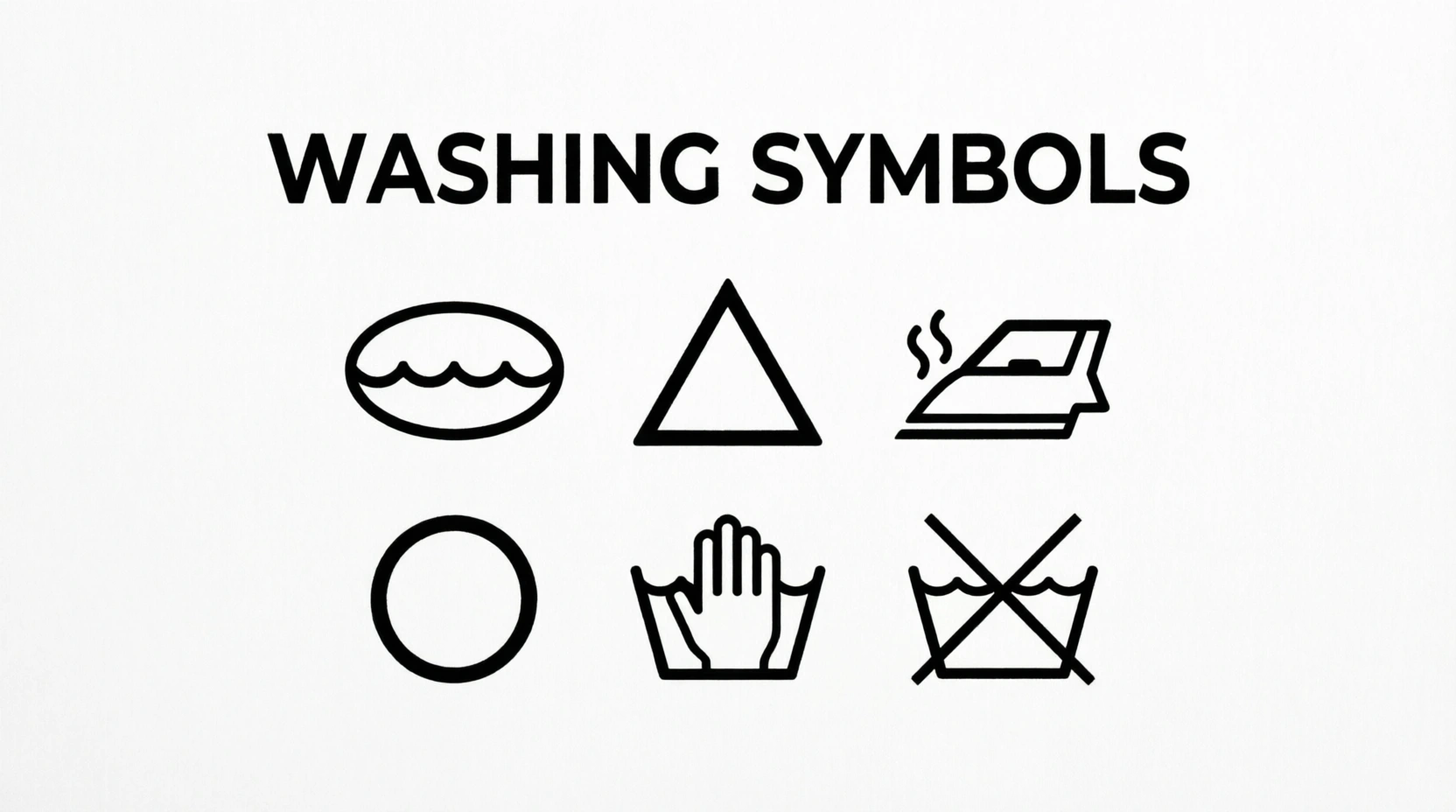
Have you ever looked at the tiny icons on a clothing label and wondered what they actually mean? I know I have.
Those small marks can look confusing, but they are there to help you protect your clothes and make them last longer.
Understanding washing symbols on tags can save your favorite shirts, prevent shrinking, and help you choose the right wash settings.
Once you learn the basics, laundry labels become much easier to read. In this guide, you’ll discover what each symbol means, how to use them, and how to avoid common laundry mistakes.
What Symbol Represents Washing Instructions?
The most common symbols for washing instructions are the wash tub symbols found on clothing care labels. A tub filled with water usually means the item can be washed, while numbers or hand symbols inside the tub show the correct washing method. These symbols are part of an international care labeling system designed to guide consumers on washing, drying, ironing, and cleaning clothing safely.
What Are Washing Symbols on Tags?
Washing symbols on tags are small care icons printed on clothing labels that explain how an item should be cleaned and maintained. They provide instructions for washing, bleaching, drying, ironing, and professional cleaning.
These symbols are used by clothing manufacturers around the world because written instructions may need to be translated into many languages. A simple icon can communicate the correct care method quickly.
The meaning of a symbol can depend on the country, labeling system, and garment type. Some symbols may also include extra details, such as dots showing temperature levels or lines showing a gentler wash cycle.
Common categories include:
- Washing symbols for water-based cleaning
- Drying symbols for dryers and air drying
- Ironing symbols for heat settings
- Bleaching symbols
- Professional cleaning symbols
Learning these icons helps you protect fabric quality, color, shape, and durability.
Washing Symbols on Tags Comparison Table
| Symbol | Main Meaning | Best Use |
| Tub with water | Machine wash allowed | Everyday clothing care |
| Tub with hand | Hand wash only | Delicate fabrics |
| Tub with temperature number | Maximum wash temperature | Choosing water heat |
| Tub with one line underneath | Gentle wash cycle | Soft fabrics |
| Tub with two lines underneath | Very gentle wash cycle | Wool and delicate items |
| Crossed-out tub | Do not wash | Professional cleaning needed |
| Square with circle | Tumble dry allowed | Dryer instructions |
| Iron symbol | Ironing allowed | Removing wrinkles |
| Triangle symbol | Bleaching instructions | Fabric whitening care |
| Circle symbol | Professional cleaning | Dry cleaning guidance |
Top Washing Symbols on Tags and Their Meanings
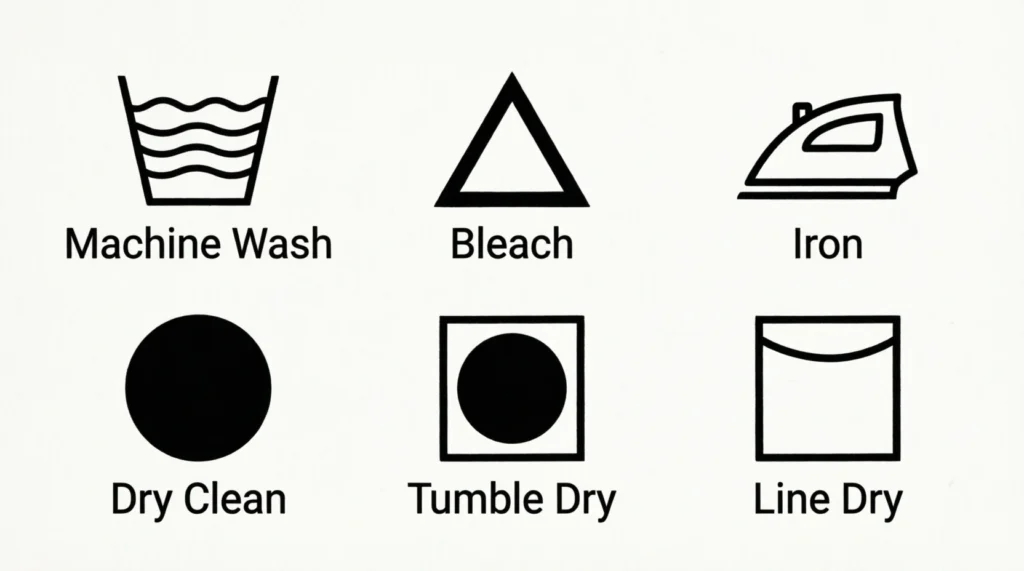
1. Wash Tub Symbol: The Basic Laundry Instruction
The wash tub symbol is the most common clothing care icon. It looks like a small container filled with water and tells you whether the garment can be washed.
If the tub appears alone, the item is usually safe for normal washing. When numbers appear inside the tub, they indicate the highest recommended water temperature. A lower temperature is often safer for protecting colors and fabric strength.
This symbol connects directly to everyday laundry because it answers the first question most people ask: “Can I wash this at home?”
Modern clothing labels use this simple icon to reduce confusion and prevent damage caused by incorrect washing methods.
Best for: everyday clothes, shirts, jeans, towels, household fabrics
2. Hand Wash Symbol: Gentle Care for Delicate Items
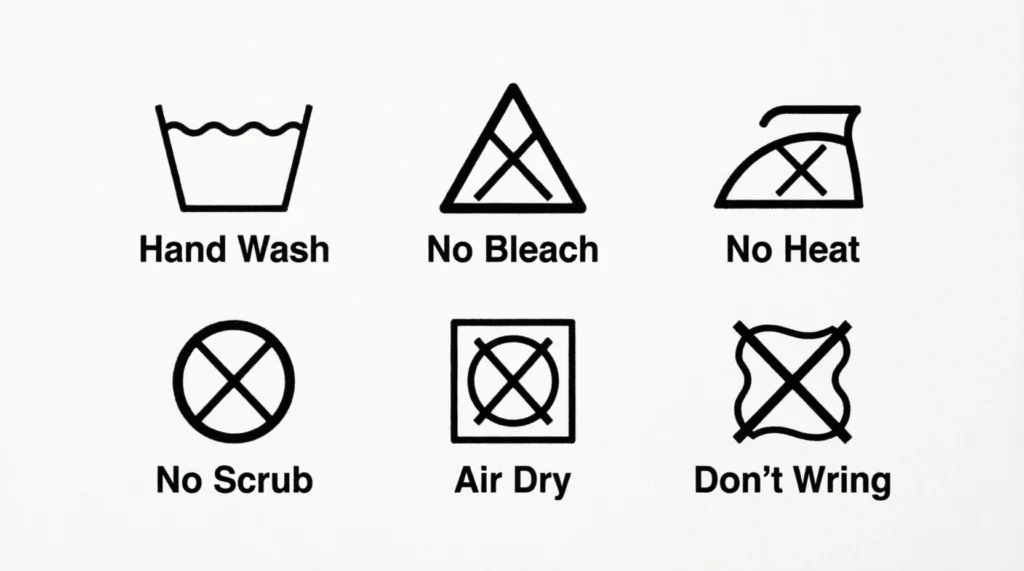
The hand wash symbol shows a hand placed inside a water tub. It means the garment needs gentle cleaning rather than a regular washing machine cycle.
Items with this symbol are often made from delicate materials that can stretch, shrink, or lose their shape during machine washing. Examples include certain sweaters, silk items, lace fabrics, and handmade garments.
Hand washing usually involves using cooler water, mild detergent, and careful movement. Avoid twisting or squeezing too hard because delicate fibers can become damaged.
This symbol reminds you that some clothing needs extra attention to maintain its original quality.
Best for: delicate clothing, silk items, sweaters, handmade fabrics, special garments
3. Temperature Number Symbol: Choosing the Right Water Heat
Numbers inside a wash tub tell you the maximum water temperature recommended for the garment. Common numbers include 30, 40, 60, or higher depending on the fabric and care requirements.
Many people assume hotter water cleans better, but excessive heat can cause fading, shrinking, and fabric damage. Using the correct temperature helps balance cleanliness with garment protection.
For many everyday clothes, cooler washes are often enough. Higher temperatures may be recommended for items that need deeper cleaning.
Always treat the number as a maximum limit, not a required setting.
Best for: cotton clothing, sportswear, bedding, towels, temperature-sensitive fabrics
4. Gentle Cycle Symbol: Protecting Soft Fabrics
A wash tub with one line underneath indicates a gentle or reduced washing cycle. This means the fabric needs more careful treatment than a standard wash.
The symbol often appears on clothing made from materials that can be affected by strong spinning or rough movement. Choosing a gentle cycle can help preserve texture, shape, and color.
Using a mild detergent and avoiding overloading the washing machine can also improve results.
This symbol is especially useful for modern clothing made with blended fabrics that require balanced care.
Best for: mixed fabrics, soft clothing, activewear, lightweight garments
5. Very Gentle Wash Symbol: Extra Protection Needed
A wash tub with two lines underneath means the item requires an even gentler cycle. These garments usually need minimal movement and careful handling.
This instruction is common for fragile materials where normal washing could cause stretching, distortion, or damage.
When you see this symbol, it is helpful to separate the item from heavier clothing like jeans or towels. A protective laundry bag may also reduce friction.
Following this instruction can extend the life of expensive or sensitive clothing.
Best for: wool items, fine fabrics, luxury clothing, delicate accessories
6. Do Not Wash Symbol: Avoid Water Cleaning
A crossed-out wash tub means the item should not be washed with water. This does not mean the garment cannot be cleaned; it means another method is required.
Some fabrics, coatings, or decorative details may react badly to water. Washing these items could cause permanent damage.
Instead, the label may recommend professional cleaning or another specific care method.
This symbol is important because guessing can lead to costly mistakes.
Best for: specialty garments, structured clothing, coated materials, formal wear
7. Drying Symbol: Understanding Dryer Instructions
Drying symbols are usually shown as a square. A square with a circle inside means the garment can be tumble dried.
Dots inside the circle indicate heat levels. More dots generally allow higher heat, while fewer dots suggest lower temperatures.
Using the wrong dryer setting is one of the easiest ways to shrink clothes. Heat-sensitive fabrics often need air drying instead.
Checking the drying symbol before using a dryer helps maintain fabric size and appearance.
Best for: machine-dryable clothing, towels, casual wear, household fabrics
8. Iron Symbol: Managing Heat and Wrinkles
The iron symbol shows whether an item can be ironed and how much heat is safe. Dots inside the iron represent temperature levels.
Some fabrics can handle high heat, while others require low settings or no ironing at all. Too much heat can create shiny marks, burns, or permanent damage.
Using the correct iron temperature protects the fabric while helping you keep clothes looking neat.
Best for: dress shirts, formal clothing, uniforms, wrinkle-prone fabrics
9. Bleach Symbol: Knowing When Whitening Is Safe
The triangle symbol relates to bleach use. A plain triangle generally means bleach may be used, while modified versions may limit which types of bleach are safe.
Many colored fabrics cannot handle traditional chlorine bleach because it can remove dye and create uneven patches.
Always check the label before using whitening products. A garment that looks washable may still be damaged by the wrong cleaning chemical.
Best for: white clothing, cleaning products, stain treatment decisions
10. Dry Cleaning Symbol: Professional Cleaning Guidance
The circle symbol is associated with professional cleaning. Letters inside the circle provide information for cleaners about suitable methods.
Some garments need professional care because they contain delicate materials, special finishes, or complex construction.
While dry cleaning can help maintain certain clothing items, it is not always required unless the label recommends it.
Understanding this symbol helps you know when home washing may not be the best choice.
Best for: suits, coats, formal clothing, specialty fabrics
11. Natural Drying Symbols: Air-Dry Instructions
Some clothing labels include square symbols with lines showing how an item should be dried naturally.
These symbols may indicate drying flat, hanging to dry, or drying away from direct sunlight. They are especially important for garments that can lose shape in a dryer.
Air drying is often a simple way to reduce fabric stress and improve clothing lifespan.
Best for: sweaters, delicate items, handmade clothing, shape-sensitive fabrics
Best Washing Symbols on Tags for Tattoos
Unlike traditional cultural or personal symbols, laundry care icons are not commonly chosen for tattoos. However, some people may use clothing-related symbols as a personal reminder of creativity, fashion, sustainability, or everyday life.
If someone chooses a care label symbol as a tattoo, it is usually because of a personal story rather than a universal meaning.
Possible ideas include:
- A wash tub symbol for simplicity or daily routines
- A clothing tag symbol for fashion interests
- A handmade clothing icon for creativity
- A textile-related design for sewing or crafting communities
Before getting any symbol tattooed, understand its original purpose and make sure the meaning matches your personal reason for choosing it.
Best Washing Symbols on Tags for Logos and Design
Laundry symbols can work well in fashion, clothing, textile, and sustainability-related designs because they are simple and recognizable.
Brands may use simplified care icons in:
- Clothing labels
- Fashion websites
- Sewing projects
- Laundry services
- Educational materials
Good design requires clarity. A symbol should be easy to understand at a small size and should not confuse customers about actual care instructions.
If using official care symbols commercially, businesses should also consider labeling rules and consumer protection requirements in their region.
Best Washing Symbols on Tags for Family, Personal, or Meaningful Use
Most washing symbols are practical rather than emotional or spiritual. Their meaning comes from helping people care for important belongings.
A family may use clothing care knowledge as a way to teach responsibility, save money, and preserve meaningful items such as baby clothes, handmade gifts, or inherited fabrics.
For personal meaning, a laundry symbol may represent:
- Caring for belongings
- Respecting craftsmanship
- Sustainable living
- Keeping memories safe
The value comes from the personal connection rather than the symbol itself.
Before Using Cultural or Sacred Symbols
Washing symbols are not religious or sacred symbols, but many symbols used in art, tattoos, and design can have cultural or spiritual backgrounds.
Before using any meaningful symbol, take time to learn its origin. A symbol that seems decorative may have deep importance within a community or tradition.
Respectful use means understanding context, avoiding inaccurate claims, and recognizing that meanings can vary between cultures and generations.
How to Choose the Right Symbol for Washing Care
Choosing the right laundry symbol depends on your purpose.
Consider:
- Fabric type: Different materials need different care methods.
- Personal value: Expensive or sentimental clothing may need extra protection.
- Practical use: Choose instructions that match your washing habits.
- Design purpose: If using symbols visually, keep them clear and recognizable.
- Long-term care: The right method can extend clothing life.
A small label can provide valuable information when you know how to read it.
FAQs About Washing Symbols on Tags
What is the most important washing symbol on a clothing tag?
The wash tub symbol is usually the most important because it tells you whether and how an item can be washed. It provides basic information about water temperature, washing method, and whether special care is needed.
What symbol means a garment can be machine washed?
A simple wash tub symbol usually means machine washing is allowed. Additional lines, numbers, or hand symbols modify the instruction and show whether the garment needs gentle care or a specific temperature.
What is a good washing symbol tattoo idea?
Laundry symbols are uncommon tattoo choices, but someone interested in fashion, sustainability, or textiles may choose one for personal reasons. The best design is one that has a clear personal connection.
What symbol represents gentle washing?
The hand wash symbol and the wash tub with gentle-cycle lines represent careful cleaning methods. They remind you that some fabrics need less movement and lower stress during washing.
What is a simple symbol for laundry care?
The wash tub icon is the simplest and most recognizable laundry care symbol. It quickly communicates that the instruction relates to washing and water care.
Do washing symbols mean the same everywhere?
Many washing symbols are internationally recognized, but details can vary by country and labeling standards. Always check the complete care label rather than relying on one icon alone.
Why are washing symbols important?
Washing symbols help prevent shrinking, fading, stretching, and fabric damage. They make clothing care easier and help people keep garments in better condition for longer.
Final Thoughts
Understanding washing symbols on tags makes everyday laundry much easier. These small icons provide important instructions that help protect your clothes, save money, and reduce unnecessary damage. Once you learn the basic wash, dry, iron, and cleaning symbols, clothing labels become simple guides instead of confusing marks. The next time you check a tag, you’ll know exactly what your clothes need.

Adam Sullivan is a dedicated writer who enjoys transforming everyday topics into engaging and informative content. His writing focuses on making complex ideas simple, practical and enjoyable for readers of all backgrounds. Adam is also the fictional author of The Lantern Beyond Autumn Hills and Where the Morning Horizon Waits. Outside of writing, he enjoys photography, traveling and discovering inspiration through new experiences. He believes great content should be both helpful and easy to connect with.
 Dylan Anderson