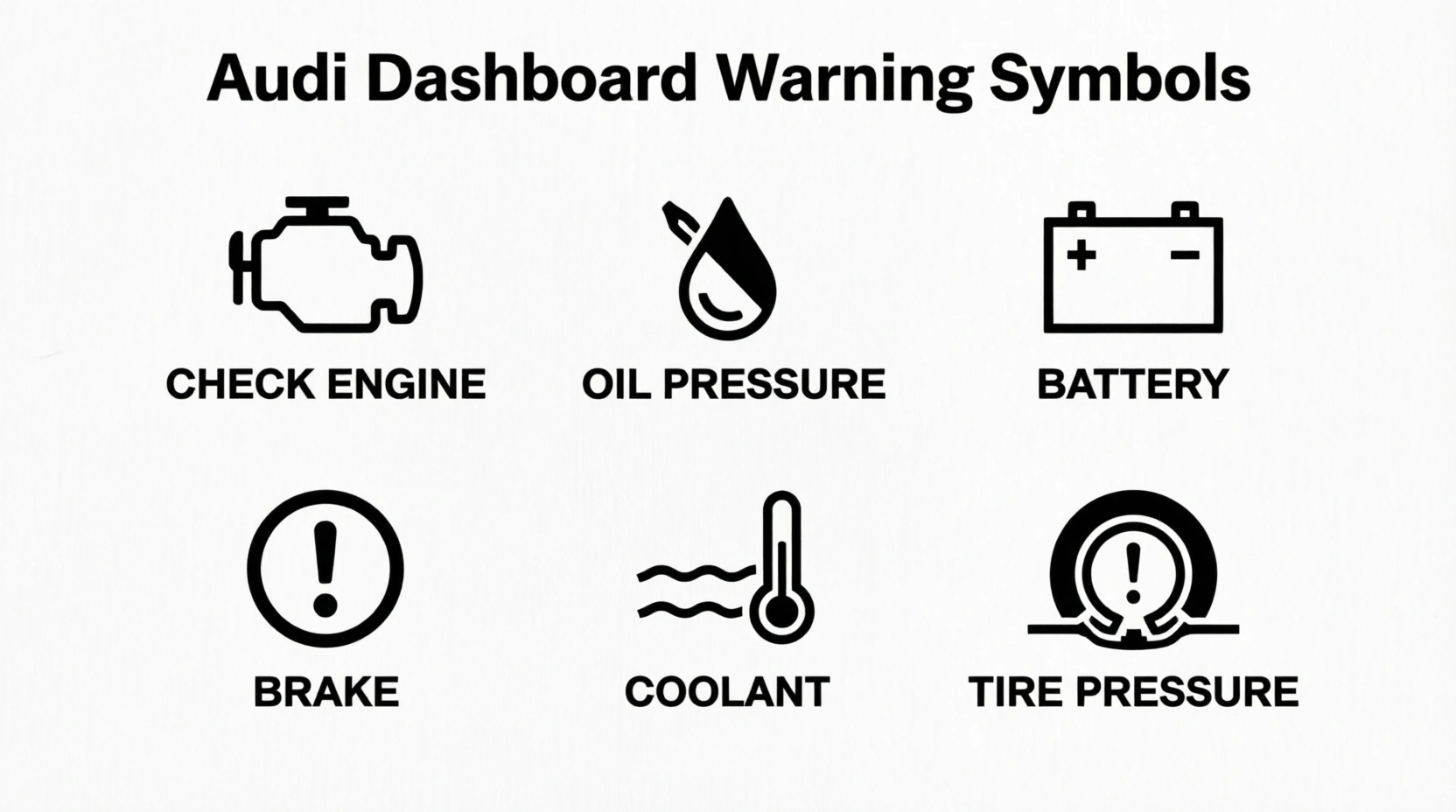
If you’ve ever seen a warning light appear on your Audi dashboard, you know how confusing it can be.
I understand that feeling because many dashboard symbols look similar, yet they can mean very different things.
Knowing what these icons mean helps you stay safe, avoid costly repairs, and keep your Audi running smoothly.
In this guide, you’ll learn the meaning behind the most common Audi dash symbols, when to take action, and which warnings should never be ignored.
What Do Audi Dash Symbols Mean?
Audi dash symbols are dashboard warning lights and indicator icons that communicate your vehicle’s condition. Red symbols usually indicate an urgent problem that requires immediate attention, yellow or amber symbols warn of an issue that should be checked soon, while green, blue, and white symbols typically show that a feature or system is active.
What Are Audi Dash Symbols?
Audi dash symbols are visual indicators displayed on your instrument cluster or digital cockpit. They alert you to the status of your vehicle’s systems, including the engine, brakes, tires, battery, lighting, and safety features.
These symbols are designed to quickly communicate important information without requiring drivers to read lengthy messages while driving.
The meaning of a dashboard symbol may vary slightly depending on:
- Audi model
- Model year
- Trim level
- Gasoline, diesel, hybrid, or electric powertrain
For this reason, your owner’s manual remains the best source for model-specific details. However, many Audi warning lights are consistent across most vehicles.
Audi Dash Symbols Comparison Table
| Symbol | Main Meaning | Best Action |
| Check Engine Light | Engine or emissions issue | Schedule diagnostics soon |
| Battery Warning | Charging system problem | Check battery and alternator |
| Oil Pressure Light | Low engine oil pressure | Stop engine immediately |
| Brake Warning | Brake system issue | Inspect brakes immediately |
| ABS Warning | Anti-lock braking fault | Drive carefully and service soon |
| Tire Pressure Warning (TPMS) | Low tire pressure | Inflate and inspect tires |
| Coolant Temperature | Engine overheating | Stop safely and cool engine |
| Airbag Warning | Airbag or restraint fault | Have safety system inspected |
| Electronic Stability Control | Stability system active or faulty | Reduce speed and inspect if persistent |
| Seat Belt Reminder | Seat belt not fastened | Buckle seat belt |
| Low Fuel Warning | Fuel level is low | Refuel soon |
| AdBlue Warning (Diesel) | AdBlue level low | Refill AdBlue tank |
Top Audi Dash Symbols and Their Meanings
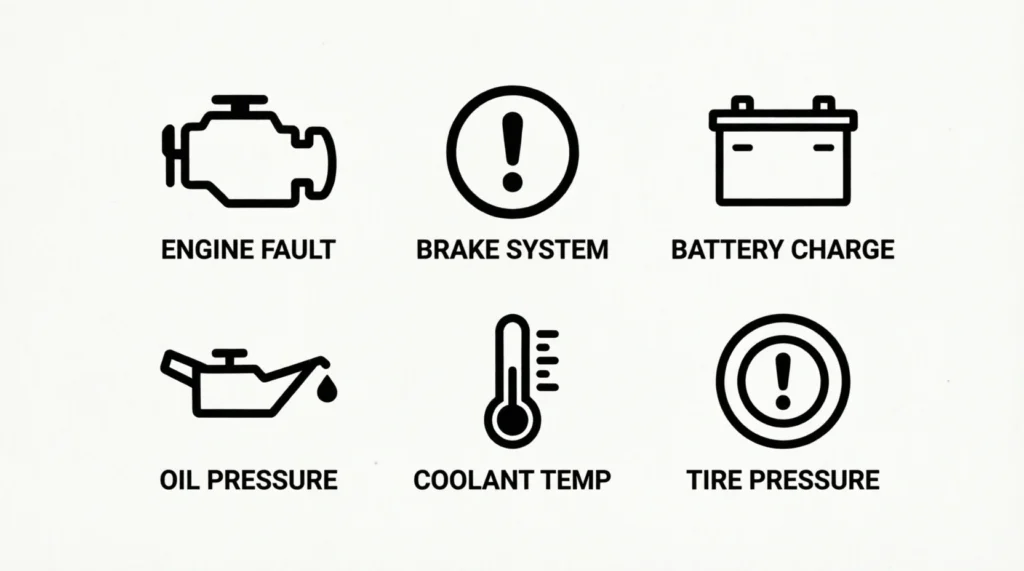
Check Engine Light: Engine System Warning
The check engine light is one of the most recognized Audi dash symbols. It can indicate anything from a loose fuel cap to a more serious engine or emissions problem.
If the light remains steady, schedule a diagnostic inspection as soon as possible. If it flashes, reduce speed and seek immediate service because continued driving may damage the catalytic converter.
Today, this warning is commonly diagnosed using an OBD-II scanner before repairs begin.
Best for: Engine diagnostics, emissions problems, routine maintenance, early fault detection.
Oil Pressure Warning Light: Protect Your Engine
This red oil can icon signals dangerously low engine oil pressure. Unlike a simple low-oil reminder, this warning means your engine may not be receiving proper lubrication.
Pull over safely and switch off the engine immediately. Continuing to drive could result in severe engine damage.
Common causes include:
- Low engine oil
- Oil pump failure
- Oil pressure sensor fault
- Internal engine wear
Best for: Preventing engine damage, emergency response, maintenance planning.
Battery Warning Light: Charging System Problem
The battery symbol does not always mean your battery has failed. More often, it indicates a problem with the charging system.
Possible causes include:
- Failing alternator
- Loose drive belt
- Weak battery
- Damaged wiring
If ignored, the battery can lose power completely, causing the vehicle to stall.
Best for: Electrical diagnostics, charging system inspection, battery maintenance.
Brake Warning Light: Brake Safety Alert
A red brake warning light requires immediate attention.
It may indicate:
- Low brake fluid
- Parking brake engaged
- Brake system malfunction
Because braking performance directly affects safety, never ignore this warning. If braking feels unusual, stop driving until the problem is repaired.
Best for: Brake inspections, vehicle safety, emergency repairs.
ABS Warning Light: Anti-Lock Brake System
The ABS light indicates that the anti-lock braking system has detected a fault.
Your normal brakes usually continue working, but emergency braking performance may be reduced on slippery roads.
Professional diagnostics can identify faulty wheel speed sensors, damaged wiring, or ABS module problems.
Best for: Wet-weather safety, brake diagnostics, electronic system repair.
Tire Pressure Monitoring System (TPMS): Tire Pressure Warning
This horseshoe-shaped symbol with an exclamation mark alerts you that one or more tires are underinflated.
Driving with low tire pressure can:
- Reduce fuel economy
- Increase tire wear
- Affect handling
- Raise the risk of tire failure
After adjusting tire pressure, reset the TPMS if your Audi model requires it.
Best for: Tire safety, fuel efficiency, preventive maintenance.
Engine Coolant Temperature Warning: Overheating Engine
A thermometer over waves usually signals that the engine coolant temperature is too high.
Common causes include:
- Low coolant
- Cooling fan failure
- Water pump problems
- Coolant leaks
If the warning appears, stop driving safely and allow the engine to cool before checking coolant levels.
Best for: Preventing overheating, cooling system maintenance, avoiding engine damage.
Airbag Warning Light: Safety System Fault
The airbag warning light means one or more components in the supplemental restraint system may not function correctly during a collision.
Possible causes include:
- Faulty seat sensors
- Wiring problems
- Airbag control module issues
Because airbags are critical safety equipment, this warning should always be inspected promptly.
Best for: Occupant safety, airbag diagnostics, vehicle inspections.
Electronic Stability Control (ESC): Stability Assistance
The ESC symbol may flash temporarily when the system actively improves traction during slippery conditions.
If it stays illuminated continuously, the stability control system may require service.
Although the vehicle remains drivable, stability assistance could be limited during emergency maneuvers.
Best for: Driving safety, traction management, winter driving awareness.
Seat Belt Reminder: Occupant Protection
This simple dashboard icon reminds drivers and passengers to fasten their seat belts.
Many modern Audi vehicles also identify which seating position remains unbuckled.
Although it seems basic, wearing a seat belt remains one of the most effective ways to reduce injuries during accidents.
Best for: Daily driving safety, family travel, passenger awareness.
Low Fuel Warning: Time to Refuel
The fuel pump icon indicates that the fuel level has reached the reserve amount.
Avoid making a habit of driving until nearly empty because it may increase wear on the fuel pump over time.
Refuel at the earliest convenient opportunity.
Best for: Trip planning, preventing fuel shortages, daily driving.
AdBlue Warning (Diesel Models): Emissions System Reminder
Diesel Audi models equipped with SCR technology use AdBlue fluid to reduce emissions.
When this warning appears, refill the AdBlue tank before it becomes empty. If ignored, some vehicles may eventually prevent the engine from restarting until the fluid is replenished.
Best for: Diesel maintenance, emissions compliance, long-distance travel.
Best Audi Dash Symbols to Know First
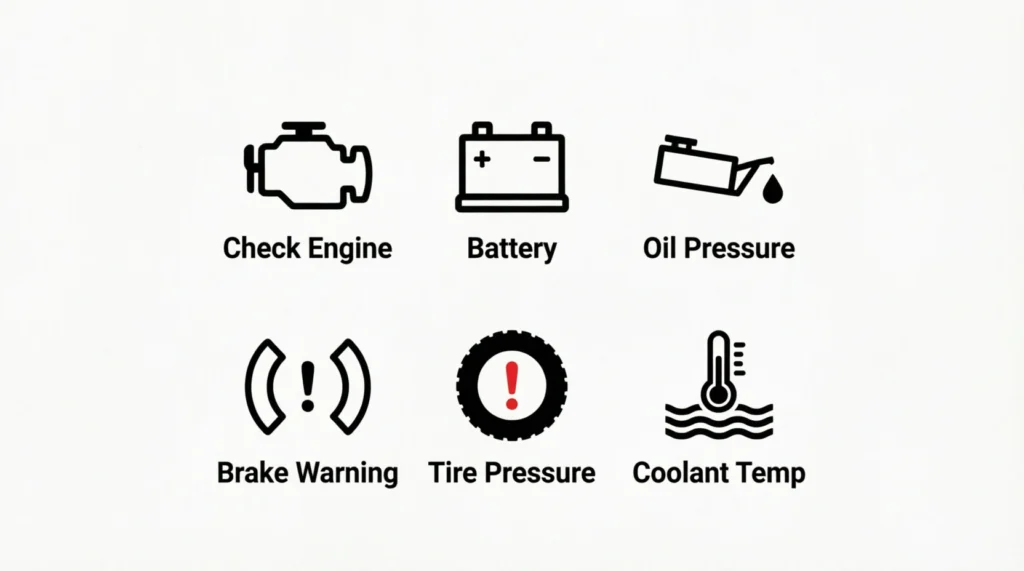
If you’re new to Audi ownership, these are the most important warning lights to recognize immediately:
- Oil Pressure Warning
- Brake Warning
- Check Engine Light
- Battery Warning
- Coolant Temperature Warning
- Tire Pressure Warning
Learning these symbols can help prevent expensive repairs and improve road safety.
Best Audi Dash Symbols for Vehicle Maintenance
Some dashboard indicators are especially helpful for routine maintenance and long-term vehicle care.
These include:
- Tire Pressure Monitoring System
- Check Engine Light
- Battery Warning
- Oil Pressure Warning
- Low Fuel Warning
Keeping up with these alerts helps maintain performance, reliability, and fuel efficiency.
Audi Dash Symbols by Warning Color
Understanding dashboard colors makes it easier to judge urgency.
Red Symbols
Red warnings usually require immediate action.
Examples include:
- Oil Pressure
- Brake Warning
- Coolant Temperature
Yellow or Amber Symbols
These indicate a fault that should be inspected soon but may not require stopping immediately.
Examples include:
- Check Engine
- ABS
- Tire Pressure
- Airbag
Green, Blue, and White Symbols
These are generally informational indicators showing that a feature is active.
Examples include:
- High beam indicator
- Cruise control
- Turn signals
- Lane assist
Before Ignoring Any Dashboard Warning
Although some dashboard icons simply provide information, others warn of potentially serious mechanical or safety issues.
Keep these points in mind:
- Meanings can vary slightly by Audi model and year.
- Some warnings appear together because one fault affects multiple systems.
- Never continue driving with red warning lights unless your owner’s manual specifically states it is safe.
- If you’re unsure, arrange a professional inspection as soon as possible.
Prompt attention often prevents larger repair bills later.
How to Understand the Right Audi Dash Symbols
When interpreting dashboard warnings, consider:
Vehicle Symptoms
If warning lights appear alongside unusual noises, smoke, vibration, or loss of power, stop driving and investigate.
Warning Color
Red generally means stop safely.
Amber means schedule service soon.
Green and blue usually indicate normal operation.
Frequency
A warning that appears briefly may indicate a temporary condition, while one that remains illuminated deserves inspection.
Owner’s Manual
Always compare dashboard symbols with your Audi owner’s manual for model-specific explanations.
FAQs About Audi Dash Symbols
What is the most serious Audi dashboard warning light?
The oil pressure warning light and brake warning light are among the most serious because continuing to drive could cause severe engine damage or reduce braking performance. Stop safely and investigate immediately.
Can I drive with the check engine light on?
If the light remains steady and the vehicle drives normally, you can often drive cautiously to a repair shop. If it flashes, stop driving as soon as it is safe because engine damage may occur.
Why is my tire pressure warning still on after inflating my tires?
Some Audi models require the TPMS to be reset after correcting tire pressure. If the warning remains after resetting, one tire may still be low or the sensor may need inspection.
What does a flashing ESC light mean?
A flashing ESC light usually means the stability control system is actively helping maintain traction on slippery roads. A constantly illuminated light typically indicates a system fault.
Why is my battery warning light on while driving?
This usually indicates a charging system issue rather than a dead battery. The alternator, drive belt, or electrical wiring may require inspection before the battery loses power completely.
What dashboard color means stop immediately?
Red warning lights generally indicate the highest level of urgency. These warnings often involve braking, oil pressure, or engine overheating and should never be ignored.
Can cold weather trigger dashboard warning lights?
Yes. Low temperatures can temporarily affect battery performance, tire pressure, and some electronic sensors. If the warning remains after driving, have the vehicle inspected.
Final Thoughts
Understanding Audi dash symbols can make you a more confident and safer driver. While some dashboard lights simply provide useful information, others warn of problems that need immediate attention.
Learning the difference between red, amber, and informational indicators helps you respond appropriately, protect your vehicle, and avoid unnecessary repair costs.
Whenever a warning light appears and you’re unsure what it means, checking your owner’s manual and arranging professional diagnostics is always the safest choice.

Adam Sullivan is a dedicated writer who enjoys transforming everyday topics into engaging and informative content. His writing focuses on making complex ideas simple, practical and enjoyable for readers of all backgrounds. Adam is also the fictional author of The Lantern Beyond Autumn Hills and Where the Morning Horizon Waits. Outside of writing, he enjoys photography, traveling and discovering inspiration through new experiences. He believes great content should be both helpful and easy to connect with.
 Dylan Anderson