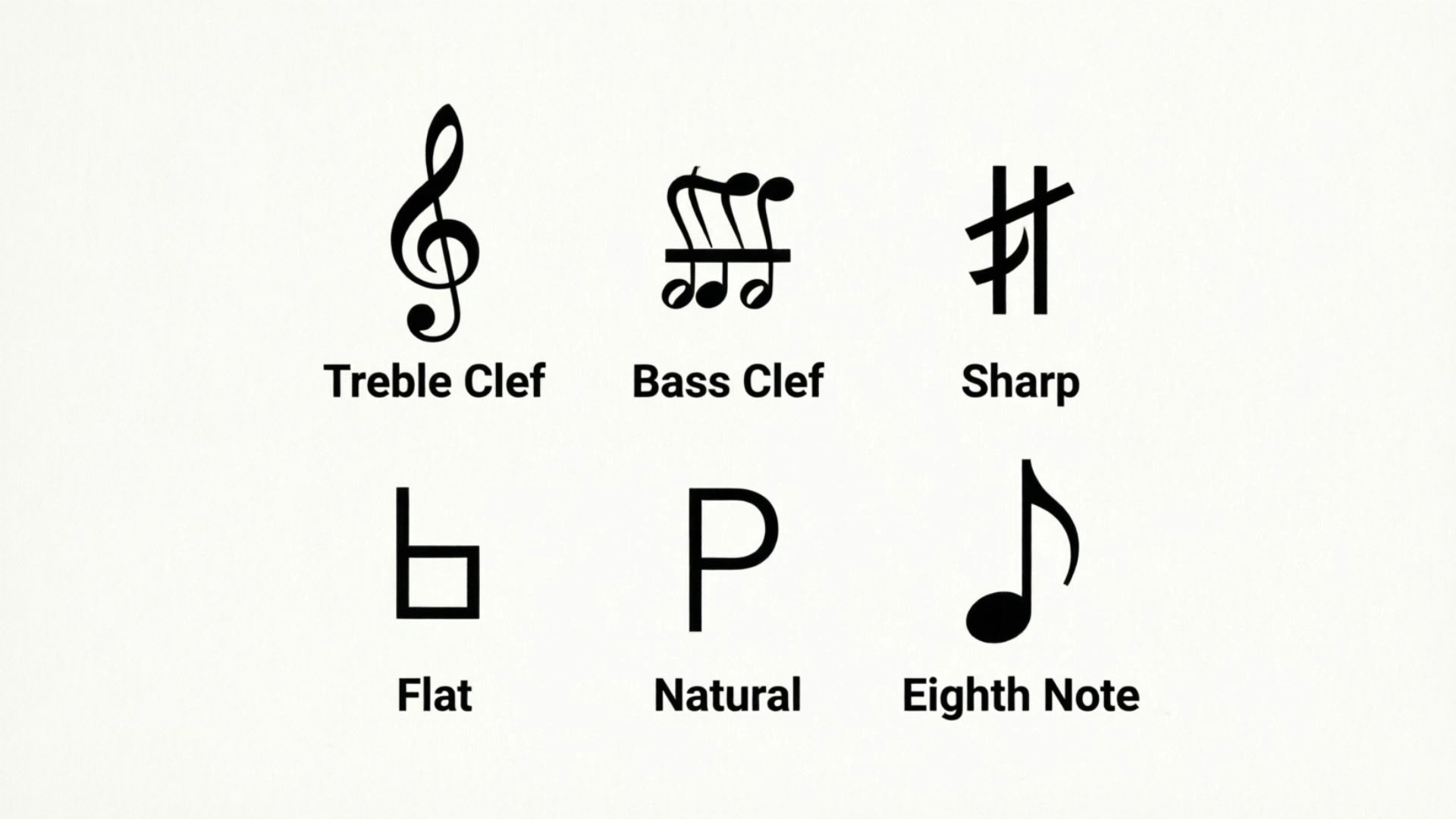
AMusic has a language of its own, and music symbols are the signs that help bring melodies, rhythms, and emotions to life.
When I look at musical notation, I see more than simple marks on a page each symbol tells a story about sound, timing, and expression.
If you are searching for music symbols names, you may want to learn their meanings, choose one for a tattoo, create a logo, or understand their deeper value.
This guide explains the most common music symbols and how people use them in creative and personal ways.
What Symbol Represents Music? (Quick Answer)
The most common symbol representing music is the musical note (♪). It is widely recognized around the world as a sign of melody, sound, creativity, and musical expression. Other popular music-related symbols include the treble clef (𝄞), bass clef (𝄢), and eighth note (♫), each with its own role in musical notation and design.
What Are Music Symbols Names?
Music symbols names refer to the official names of signs and marks used in music writing, performance, and design. These symbols help musicians understand pitch, rhythm, speed, pauses, volume, and expression.
Musical symbols appear in sheet music, digital music software, educational materials, tattoos, artwork, logos, and decorative designs. While many symbols have technical meanings in music theory, people also use them personally to represent creativity, memories, passion, emotions, or a connection to sound.
The meaning of a music symbol can change depending on how it is used. A musician may see a note as part of a composition, while another person may see it as a reminder of a loved one, a special song, or a life experience connected to music.
Music Symbols Names Comparison Table
| Symbol | Main Meaning | Best Use |
| ♪ Musical Note | Melody, sound, creativity | Tattoos, art, personal designs |
| ♫ Beamed Notes | Rhythm and musical flow | Logos, posters, decorations |
| 𝄞 Treble Clef | Higher musical notes and harmony | Music branding, tattoos |
| 𝄢 Bass Clef | Lower tones and depth | Music education, designs |
| ♩ Quarter Note | Basic rhythm and timing | Minimal tattoos, icons |
| 𝄽 Rest Symbol | Silence and pauses | Meaningful artwork |
| ♯ Sharp Sign | Raising a musical note | Music theory designs |
| ♭ Flat Sign | Lowering a musical note | Music education symbols |
| 𝄐 Fermata | Holding a note longer | Creative tattoos |
| 𝄢 Staff Lines | Musical structure | Educational designs |
| 🎼 Musical Score | Complete musical expression | Logos and artwork |
Top 11 Music Symbols Names and Their Meanings
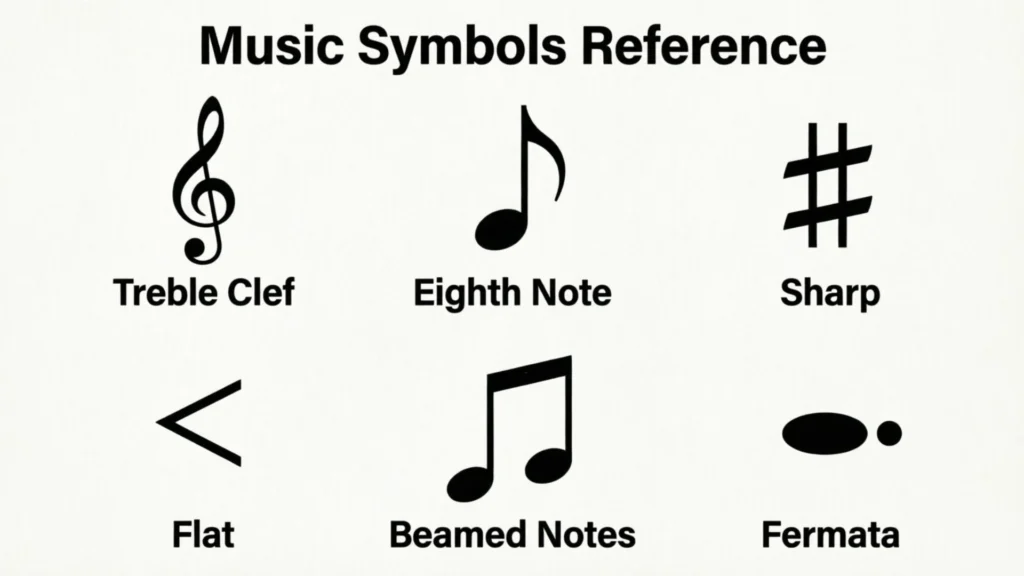
1. Musical Note (♪): The Universal Sign of Melody
The musical note is one of the most recognizable music symbols in the world. It represents sound, rhythm, songs, and the simple idea of turning feelings into music. Notes show musicians which sounds to play and how long those sounds should last.
Because of its simple shape, the musical note is often chosen for tattoos, jewelry, stickers, and personal artwork. Many people use it to show their love for singing, playing an instrument, or a song that holds special meaning.
A single note can also represent creativity and self-expression. Unlike some technical symbols, it is easy for almost anyone to understand.
Best for:
- Small music tattoos
- Personal reminders
- Jewelry designs
- Music-related gifts
- Creative artwork
2. Treble Clef (𝄞): A Classic Symbol of Musical Expression
The treble clef is one of the most famous symbols in written music. It is used to show the pitch range for many higher notes, especially those played by instruments like the violin, flute, and piano’s upper range.
Beyond music theory, the treble clef has become a popular artistic symbol. Many people associate it with elegance, creativity, and a lifelong connection to music.
It is commonly used in music school logos, band artwork, tattoos, and decorative pieces. Because of its graceful shape, it works well as a standalone design.
Best for:
- Musician tattoos
- Music school branding
- Elegant artwork
- Piano or violin themes
- Creative logos
3. Bass Clef (𝄢): A Symbol of Depth and Musical Foundation
The bass clef represents lower musical notes and is an important part of musical notation. It is often used by bass players, cellists, pianists, and other musicians who work with deeper sounds.
Many people choose the bass clef because it represents balance between different parts of music. It reminds musicians that both high and low sounds are needed to create complete harmony.
In design, the bass clef is less common than the treble clef, making it a unique choice for people who want a symbol connected to deeper tones and musical identity.
Best for:
- Bass player tattoos
- Instrument-themed designs
- Music education
- Unique personal artwork
4. Beamed Notes (♫): Representing Rhythm and Musical Flow
Beamed notes combine multiple notes together to show rhythm and timing. They are often seen in sheet music and are visually associated with movement and musical energy.
This symbol is popular in designs because it looks more dynamic than a single note. It can suggest dancing, singing, songwriting, and the ongoing flow of creativity.
People often use beamed notes in posters, social media graphics, event designs, and tattoos. Their balanced appearance makes them suitable for both modern and classic styles.
Best for:
- Music event posters
- Matching tattoos
- Band designs
- Creative branding
- Decorative art
5. Quarter Note (♩): A Simple Symbol of Rhythm
The quarter note is one of the basic building blocks of rhythm in music. It represents a specific length of sound and helps musicians understand timing.
Because it has a clean and minimal shape, the quarter note is a favorite choice for simple tattoos. It can represent a steady beat, personal rhythm, or the idea of moving through life with your own pace.
Its simplicity makes it easy to combine with names, dates, flowers, instruments, or other meaningful designs.
Best for:
- Minimal tattoos
- Small symbols
- Personal designs
- Music lover gifts
6. Rest Symbol (𝄽): The Meaning of Silence in Music
A rest symbol represents silence or a pause in music. While it does not create sound, it plays an important role by giving music space and balance.
Many people find this symbol meaningful because silence can be just as important as sound. In personal designs, it may represent reflection, patience, calm moments, or appreciating pauses in life.
Rest symbols are less obvious than musical notes, which makes them a thoughtful choice for someone looking for a deeper musical reference.
Best for:
- Meaningful tattoos
- Personal reflection symbols
- Minimal artwork
- Music theory designs
7. Sharp Sign (#): A Symbol of Musical Change
The sharp sign raises a musical note by a half step in traditional Western music notation. It is an important symbol used by musicians when reading and creating music.
In creative designs, the sharp sign can represent change, adjustment, and musical growth. Some people choose it because it connects directly to playing instruments or studying music.
It is especially meaningful for musicians who understand its technical purpose and want a symbol connected to their craft.
Best for:
- Musician tattoos
- Instrument designs
- Music education
- Personalized artwork
8. Flat Sign (♭): A Symbol of Musical Expression
The flat sign lowers a musical note by a half step. Like the sharp sign, it is a technical symbol that plays a major role in music composition and performance.
Its curved design makes it visually attractive for creative uses. Musicians may choose it to represent their relationship with music theory, their instrument, or their personal style.
The flat sign is a good option for people who want a less common music symbol with a clear musical meaning.
Best for:
- Unique music tattoos
- Music student designs
- Instrument artwork
- Creative symbols
9. Fermata (𝄐): A Symbol of Holding a Moment
The fermata tells musicians to hold a note or rest longer than its usual value. It creates space for emotion, expression, and interpretation.
Because it connects with the idea of extending a special moment, some people use the fermata as a personal symbol. It can represent memories, meaningful experiences, or moments worth appreciating.
Its design is simple but carries a thoughtful message, making it suitable for subtle tattoos and artwork.
Best for:
- Memory tattoos
- Emotional artwork
- Music-inspired designs
- Personal symbols
10. Musical Staff: The Foundation of Written Music
The musical staff consists of the lines and spaces where notes and symbols are placed. It provides the structure musicians use to read and perform music.
As a design element, staff lines can create beautiful backgrounds for names, quotes, dates, or musical notes. They are often used by composers, singers, and instrumentalists who want a symbol connected to the foundation of music.
The staff represents organization, learning, and the written side of musical creativity.
Best for:
- Custom tattoos
- Sheet music artwork
- Music school designs
- Personalized gifts
11. Musical Score (🎼): Complete Musical Storytelling
A musical score represents a complete piece of written music. It brings together notes, rhythms, symbols, and instructions that guide performers.
People often choose score designs because they represent a full musical journey rather than one single sound. A favorite song, family memory, or important life event can be connected to a piece of music.
This symbol works especially well in larger creative designs where details can be included.
Best for:
- Large tattoos
- Music artwork
- Posters
- Creative branding
Best Music Symbols Names for Tattoos
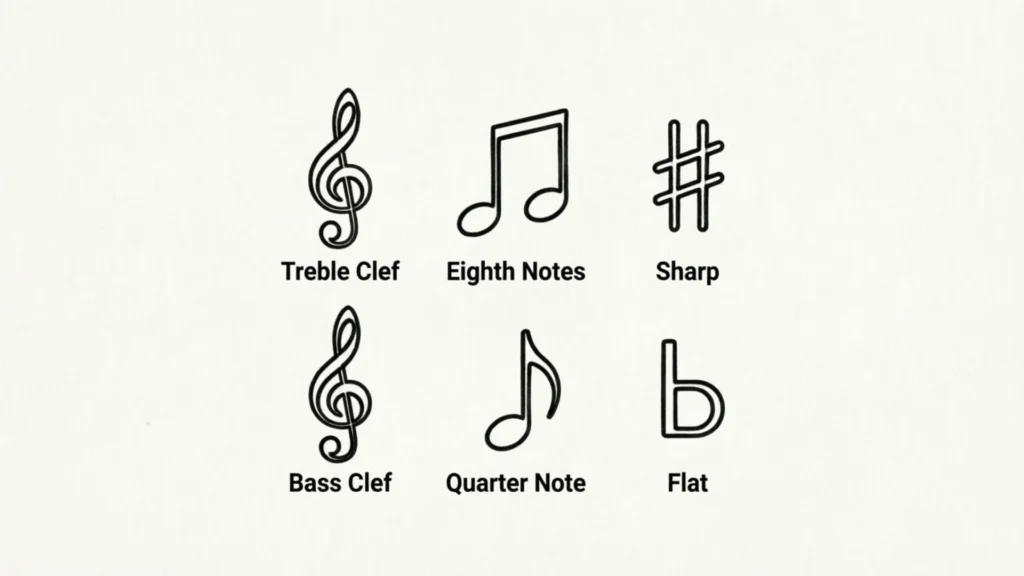
Music tattoos are popular because they allow people to carry a personal connection to sound, memories, or creativity. The best choice depends on whether you want something simple, meaningful, or highly detailed.
Popular tattoo choices include:
- Musical note (♪) for a simple music connection
- Treble clef for classic musician style
- Beamed notes for movement and rhythm
- Fermata for meaningful moments
- Staff lines with a favorite song reference
- Combined symbols for matching family or partner tattoos
Small tattoos usually work best with clean symbols, while larger tattoos can include instruments, lyrics, dates, or full musical designs.
Best Music Symbols Names for Logos and Design
For logos, branding, posters, and social media graphics, simple symbols usually work best. A recognizable design helps people understand the connection with music quickly.
Treble clefs, musical notes, beamed notes, and staff lines are commonly used because they are visually clear. Designers should consider balance, readability, and whether the symbol matches the brand’s personality.
A children’s music school may choose a playful note design, while a professional music company may prefer a cleaner and more modern symbol.
Best Music Symbols Names for Family, Spiritual, or Personal Meaning
Music often connects with family memories, traditions, emotions, and personal experiences. A music symbol may represent a favorite song, a family member who loved music, or an important moment in life.
For personal meaning, many people choose:
- A note connected to a special memory
- A song-inspired staff design
- A symbol representing a loved one’s musical passion
- A combination of music and meaningful cultural artwork
Music can also have spiritual importance in many communities, where songs and sounds are part of ceremonies, celebrations, and personal reflection.
Before Using Cultural or Sacred Symbols
Some symbols connected with music, sound, or artistic traditions may have cultural, religious, or spiritual roots. Before using any symbol in tattoos, logos, products, or commercial designs, it is important to understand its origin and meaning.
Respectful use means learning about the tradition behind a symbol and avoiding designs that could be misunderstood or taken out of context. Meanings can vary between cultures and communities, so personal research and sensitivity matter.
How to Choose the Right Symbol for Music
Choosing the right music symbol depends on your reason for using it. Consider these questions:
- Does the symbol have personal meaning for you?
- Do you understand its cultural or historical background?
- Will it look clear as a tattoo or logo?
- Does its shape match your design style?
- Does it represent a memory, emotion, or creative goal?
A simple note may be perfect for a small tattoo, while a full musical score may work better for a larger artwork project.
FAQs About Music Symbols Names
What is the best symbol for music?
The musical note (♪) is the most widely recognized symbol for music. It is simple, clear, and connected with melody, songs, and creativity. However, the best choice depends on your personal connection with music and the meaning you want to express.
What symbol represents creativity in music?
Musical notes, treble clefs, and musical scores are often associated with creativity because they represent the process of creating and sharing sound. Many artists and musicians use these symbols in personal designs.
What is a good music symbol tattoo?
Good music tattoo choices include a small musical note, treble clef, fermata, or a custom staff design. The best option is one connected to a personal memory, favorite song, instrument, or musical journey.
What symbol represents family through music?
A music symbol combined with names, dates, or meaningful artwork can represent family bonds. Many people use songs, notes, or instruments connected to shared memories with loved ones.
What is a simple music symbol?
The single musical note (♪) is one of the simplest music symbols. It works well for small tattoos, icons, decorations, and beginner-friendly designs.
Can music symbols be used in logos?
Yes. Music symbols are often used in logos for bands, schools, studios, and creative businesses. Simple and recognizable designs usually work best for branding.
What animal represents music?
There is no single official animal representing music. However, birds are often associated with songs because of their natural vocal sounds, while some cultures connect certain animals with storytelling and musical traditions.
Final Thoughts
Learning music symbols names helps you understand both the technical and emotional side of music. These symbols are more than marks on a page they can represent creativity, memories, learning, and personal expression. Whether you want a tattoo, logo, artwork, or simple reminder of your love for music, the right symbol is the one that has meaning for you.

Adam Sullivan is a dedicated writer who enjoys transforming everyday topics into engaging and informative content. His writing focuses on making complex ideas simple, practical and enjoyable for readers of all backgrounds. Adam is also the fictional author of The Lantern Beyond Autumn Hills and Where the Morning Horizon Waits. Outside of writing, he enjoys photography, traveling and discovering inspiration through new experiences. He believes great content should be both helpful and easy to connect with.
 Dylan Anderson